Historical dinners
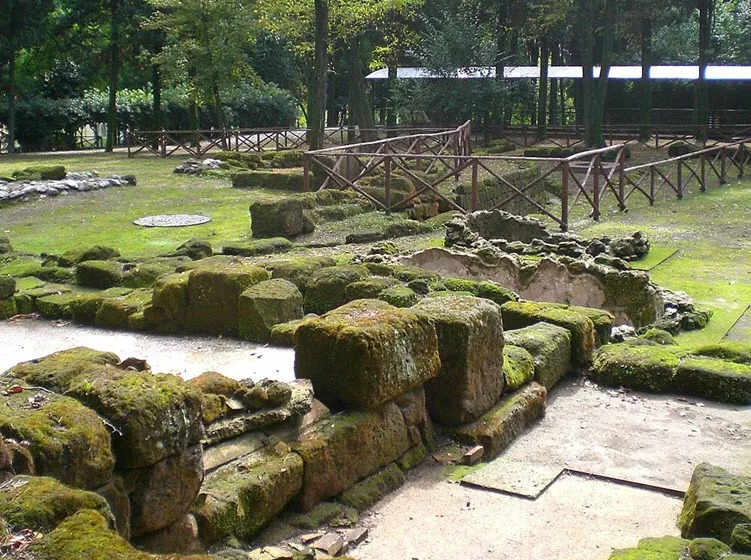
The church of San Pietro a Corte was built in the 8th century AD on the remains of a Roman thermal building already reused as a place of worship and burial in early Christian age.
It was in this area that Arechi II made a chapel dedicated to Saints Peter and Paul, annexed to his great residence of Salerno, to be used as a chapel of the Court and a representative hall.
Over the centuries, the building underwent many profound transformations. The princely palace, which came almost to the sea, was repeatedly restored until it was incorporated into various private houses. The rooms of the palatine chapel were used for public use throughout the medieval period.
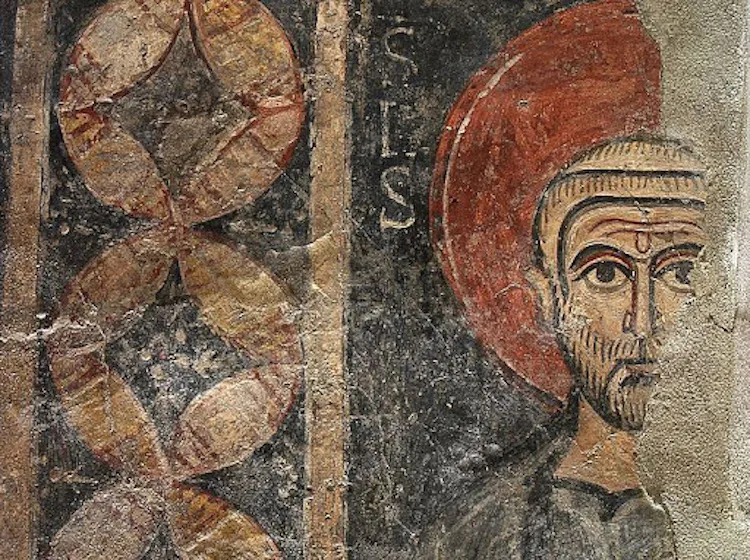
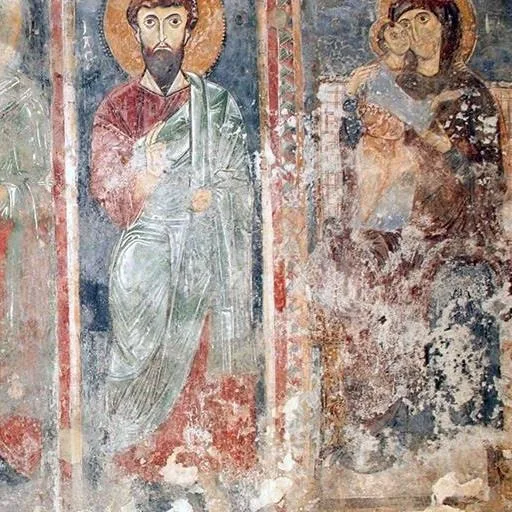
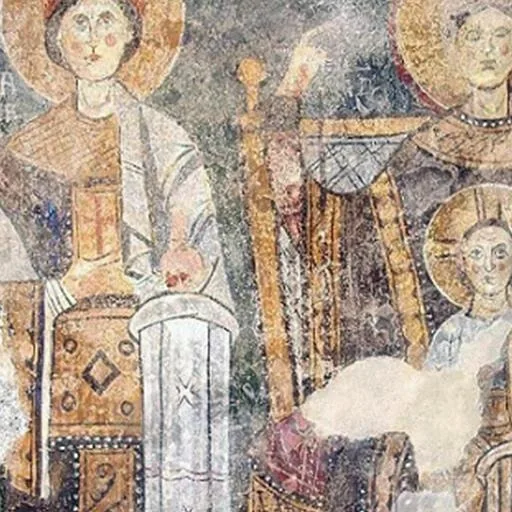
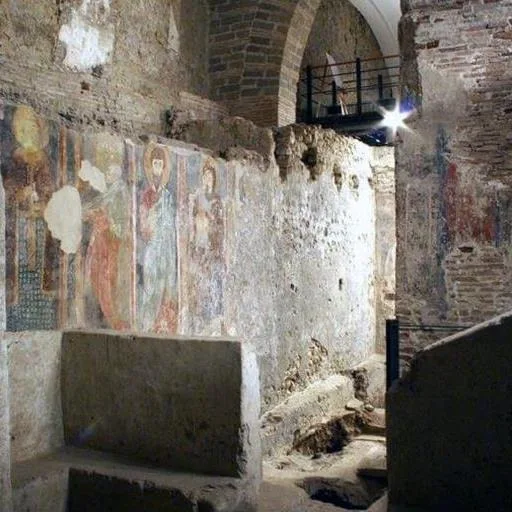
After the Norman conquest of 1076 the underground space (hypogee) hosted an oratory, enriched with beautiful frescoes of Byzantine influence, dating back to the late 12th century.
Throughout the Norman-Swavo period the upper court was used for meetings of the citizen parliament and, subsequently, for the ceremony of delivery of the degrees of the Salernitana Medical School. It is probable that St. Peter at the Court also housed some lessons of the school in the environments of the hypogeum where, among the subjects depicted in the frescoes, the presence of St. Catherine of Alexandria protects the wise.
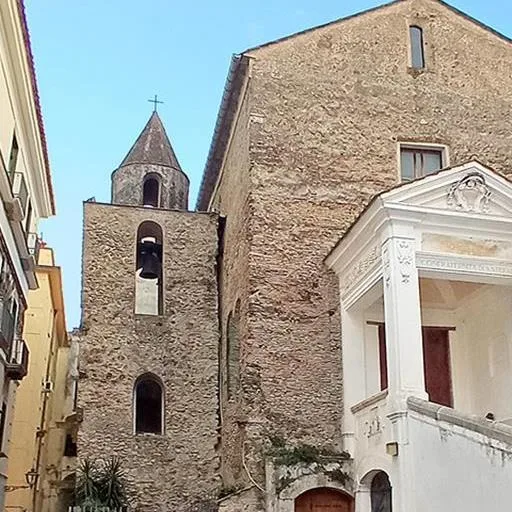
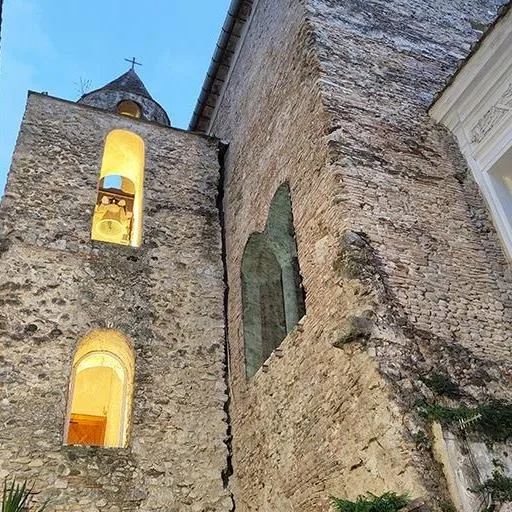
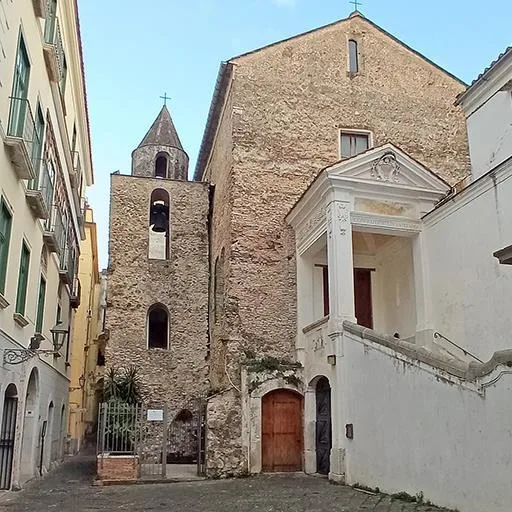
Between the twelfth and the 16th century the complex was flanked thebell towervisible still today, perhaps made instead of the original one of the Lombard era.
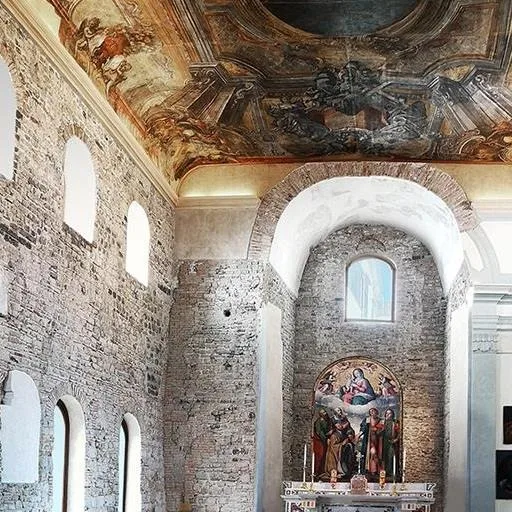
In the 16th century San Pietro a Corte obtained the title of abbey Commendata(‘in concession’) undergoing numerous transformations and embellishments: the floor of the upper church was rebuilt, the square apse became semicircular, instead of the outer loggia was realized the current access stairway to the chapel (the original entrance was only from the inside of the palace), then restored in the eighteenth century.
To the Pignatelli family, who had become the owner of the structure, the restorations and transformations of the eighteenth century, with the realization of new altars and the insertion of paintings and paintings. At the same time it was built on the north side of the building, on the street level, a small chapel known as the “Spanish” Saint Anne.
With the Unity of Italy the abbey of San Pietro a Corte was suppressed and the princes Pignatelli decided to sell the structure, which slowly fell into disuse. During World War I it was used as a military deposit and in 1939 it was finally granted to the brotherhood of Santo Stefano.
In the 70s of the last century the Superintendence began a complex work of restoration and restoration of the upper chapel, the hypogean environments and the chapel of Sant’Anna, which in 2010 were reopened to the public.
The complex today
Today the complex of San Pietro a Corte presents itself as a real story of the different historical eras lived by the city of Salerno. A place that shows the alternation of centuries through the vertical reading of different structures for ages, styles and functions.
The monument is characterized by four distinct buildings:
– a vast underground “hypogee” with traces of Roman baths of imperial age (I-II century AD) and a place of worship and early Christian burial (V-VII century), then became oratory in Norman times, with frescoes of the 12th century.
– the former palatine chapel and hall of the throne of Arechi II (VIII century AD) became throughout the medieval period seat of representation of the citizens’ parliaments and then of the medical school Salernitana, finally abbey of San Pietro a Corte between the sixteenth and the nineteenth century.
– The bell tower built between the 12th and 16th centuries instead of the previous Lombard work.
– The 18th century chapel of Sant’Anna.
The laminated architecture of San Pietro a Corte preserves frescoes, marbles, inscriptions, canvases and paintings that let them tastare with hand the flow of time. In this place, nestled in the ancient heart of Salerno, it is really possible to live the charm of stories emerged from a distant past that marked the life of the city.
To discover
– The hypogean
In the lower environment of San Pietro a Corte, or hypogeo, there are traces of Roman baths of imperial age and a subsequent place of worship and burial used by the Christian communities of Salerno. When Arechi built his palace, at the end of the 8th century AD, he fortified the walls and pillars so that they could support the weight of the upper floors, creating a new loft that became the floor of the church above. All the hypogean, in fact, became a crypt of the palatine chapel and was later used as an oratory and classroom studio, enriching it with new frescoes dating back to the 12th century.
– The frigidarium
In the compartment offrigidariumof the thermal baths there is a burial belonging to a certain Socrates,vir spectabilisof Greek-Byzantine origin and containing the following epitaph: “Under the consulate of our lord Anastasius perpetual Augustus on the fourteenth day before the December limes, here rests in peace Socrates, magistrate of high rank who lived for forty-eighteen years.”
– The main altar
On the main altar of the Palatine church there is a painting depicting the Madonna in glory among Saints Peter and Paul, St. Cyrus, physician and hermit, and St. John the soldier, his disciple. Kneeling in prayer is represented Decio Caracciolo, abbot until 1613, who had commissioned the painting, attributed to Decio Tramontano.
Curiosity / To know
– Arechi II and the new role of Salerno
In 774, with the descent into Italy by Carlo Magno and the surrender of Pavia, the capital ofLangobardia maior, Duke Arechi II transferred his court from Benevento to Salerno proclaiming himselfprinceps andthe last bastion of the Lombard peoples on the Peninsula.
Arechi II died in 787 after promoting the strengthening of all the city walls and the ancient Byzantine Castle, as well as the construction of his new large palace and the palatine chapel of San Pietro a Corte.
– The flood in the port
The Roman baths on which the private chapel of Arechi II was built stood near the port of the ancientSalernum, in an area that between the end of the IV and the beginning of the 5th century AD was completely destroyed by a flood. In addition to the presence of river pebbles and clay, the flood is documented by an inscription that reports of a certain Arrio Mecio Graccopatronuswhich had financed the reorganization of the city after destruction.
– The decline of San Pietro in Corte
At the end of the 19th century the complex of San Pietro a Corte lost many of its functions and gradually fell into disuse. During the First World War the building became a munition store, while the rooms of the chapel of Sant’Anna were occupied by the workshop of a blacksmith and then by a re-sale of carbons. Only at the end of the last century the whole complex was dug, restored and recovered to be reopened to the public.


 Places of the Salernitana Medical School Artistic Historic