Historical dinners
The archaeological area of Fratte is located in the northern outskirts of the city of Salerno, in a position that favoured the control of the fertile valley of the Irno and easy connections both south, towards the Gulf and the Picentini Mountains, that north, towards Capua and the Volturno area.
The first human settlements date back to2300 BC., attested by fragments and firearms found in the area. However it is fromSixth century a. C. that Fratte is continuously inhabited, as evidenced by the remains of ancient buildingsof Etruscan originstill visible today.
At the end of the5th century BC.the area is occupied bySanniti, that remained there until the second half of the third century BC, when the area was finally abandoned. Its re-employment is recorded only when the territory became part of the Roman colony of Salerno.
The archaeological area
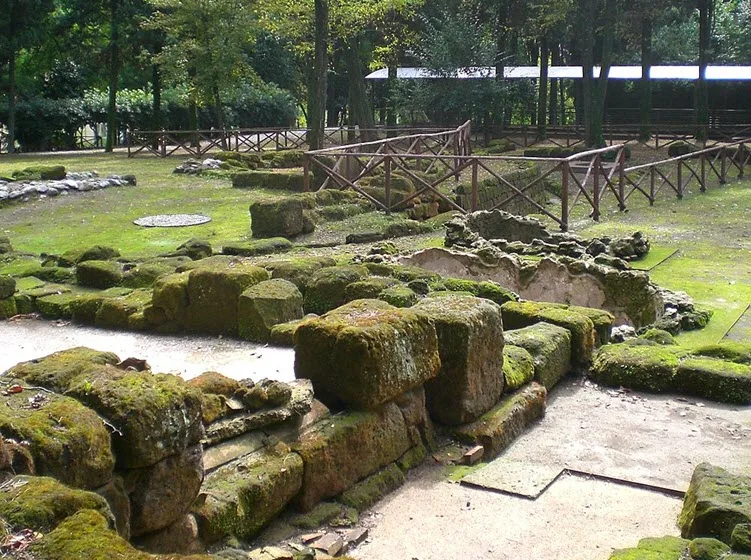
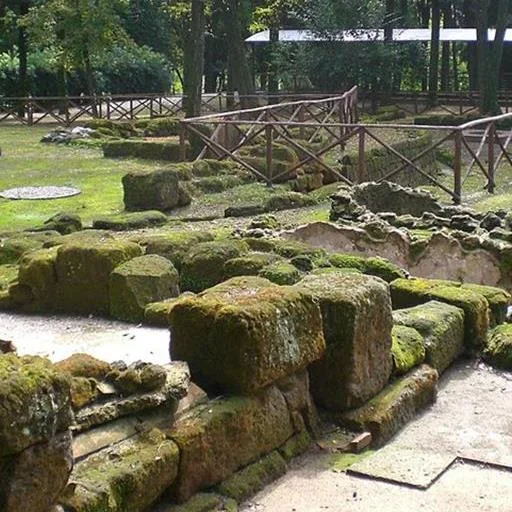
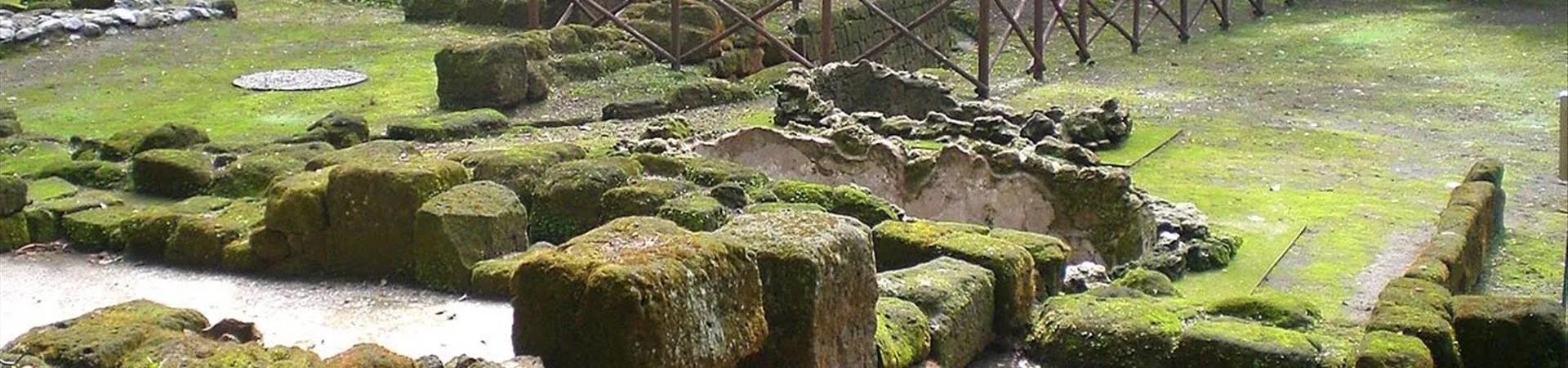
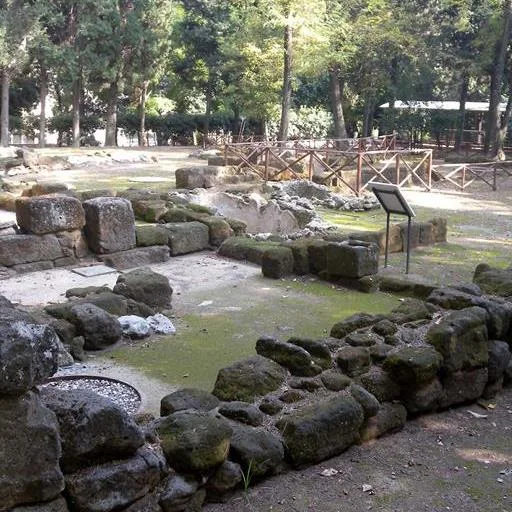
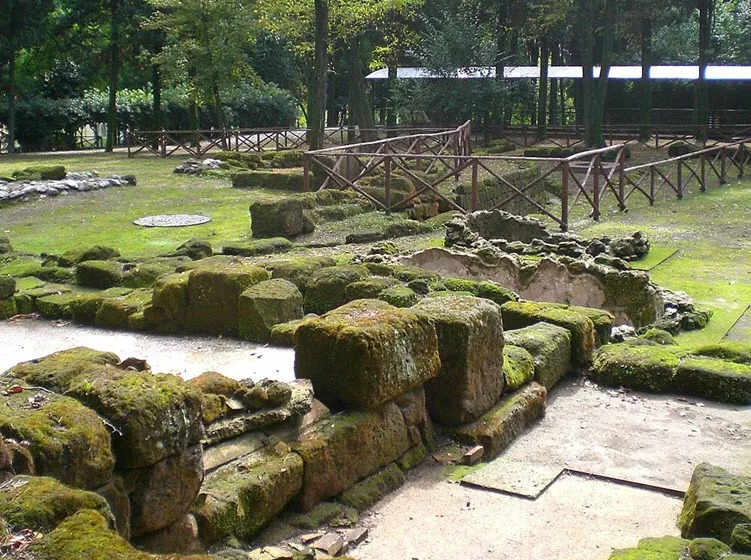
The archaeological area of Fratte, which extends for about4500 sqm,is bordered by walls and parked, leaving in view the most substantial remains of the structures found.
That the settlement was inhabited by Etruscan populationsbetween VI and the 5th century BC.is evidenced by some inscriptions and finds in bucchero (black glossy ceramic) found in the tombs. The discovery in the western part of the excavations of a cistern, decantation tanks for clay, a furnace and “industrial” structures indicates that the town was an important production site of clay artifacts.
InIV centuryOa.Cthe Etruscan center undergoes the Sannitic invasion. The monumental remains of this period have arrivedEight tombsvisible on the western side of the hill from which it was possible to reconstruct much of the funerary kits.
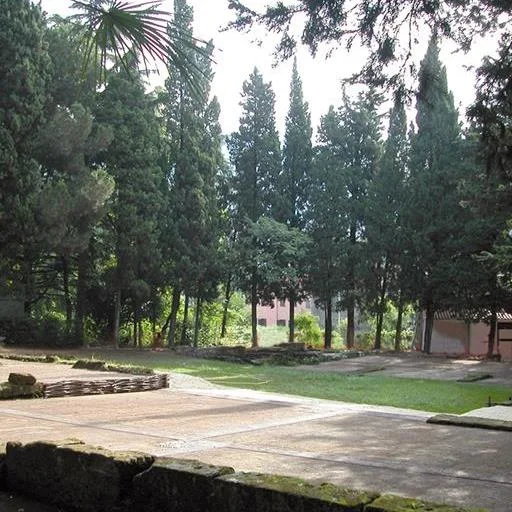
Today the archaeological area of Fratte is a wide green lung that allows to combine the pleasure of walking in nature with the love for ancient history. The materials found in the excavations of the site are exposed toProvincial Archaeological Museum of Salerno.An in-depth and fascinating journey into the world of Etruscans ‘frontier’ is possible by visitingNational Archaeological Museum of Pontecagnano.
To discover
– Tombs in room
The chamber tombs have a structure built in the rock, whose inner space, the chamber, in fact, served to accommodate the tombs of the deceased and those of his family and to show a higher rank. The tombs feature funeral beds with a cushion, triangular or cylindrical section.
– The cistern
Moving towards the western part of the settlement there is a cistern surrounded by tanks for the decantation of the clay, a furnace, wells and canals and paved areas: in this area, in fact, between the VI and the 5th century BC. the clay was worked, as confirmed by the finding of numerous moulds and discards.
To know
– The Etruscans in Campania
In their period of maximum expansion, the Etruscans arrived to lambire South Italy and the Salernitan area constituted their southern border. The site of Fratte, according to some scholars calledIrna,and that of the nearby Pontecagnano(Picentia),were two important outposts of the extruded civilization in Campania. These “frontier” centers, open to different peoples and cultures, thanks to the trades and exchanges were very rich, as denotes the great amount of objects present in the tombs of the necropolis, today exposed in the Provincial Archaeological Museum of Salerno and in the National Archaeological Museum of Pontecagnano.
– The Etruscan ceramic
The bucchero is a type of black and glossy ceramic, often fine and light, produced by the Etruscans, in particular in the centers of Tarquinia and Cerveteri (Lazio). The black color was obtained through a particular process of “reduction”, that is, using the smoke of a flame that transformed the red oxide contained in the clay into black oxide.


 Ancient Salerno: between Etruscan and Romans Artistic Historic