'/%3E%3C/svg%3E)


A church with an anonymous façade, but very beautiful inside, full of surprises, with two levels, the ancient underground one. The modern name dedicated to the Crucifix, recalls the legend of the Berliario wizard.

Church of the Holy Cross
- Description
- Event
- News
- Gallery
- Contacts
- Map
- Opening hours
- Itineraries
1) From Santa Maria della Pietà to the Crucifix
TheChurch of S. Maria della Pietà, attributable by type of construction to the X-XI centuries, has taken the current name ofSS. Crucifixfrom 1857, when the parish of San Benedetto was temporarily transferred, closed by the military.
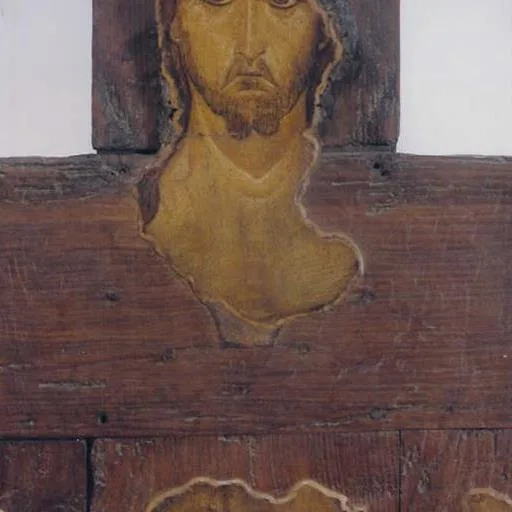
The church has onebasilical scheme with three apsesoriented towards the east and three aisles, marked by pillars of the beam, on which rest arches to the whole sixth in masonry listed with frames in yellow tuff. The north side of the church is slightly greater than the south side, so it is slightly inclined. In the rectangular niche on the left, in some periods of the year, there is aWood crucifixionof the 18th century, ascribed toPietro Barliario. Under the right altar there arefrescoes of the XVI-XVII century.
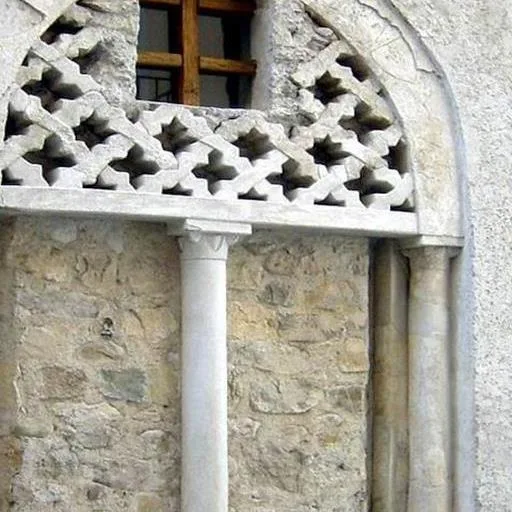
Outside, along the side wall overlooking Via Mercanti, it is worth seeingoriginal masonry of the Romanesque period, scanned by monophores.
2) The transformations and the lower level
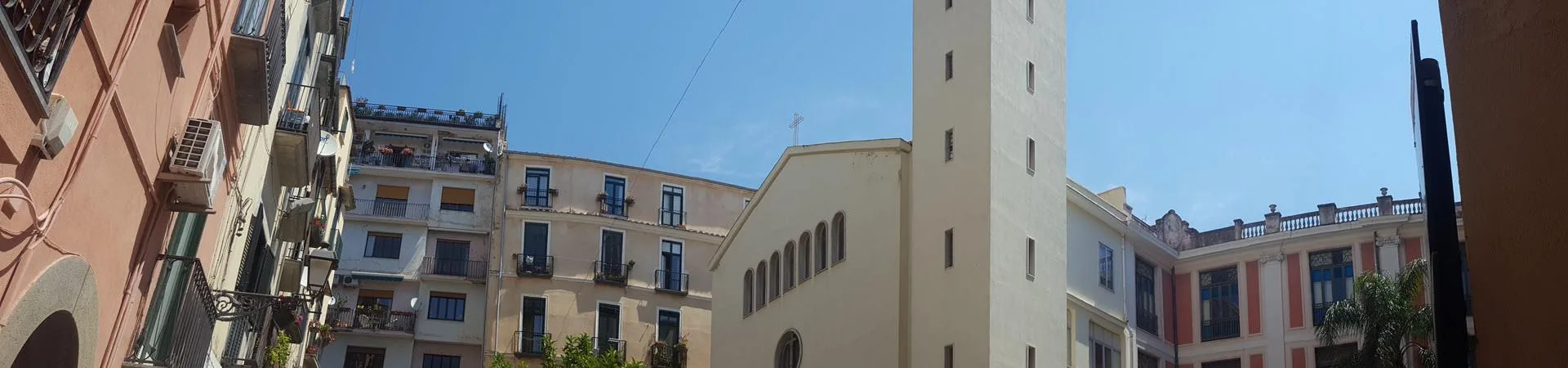
The church underwent various transformations during the twentieth century. In 1928, a new façade was created, in an academic style, with an overlapping portico that recalculates the internal scheme with three apses. After the great flood of 1954, the church was restored and consolidated according to the original image, in false neo-Roman style. The second new façade internally incorporated the 19th century portico and its right was installedbell tower.
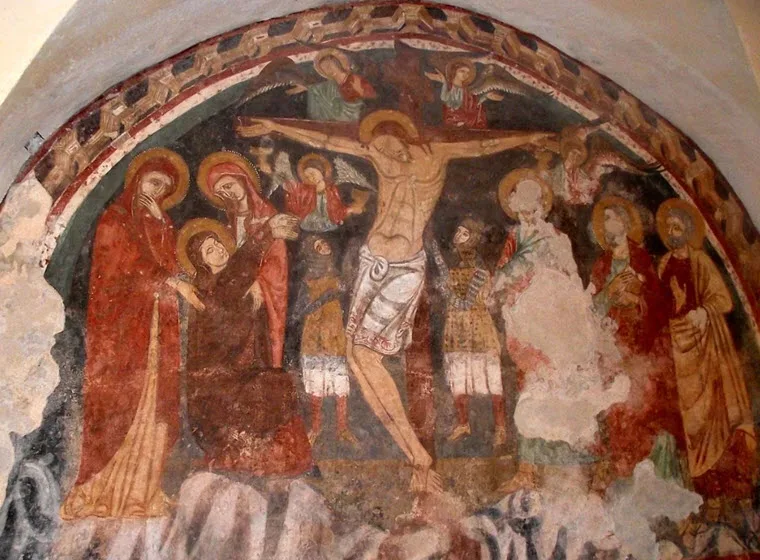
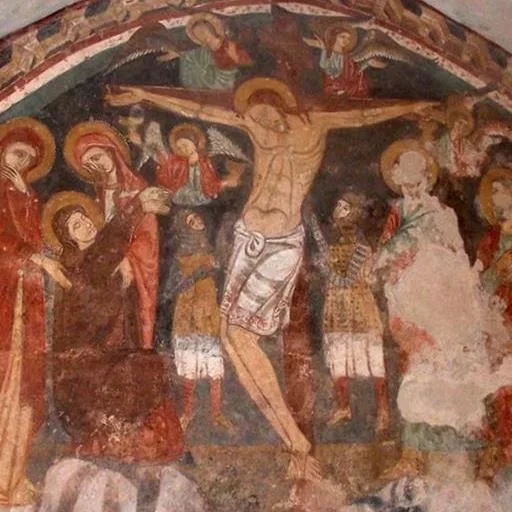
Below the church you can admire thecryptography, officially discovered in 1950. It is thought that the crypt dates back to the eighth century and is before the upper church. A famous fresco ofCrucifixion, dating from the 13th and 14th centuries, bears witness to the angioine influences in Salerno, in a fully functional structure.
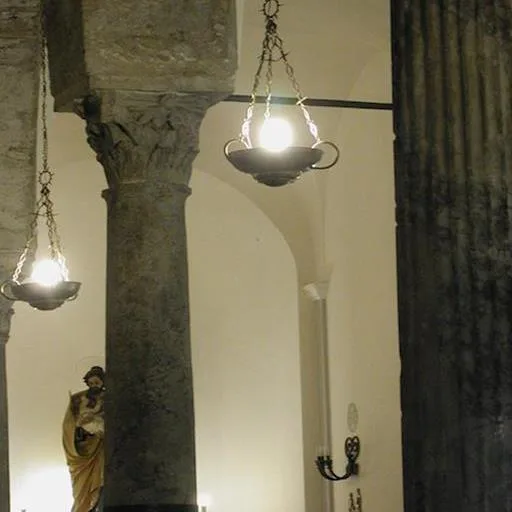
The crypt, like the upper church, is a basilica with three aisles, separated by arches with vaults to cruise, and culminating in three apses facing east. The arches rest on inglobal pillars ancient pillars of the spout. On the north side there are monophores.
Loading…
Nessun itinerario disponibile.