


The Church of the Holy Family, designed by Paolo Portoghesi in 1969, and built in Fratte, is a great intervention of sacred post-conciliar architecture.
 Post-war and development Artistic Historic
The Church of the Holy Family, designed by Paolo Portoghesi in 1969, and built in Fratte, is a great intervention of sacred post-conciliar architecture.
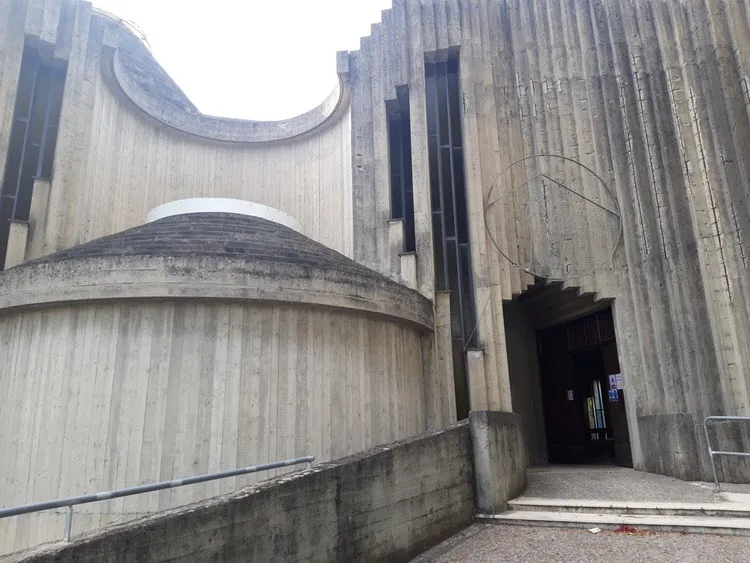
In the district of Fratte, along the road that leads to Avellino and Benevento, the ancient street of the two Principati that united the Lombard cities of Salerno and Benevento, stands a masterpiece of contemporary architecturelittle known and little visited also in Salerno: theChurch of the Holy Family.
The building was designed by the Salerno engineerVittorio Gigliotti and by Paolo Portoghesi(1931), former director of the Venice Biennale and theorist of post-modern architecture.
The church was built between 1971 and 1974, in a district that has very ancient origins – here the Etruscans settled in the city known as Irna – and that in the nineteenth century it was the seat of important manufactures, so as to become a working-class district.
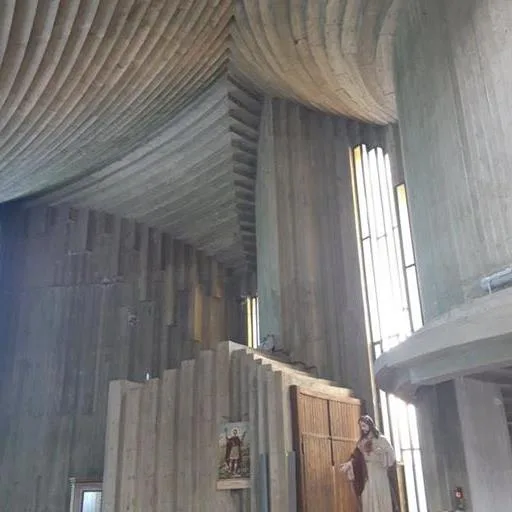
Thecurved shapes and the circle are the elements characterizing the architectural intervention, as a metaphor of the divine and its centrality. Three concentric circles, to symbolize the Trinity, are the elements on which the project is realized. The dedication to the Holy Family is instead represented by the twoentrance ramps.
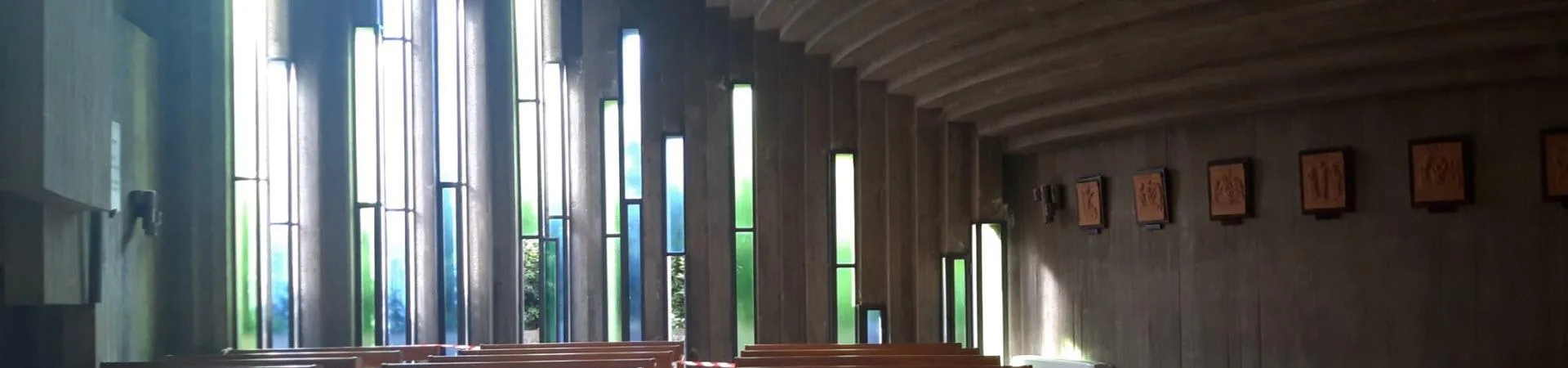
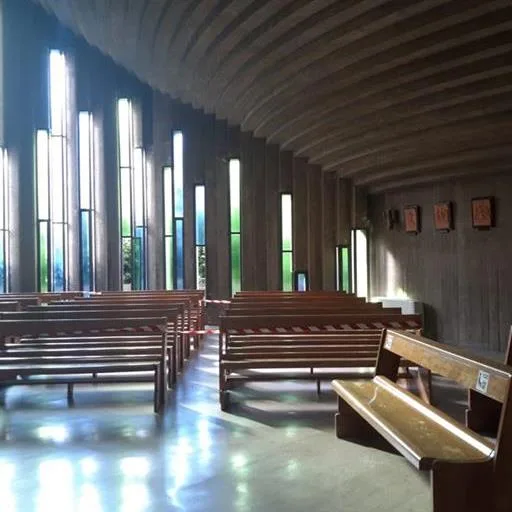
The interior, illuminated by beautiful stained glass(green-blue and yellow-white) combines a first impression of traditional church, withroofingandbell tower, with the centrality of the main altar, typical of the new Conciliar church, made of assembly dialogue.
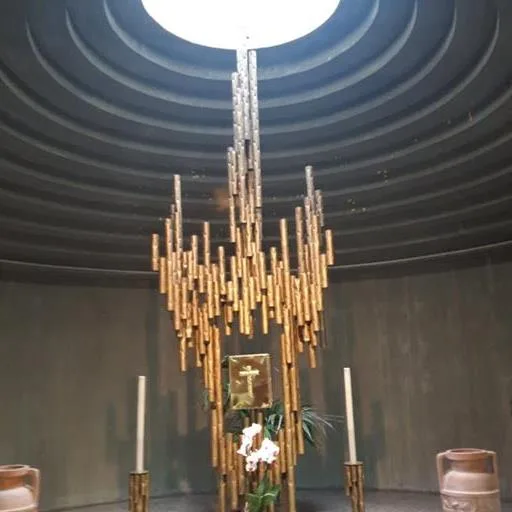
Onesculpture by Mario Siniscalcoin brass, embellishes the chapel of the tabernacle.
Monday | : | : | |
Tuesday | : | : | |
Wednesday | : | : | |
Thursday | : | : | |
Friday | : | : | |
Saturday | : | : | |
Sunday | : | : |