• Home
  • Salerno
    • History of Salerno
    • Historical Figures
    • Traditions
    • Food and Wine
    • Mobility in Salerno
    • Places Nearby
    • Useful Links
  • Events
    • Find an Event
    • Artist Lights
    • Must-see events 2026
  • Explore places
    • Itineraries
    • Verdi Theater
      • Theater Home
      • The season 2026
    • Cultural Venues and Theatres
    • Churches and Monasteries
    • Palaces and Squares
    • Museums and Archaeology
    • Gardens and Parks
    • Modern Architecture
  • News
  • English
    • English
    • Italiano
    • Français
Salerno Cultura -
  • Home
  • Salerno
    • History of Salerno
    • Historical Figures
    • Traditions
    • Food and Wine
    • Mobility in Salerno
    • Places Nearby
    • Useful Links
  • Events
    • Find an Event
    • Artist Lights
    • Must-see events 2026
  • Explore places
    • Itineraries
    • Verdi Theater
      • Theater Home
      • The season 2026
    • Cultural Venues and Theatres
    • Churches and Monasteries
    • Palaces and Squares
    • Museums and Archaeology
    • Gardens and Parks
    • Modern Architecture
  • News
  • English
    • English
    • Italiano
    • Français
Salerno Cultura -
  1. Home
  2. Storia di Salerno
  3. Steps
  4. The Guiscardo and the Siege of Salerno

The Guiscardo and the Siege of Salerno


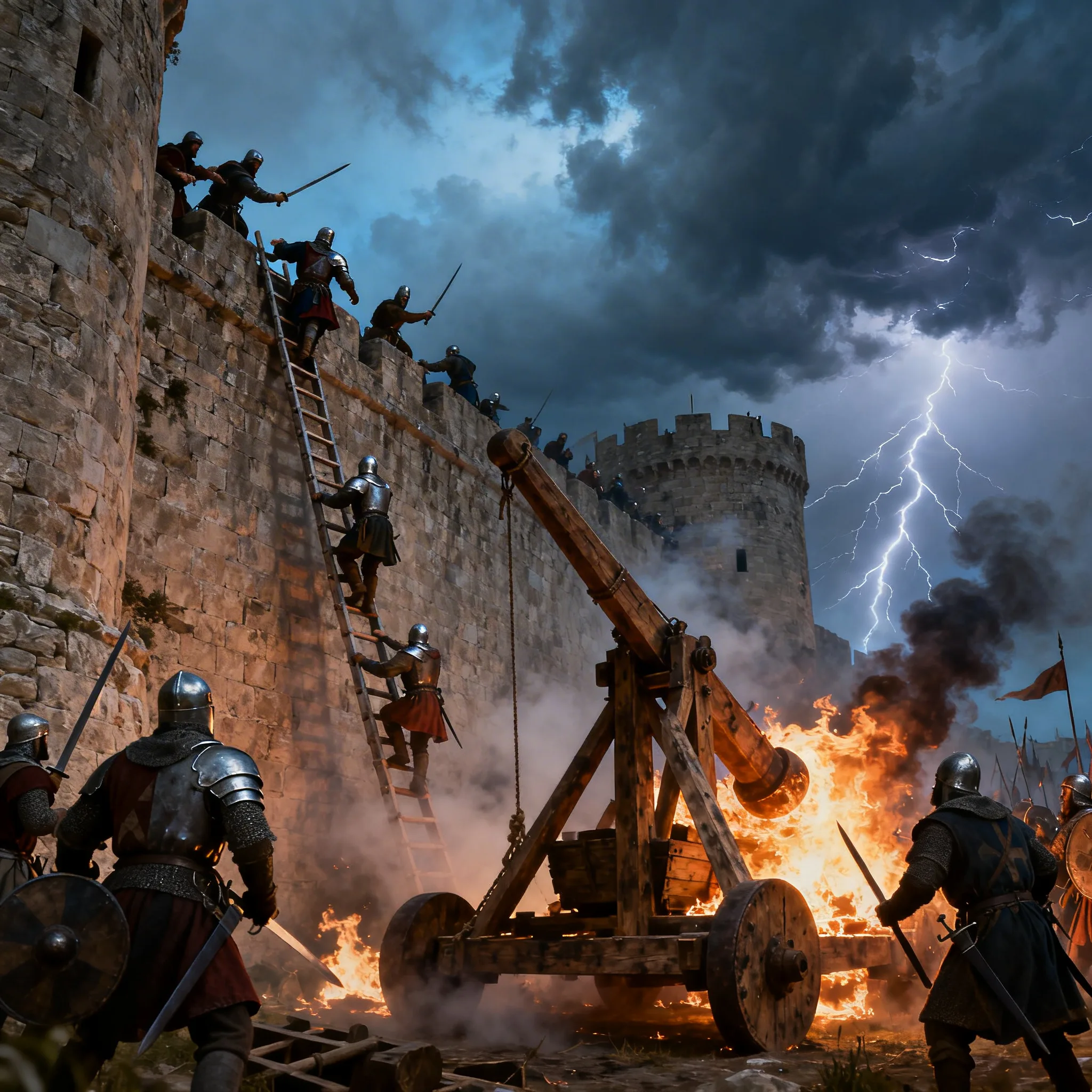
The Guiscardo siege Salerno, conquest to the brother-in-law Gisulfo and the spear in its most beautiful period.


Salerno was governed by the Lombard princes for four centuries, now the most barbaric among the barbarians – as they were defined – were refined and were the heirs of Roman culture. Earning had extended its domain to much of the South and had laid the foundations of the “Opulenta Salernum”.

The son Gisulph II He had succeeded, after a hand in which the Prince had been murdered.

But Gisulph was not at the height of his father, and in the midday they were now affirming newcomers, the terrible and valiant Normans. Among these,Roberto said the Guiscardo, that is the ardent, formidable warrior and skillful politician. With the reluctance of Gisulfo, the sisterSichelgashe was married to Roberto, who had already a Norman wife, who was repudiated. So the new power joined the Lombard nobles, but the conflicts instead of assopirsi increased.


The ambitions and military capabilities of Guiscardo were boundless: he fought, always victorious, with the Byzantines in Apulia, sent his brother to Sicily to expel the Arabs, he also came to invade the Byzantine Empire by siege the same Byzantium.

Salerno could not stay out of his mires, driven in this also by his wife. It was so that the city was besieged, with Gisulph who locked himself in the walls, despite the attempts of his sister who asked him to surrender. The long siege was interrupted by an internal treason, which brought the army into the city, and Gisulph retired to the unpretentious castle, until he was persuaded to surrender and, in exchange for his life, he was expatriated and fled to Rome.


Salerno therefore became capital of the Norman domain, and Roberto built the new palace, known asCastel Terracena,

he built the beautifulCathedral dedicated to San Matteo, whose precious relics were preserved in the city for over a century.

With theAbate AlfanoThe Medical School was relaunched, which reached its maximum splendor, the city became a very important place of traffic, and also hosted Pope Gregory VII who died here and was buried. It seemed the beginning of a new era in which Salerno, the capital of the whole Mezzogiorno. But Robert died, and the Normans conquered Sicily and established a kingdom that will last eight hundred years.


The capital will become Palermo and Salerno will begin a constant decline.

Comune di Salerno
Via Roma – Palazzo di Città, 84121 Salerno
C.F. 80000330656 P.IVA 00263650657

Email:
cultura@comune.salerno.it

Reporting service disruptions on the portal:
utd@pec.comune.salerno.it

Explore Places

  • Itineraries
  • Cultural Venues and TheatresCultural venues and theatres in Salerno enliven the city’s artistic life with a dense network of historic halls and contemporary spaces dedicated to theatre, cinema, music and performing arts. From the Municipal Theatre Giuseppe Verdi and the Cinema Teatro Augusteo to the Teatro Ghirelli, Sala Pasolini and neighbourhood theatres such as Teatro delle Arti, Piccolo Teatro del Giullare and Teatro Nuovo, these spaces host seasons, festivals, workshops and projects that make culture accessible to residents and visitors all year round.
  • Churches and MonasteriesThe churches and monasteries of Salerno preserve the spiritual and historical heart of the city, especially in the old town centre, where monumental buildings and more intimate spaces tell centuries of faith and art. From the Cathedral of San Matteo to the monastic complexes of San Benedetto, Santa Sofia and San Giorgio, a journey through these sites crosses different eras — from medieval and baroque architecture to spaces now repurposed for culture — keeping alive the connection with the religious roots of the territory.
  • Palaces and SquaresPalaces and squares in Salerno form a vibrant urban fabric, where noble residences, historical archives and monumental spaces recount the city’s civil and social evolution from the Middle Ages to the twentieth century. From Piazza Portanova and Largo Campo to Piazza Abate Conforti, from Palazzo Fruscione to the City Hall and the many historic buildings along Via dei Mercanti and in the Duomo district, every corner offers evocative architectural settings that combine history, everyday life and the symbolic places of the Salerno community.
  • Museums and ArchaeologyMuseums and archaeology in Salerno recount the thousand-year history of the territory through artefacts spanning from prehistory to the Roman era, housed in a network of institutions spread across the city. From the Provincial Archaeological Museum, hosted in the former monastery of San Benedetto and dominated by the famous bronze head of Apollo, to civic and diocesan museums and the routes dedicated to the Etruscan-Samnite sites of Fratte, each exhibition offers an immersive journey through everyday objects, funerary goods, sculptures and the evidence of ancient civilisations in the Salerno area.
  • Gardens and ParksGardens and parks in Salerno offer a widespread network of green areas stretching across the entire city — from historic gardens to large urban parks — creating spaces for relaxation and socialising just steps from the sea. From the Parco del Mercatello to the Parco del Seminario, from the Parco dell’Irno to the gardens of the eastern district and the Giardino della Minerva, these places combine nature, outdoor sports and cultural events, enhancing the urban landscape and making the city more liveable in every season.
  • Modern ArchitectureModern architecture in Salerno reshapes the relationship between the city and the sea with iconic buildings and open public spaces, transforming the waterfront into a new contemporary urban hub. From the Crescent and Piazza della Libertà to Zaha Hadid’s maritime station, the Santa Teresa seafront and the Cittadella Giudiziaria, a dynamic architectural landscape emerges — one of fluid lines, essential volumes and sea-facing squares designed for the social and cultural life of the city.

Events

  • Concerts
  • Dance
  • Exhibitions
  • Fairs
  • Festivals & Series
  • Music
  • Opera
  • Festivals & Series
  • Theatre

Salerno

  • Historical Figures
  • Food and Wine
  • Mobility in Salerno
  • Places Nearby
  • Useful Links

© 2026 Comune di Salerno – All rights reserved

  • Credits
  • Privacy Policy
  • Cookie Policy