
'/%3E%3C/svg%3E)


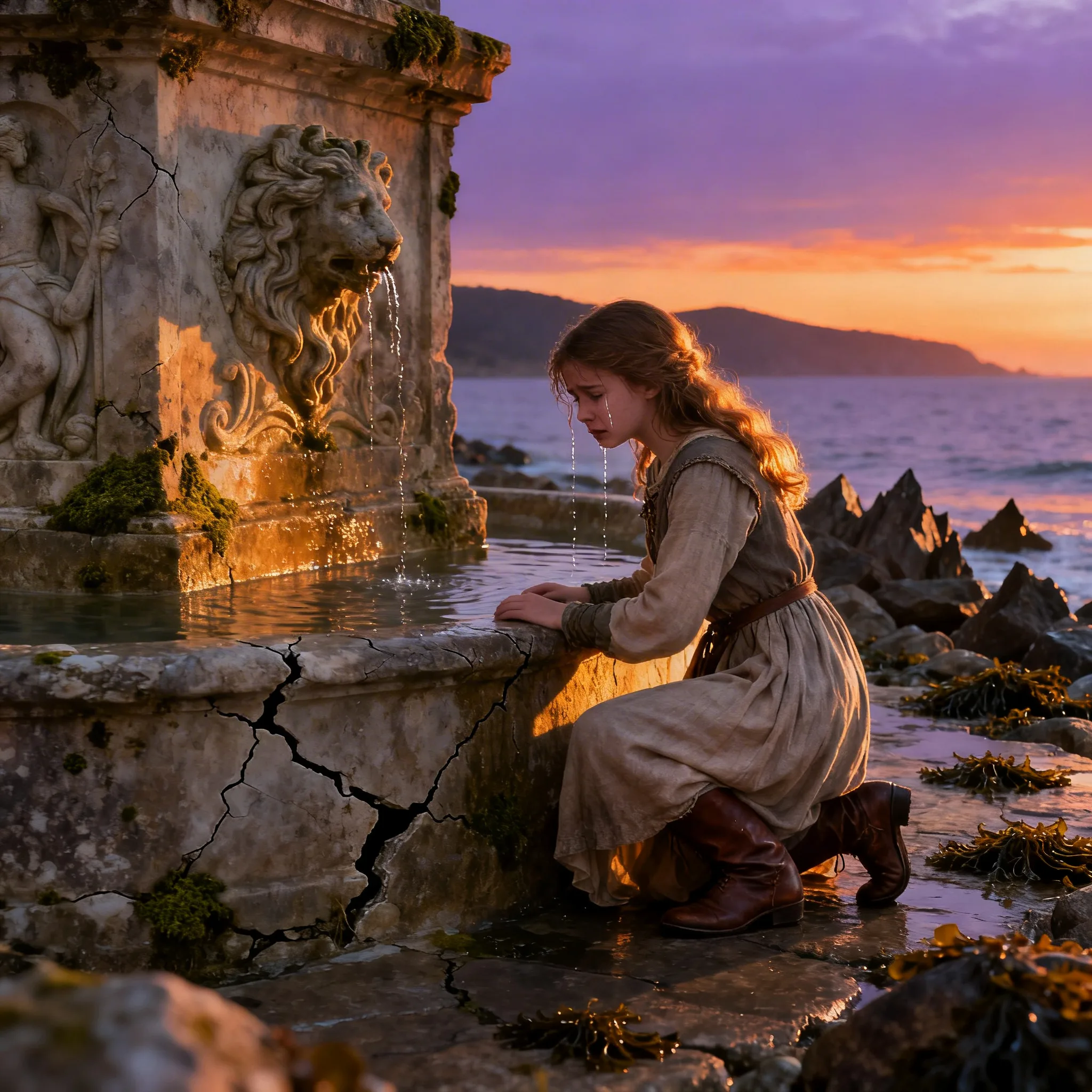
Among suicide sirens, brothers who recognize themselves in the point of death, beautiful girls who cry tears of love, the legends that take place in Salerno are many and painful.
Salerno is a mythical city, rich in legends throughout its history. We have told elsewhere the story of the Wizard Barliario, a historical and legendary character together, and that of the foundation of the Medical School by the four doctors from every corner of the world. But we see other Salento legends.
The foundation
Salerno, a noble city, inevitably has noble origins. The stories about his foundation are many, all beautiful.
The Gulf, first of all, is dedicated to the Sirens, two of which, have marked its borders. The sirens lived on the islets of the Galli, also called Sirenuse, and with their song, as Homer tells, they loved the navigators, who lost control of the ships and naufragavano. Ulysses, having tied himself to the ship’s tree, and stopping the ears of his men, managed to listen to their wonderful song, and to escape evil, and the Sirens, desperate for defeat, let themselves die on the beach. The first, Leucosia, settled in Punta Licosa, the southern peninsula of the Gulf of Salerno, the second, Ligea, at the end of the Sorrento Peninsula, northern part of the Gulf of Salerno. The third, Partenope, on the beach where Naples will rise, the city dedicated to her. The Gulf of Salerno was marked by the beautiful and cruel Sirene. But the foundation of Salerno is linked, from several legendary sources, to the patriarch Noah. The name of the city, according to some, is in fact linked to Queen Elerna, daughter of the builder of the ark. According to others, even to found it was Sem, one of the three sons, or even Sale, son of Sem, founder of other fourteen cities, all beginning with the letter S. It is certain that the area of Salerno has been a crossroads of more stories and more peoples, because here the Etruscans settled, who had the southern border of their expansion, in relation to the Plane of the Sele with the Greeks, who lived in Poseidonia- Paestum. And here they pressed the Lucani and the Osci, pre-Roman Italian populations. Salerno is, therefore, a crossroads of traditions and peoples since the legendary prehistory.
The two brothers
One day in the sea of Salerno appeared a fleet of thousand Saracen ships. The landed people fled into the city walls, and began a fierce siege. The war lasted for a year and Prince Guaiferius, unable to endure the siege that sowed death, misery, disease, proposed that a duel between the strongest Saracen and the champion of the Salernitans close hostilities. The two chosen knights were Count Umfredo of the Landolfi for the Salernitans and Prince Rajan for the Saracens. From the gate of the sea came out, beautiful in his armor, Umfredo, who, riding a white horse, made the tour of the walls, shouting his challenge to the Saracen. In response, Rajan appeared, in the rump to his black horse, challenging him and the climbers who had appeared at the top of the walls to see the duel. The two knights ran and fought with spears, then with swords, first on horseback and then, wounded and tired, on the ground. In the foga of the fight they arrived, between chases and escapes, until Vietri. Here the fight continued wild, with the two knights now hurled to each other, dispossessed of weapons and bleeding, but decided not to give in to each other. At sunset they were now exhausted and each other leaned on two rocks that arrived almost to the beach, the last field of the duel. At the time of abandonment, Rajan saw a coat of arms on the bare chest of the Christian knight, the same one he also carried. Who see my eyes, Umfredo, the coat of arms of my family, we are brothers! As it is possible, do not offend me, I am your enemy! But yes, my father for the rest of his life searched for a son who had been kidnapped by pirates, a son who bore his family’s coat of arms. And I hurt you to death, brother, forgive me. And you forgive me, brother, that only at the point of death I knew. Goodbye. And the two brothers slipped into the water, dead, trying to embrace. Since then the two rocks in front of the beach of Vietri are known as the Two Brothers.
The history of “The poor Enrico”
The beautiful story of “The poor Enrico”, also known as “Leggenda Aurea”, has been told several times and for many centuries. It testifies how, where medical science cannot, it comes to heal the mystery of the Faith. This is the legend of poor Henry according to Henry Wadsworth Longfellow. A young German prince became sick of the horrible evil of leprosy and no cure could heal him. One night, as he suffered as usual, Satan appeared to him, under the guise of a wrong doctor, and said to him: “There is only one way to heal: obey the Masters of the Salernitana Medical School. You have to undergo a special care: wash your wounds with the blood of a virgin who will have to sacrifice for love.” The news of this terrible cure was heard throughout the Kingdom, and a beautiful and noble maiden named Elsie, presented himself at the Palace. Full of love for the young Henry, he offered his life for healing. But the prince did not want to accept his sacrifice and decided to take a trip to Salerno, to learn directly from the School the way to heal. Arrived in Salerno with his entourage, the prince went to the Chapel of Palazzo and entered there at the time when he was giving his degree to a new doctor in medicine. The young graduate was in front of the Almo Collegio Medico, chaired by the Prior, and was holding the dispute with the elderly doctors. At the end of the ceremony the young man was given a book on which he vowed to follow the rule and the ancient formulas of the School, to visit the poor sick twice a day and once the night and not to take from them any compensation. After the solemn oath, the Prior, followed by the High College, descended from the podium and stood before the young man still kneeling. Once invited to stand, he infiltrated his right hand the doctoral ring, kissing it on his forehead. Then the Prior, wrapped in the purpure toga, embroidered in gold and silver, with a coat of hermill on his shoulders, proclaimed him doctor. Prince Henry and his sequel were impressed and moved by that scene and before speaking to the doctors, they went to where they were even more surprised by the grandeur and beauty of the temple. When they arrived in the Crypt they kneeled before the relics of St. Matthew and here is the miracle! The prince rose up and smiled: on his face the signs of evil had disappeared. Henry, grateful, raised rich gifts to the Cathedral; then he wanted to marry on that miraculous altar his beloved Elsie and could return happy to his kingdom.
The beautiful Antonella
Near the Convent of San Benedetto there is a fountain, the fountain of the beautiful Antonella, dear to all children in love. The beautiful Antonella was an eye of the Queen Margherita of Durazzo, who lived in the beautiful palace near San Benedetto. There the girl met with the beloved Raimondo, a nobleman at the service of King Ladislao. Love could not be satisfied by the difference in rank of the two lovers, and the king sent Raymond to war, where he covered himself with honors. Returned from the war, the king granted the noble Raymond to marry his Antonella, who had been locked up in the Convent of San Michele. But in his place the wicked sister came. Only when, two years later, Regina Margherita fell ill of plague and wanted Antonella to his side immediately discovered the deception of the cruel sister, revealing it to Raimondo. The beloved was still locked in San Michele, but she was also sick. Raimondo only had the time to greet her and see her die, and then escape, mad at pain, in the Valle dell’Irno, where her love laments still lie. And the fountain still cries Antonella’s love tears, dedicated to all children in love with Salerno.