The Palazzo della Provincia, in a beautiful position in front of the sea, is the first town building built with modern culture on a project by the engineer Grasso in the early nineteenth century. But the building, which even in modern times has undergone a series of renovations and extensions – like the clock tower that is at the end of the nineteenth century – is located on a monastery dedicated to Saint Augustine
, built in 1400. Then the building gave on the beach and insisted on the city walls, and right on the beach in front of it was miraculously found in 1453 the so-called painted table of Our Lady of Constantinople, a painting considered miraculous and connected to popular devotion.
The line of the stable facing the sea – the entrance of the monastery was on the opposite side – highlights a sober symmetry set above the axis of the gate with four balconies for each side. 19th century paintings and then numerous vintage photos depict the palace that was considered the centerpiece of the new city. Inside are preserved some fine paintings ranging from the fifteenth to the eighteenth century.
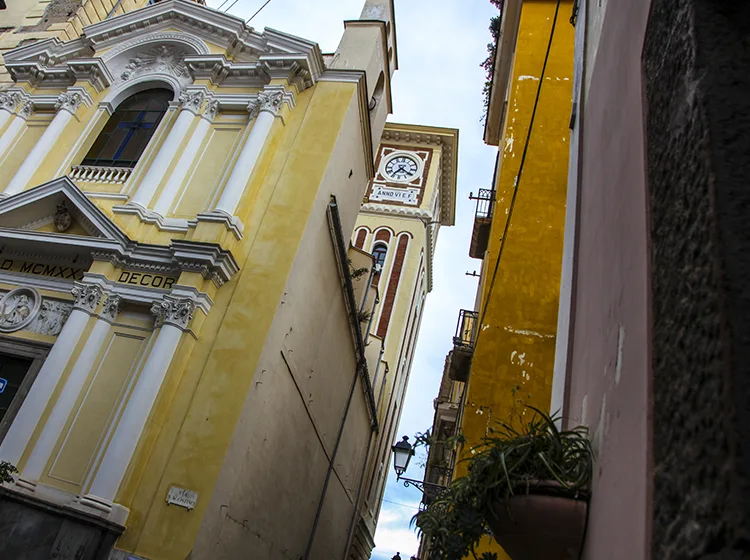
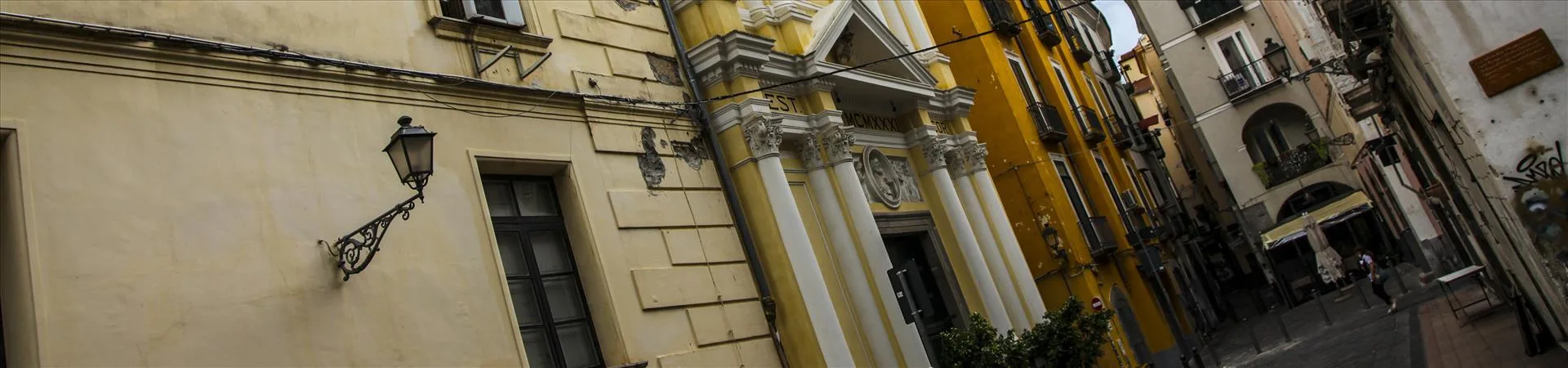
The Church of St. Augustine, which gives on the side of the square originally entered the convent, is of late 17th century plant, but it is of course of origin of the fifteenth century, and in it takes place an episode of a novella of Masuccio Salernitano, the major novelist of the fifteenth Italian.
Inside the Church, in addition to the table of Our Lady of Constantinople (actually Western plant) of the fourteenth century, there are other valuable works of art, including a beautiful wooden Crucifix of the fifteenth century.


 Salerno angioina-aragonese Artistic Historic