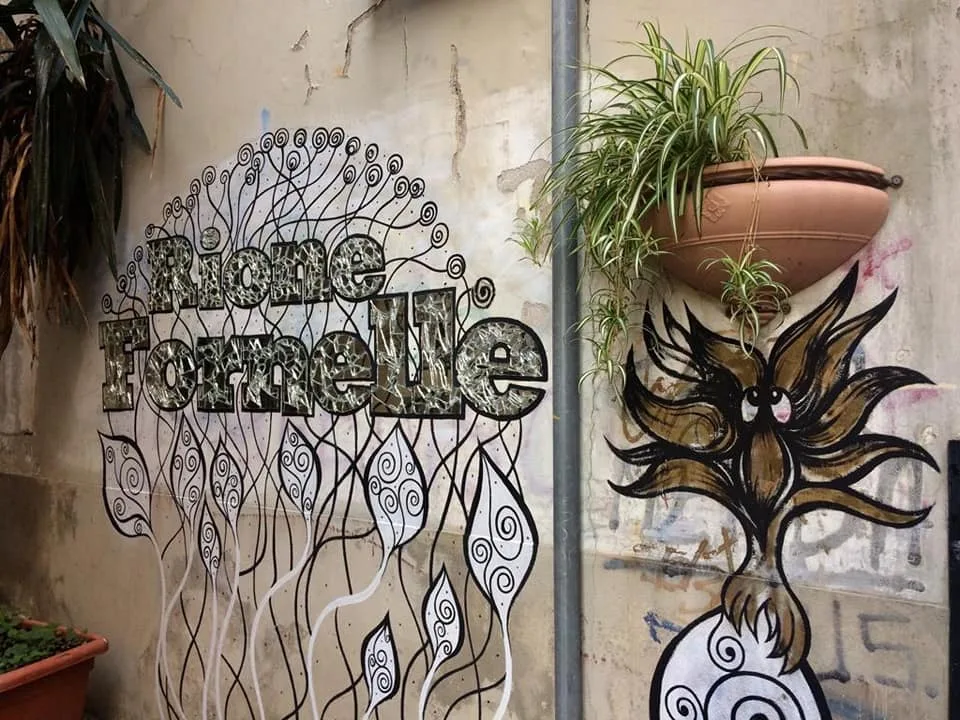
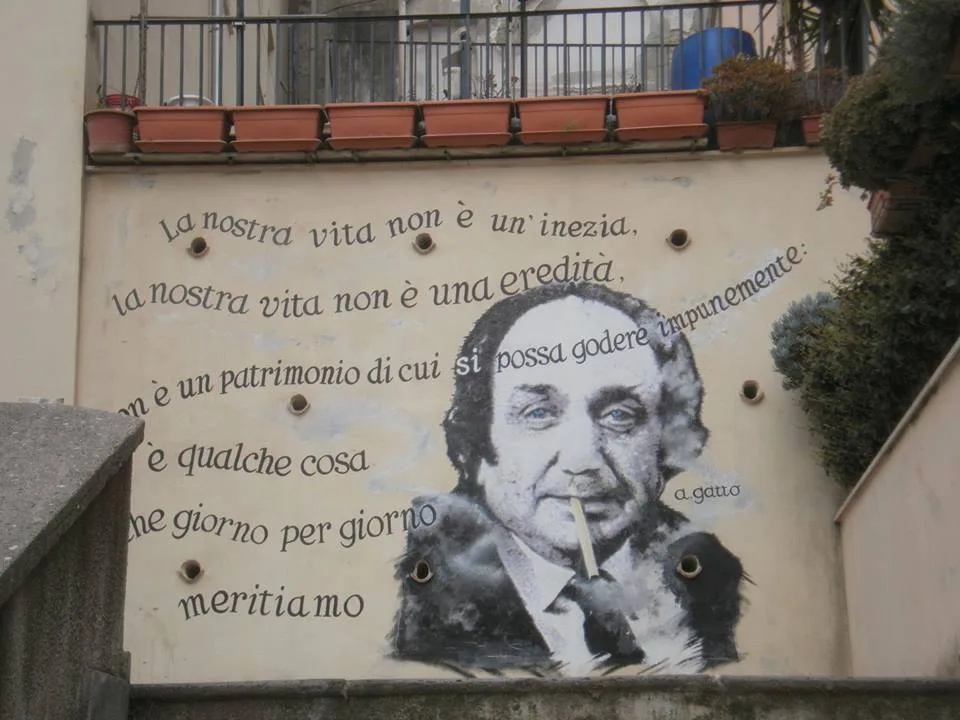
The Fornelle district is a unique enclave in Salerno’s historic center and an outstanding example of cultural regeneration through street art. It is the neighborhood where Alfonso Gatto was born and raised, the poet who shaped the city’s cultural life in the post‑war years and to whom this regeneration project is dedicated.
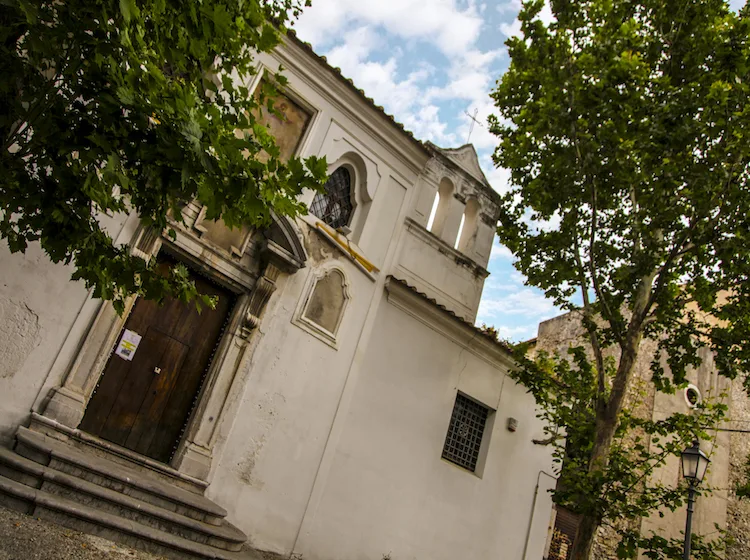
But let us start from the beginning. The Fornelle quarter originated in the 9th century, when people from Amalfi were moved here – in truth, deported – by the Lombard prince Sicard. The neighborhood developed around the Church of Santa Trofimena, the patron saint of Minori. Its name probably comes from the kilns that the Amalfitans built for producing ceramics, of which they were renowned makers.
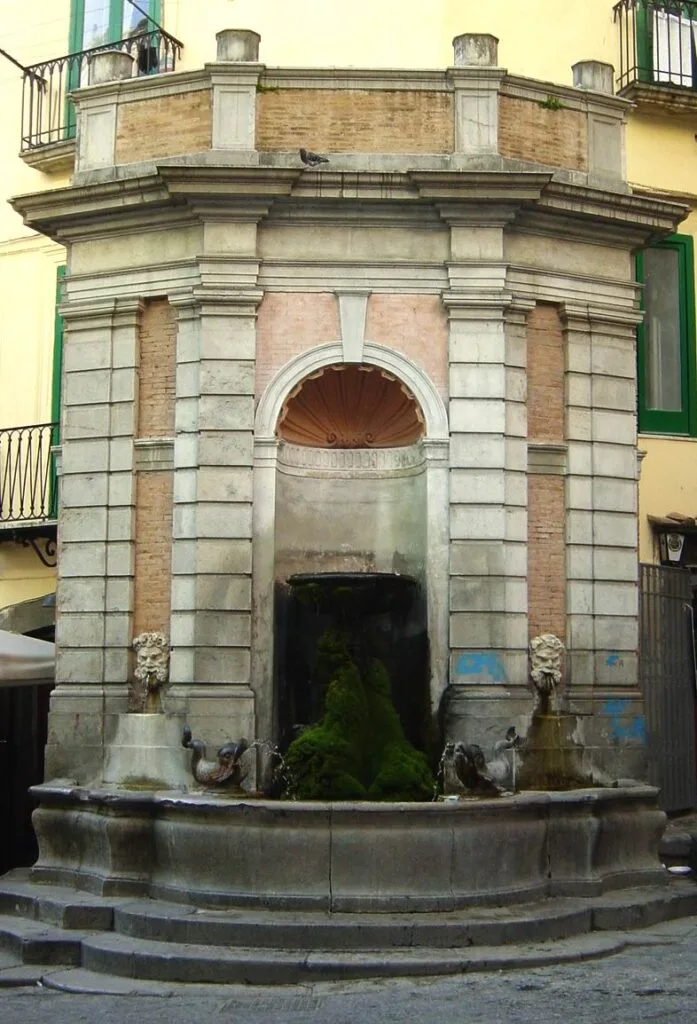
The district has a very long history and is tucked away from the main streets of the historic center, so much so that many residents of Salerno have never set foot there. At its heart lies Matteo d’Aiello Square with the Fornelle Fountain (17th century). The entire area was devastated by the disastrous flood of 1954, so today twentieth‑century public housing stands side by side with buildings erected a thousand years earlier.
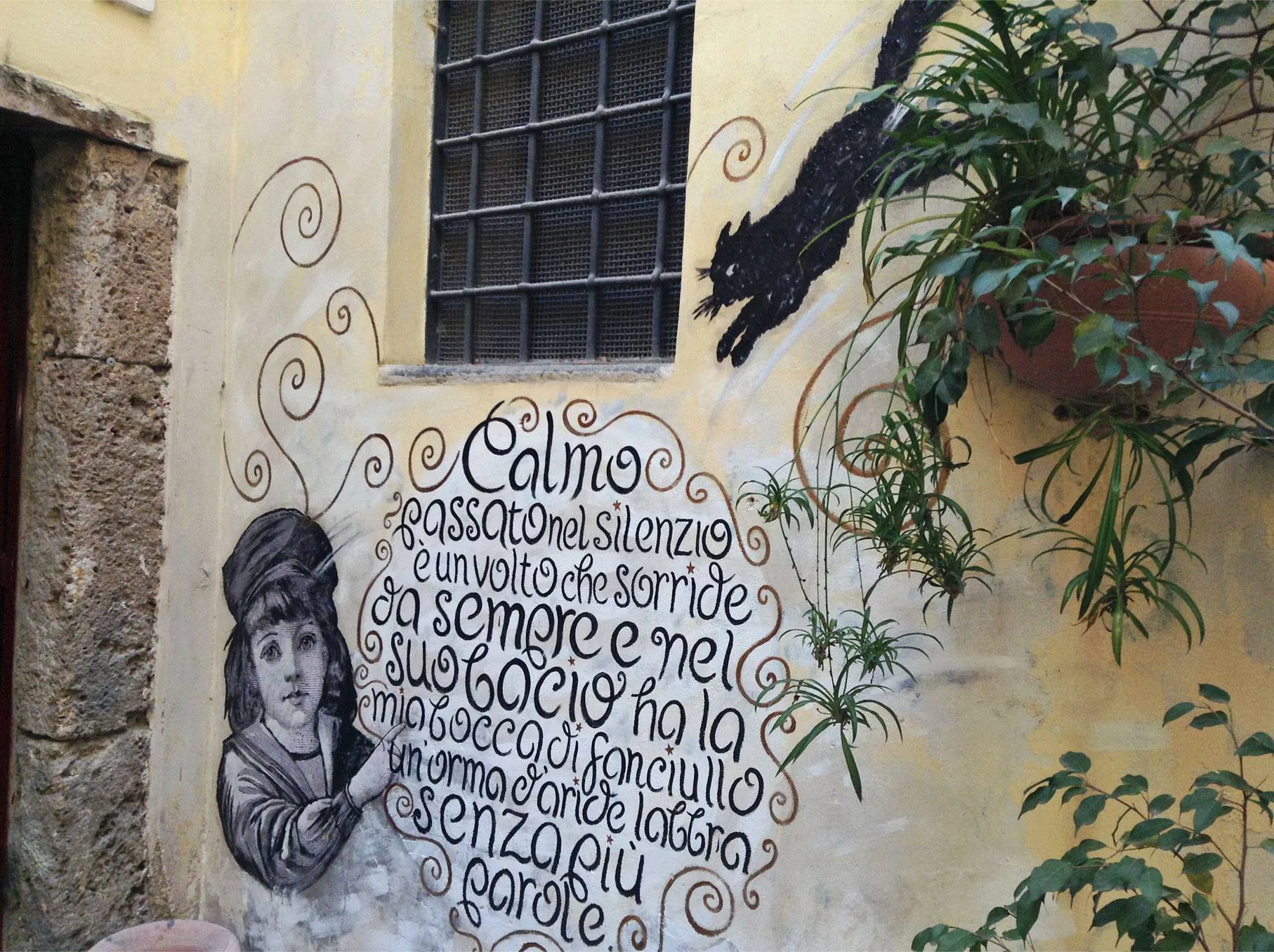
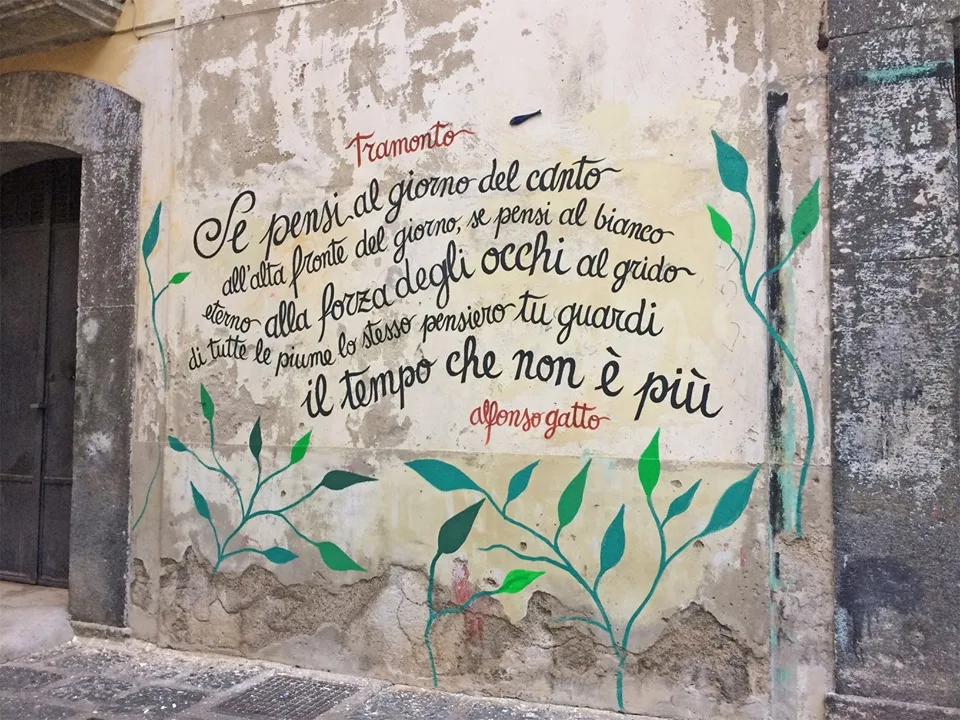
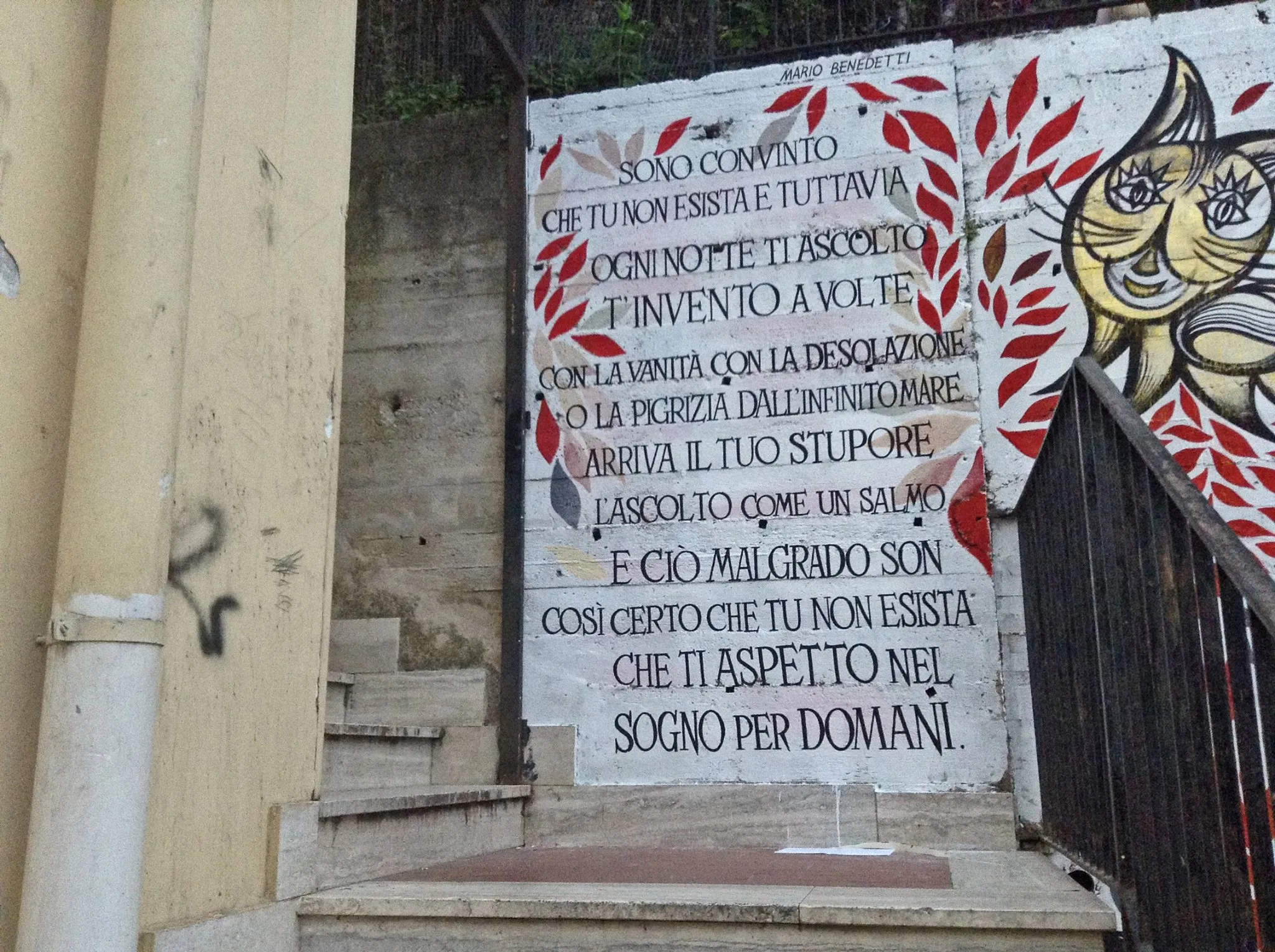
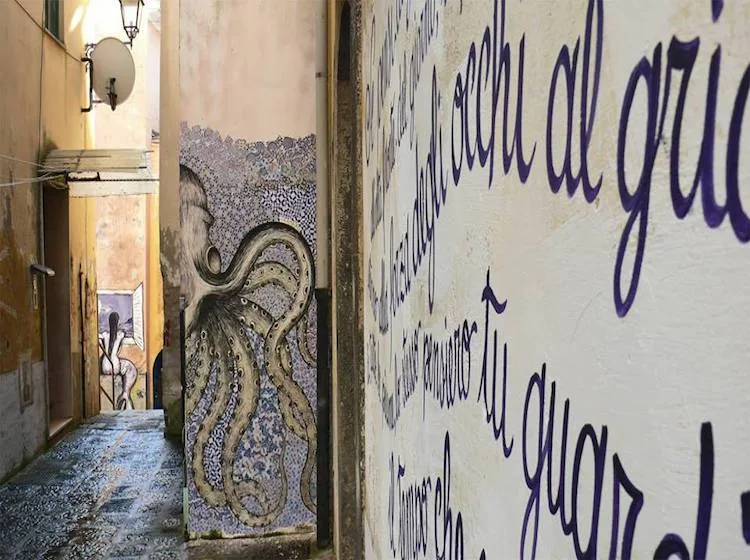
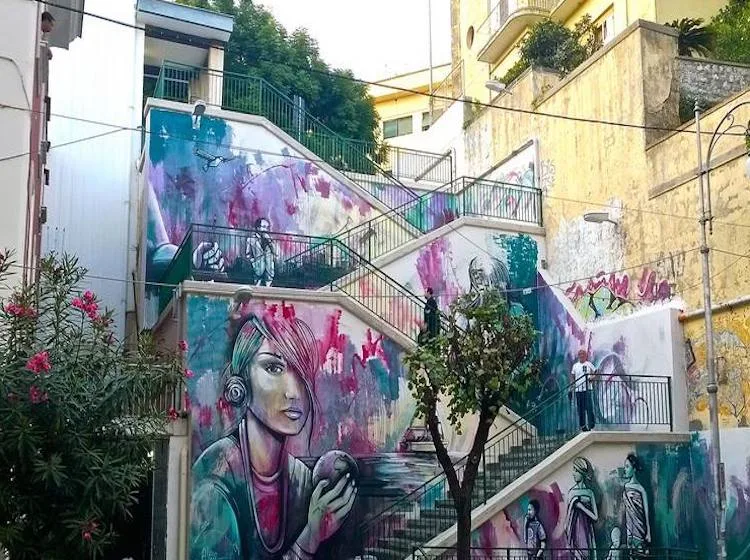
In this district, the very soul of old Salerno, a project called ‘Muri d’autore’ (Author’s Walls) was launched in 2014 to restore the bond between Alfonso Gatto and his city and to carry out a street‑art intervention that would revitalize the whole area. The project actually began with a mural outside the district, a work by GreenPino (the artist Pino Rescigno) on the steps of the Mutilati quarter. The intervention then focused on the walls of the Fornelle, creating an open‑air museum with works by various artists. The project was coordinated by the poet Valeriano Forte and the artist Pino Roscigno, known as GreenPino, under the patronage of the Alfonso Gatto Foundation, directed by Filippo Trotta, the poet’s grandson.
Murals, poems drawn on the walls, the use of local dialect, references to the sea, and portraits of artists such as Pino Daniele, Totò, and Massimo Troisi make this a comprehensive intervention that has worked on local identity and now also attracts many visitors.
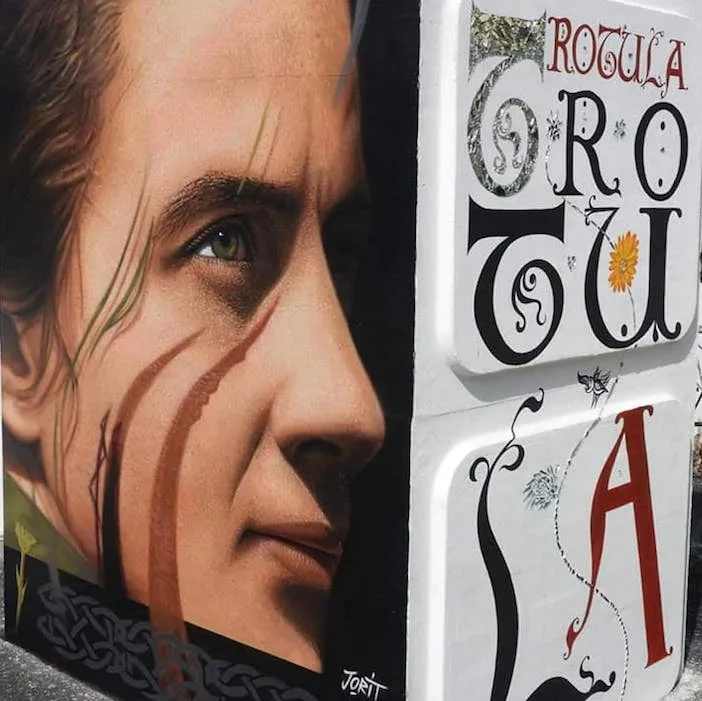
However, the ambitions of those behind the project go beyond the district itself. As mentioned, works have been created in other parts of the city, in the historic center (for example in Vicolo della Neve, home to a historic pizzeria once frequented by Alfonso Gatto), as well as in the most striking intervention: an ideal portrait of Trotula de Ruggiero painted by the Neapolitan artist Jorit in a car park near the railway station. This shows how art can spread throughout the entire city.