


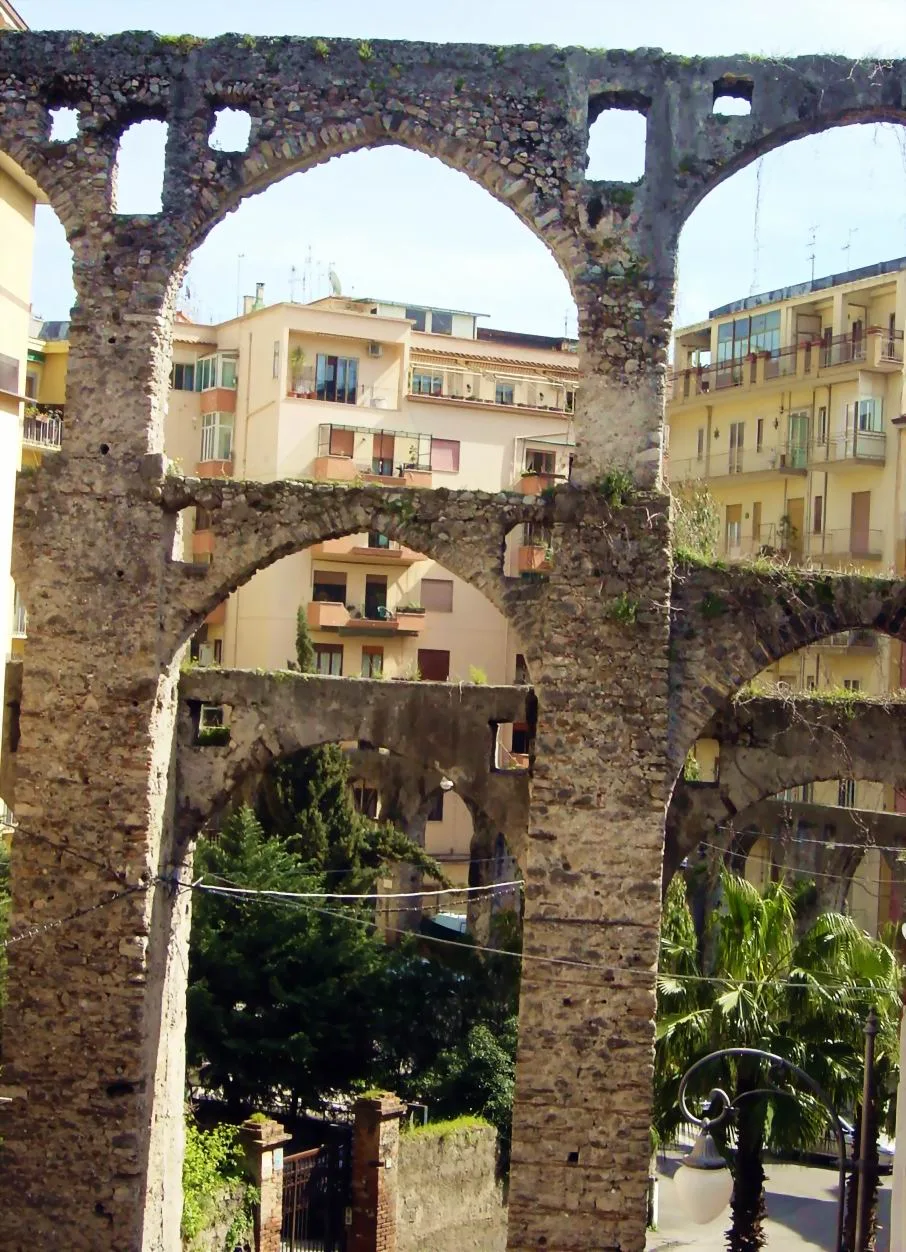
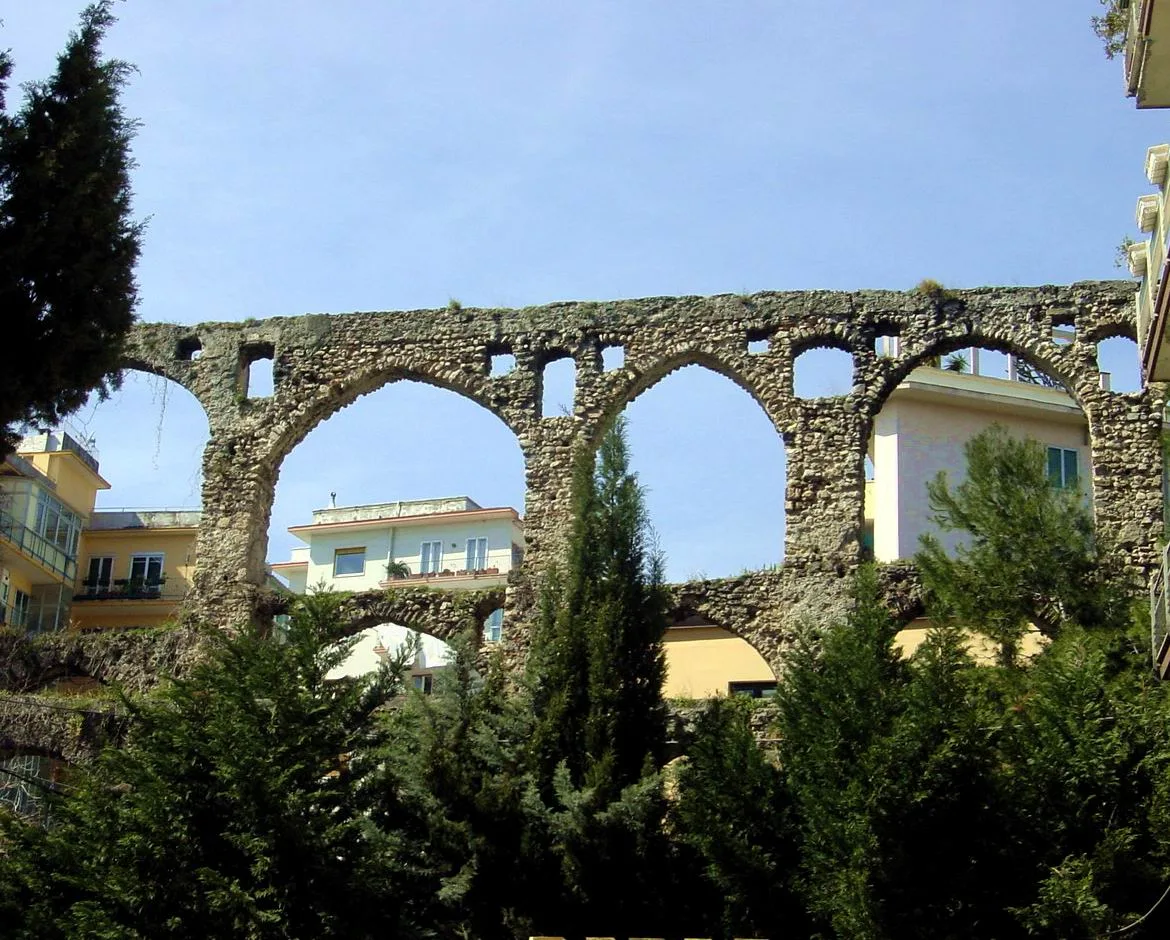
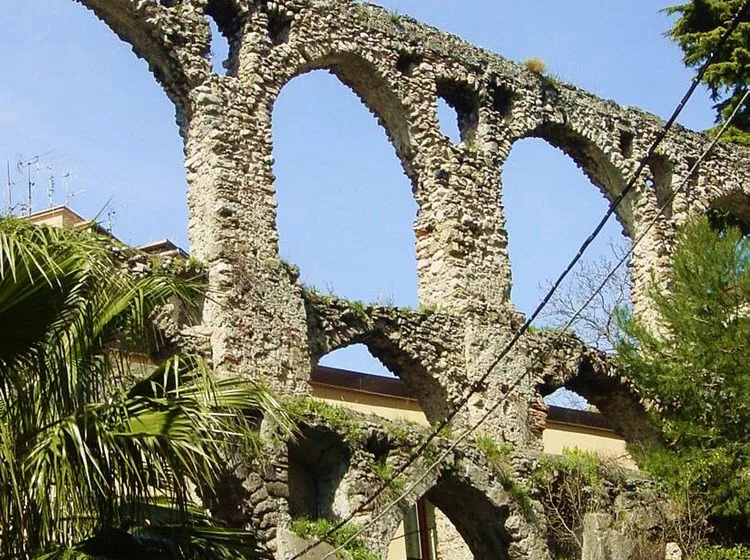
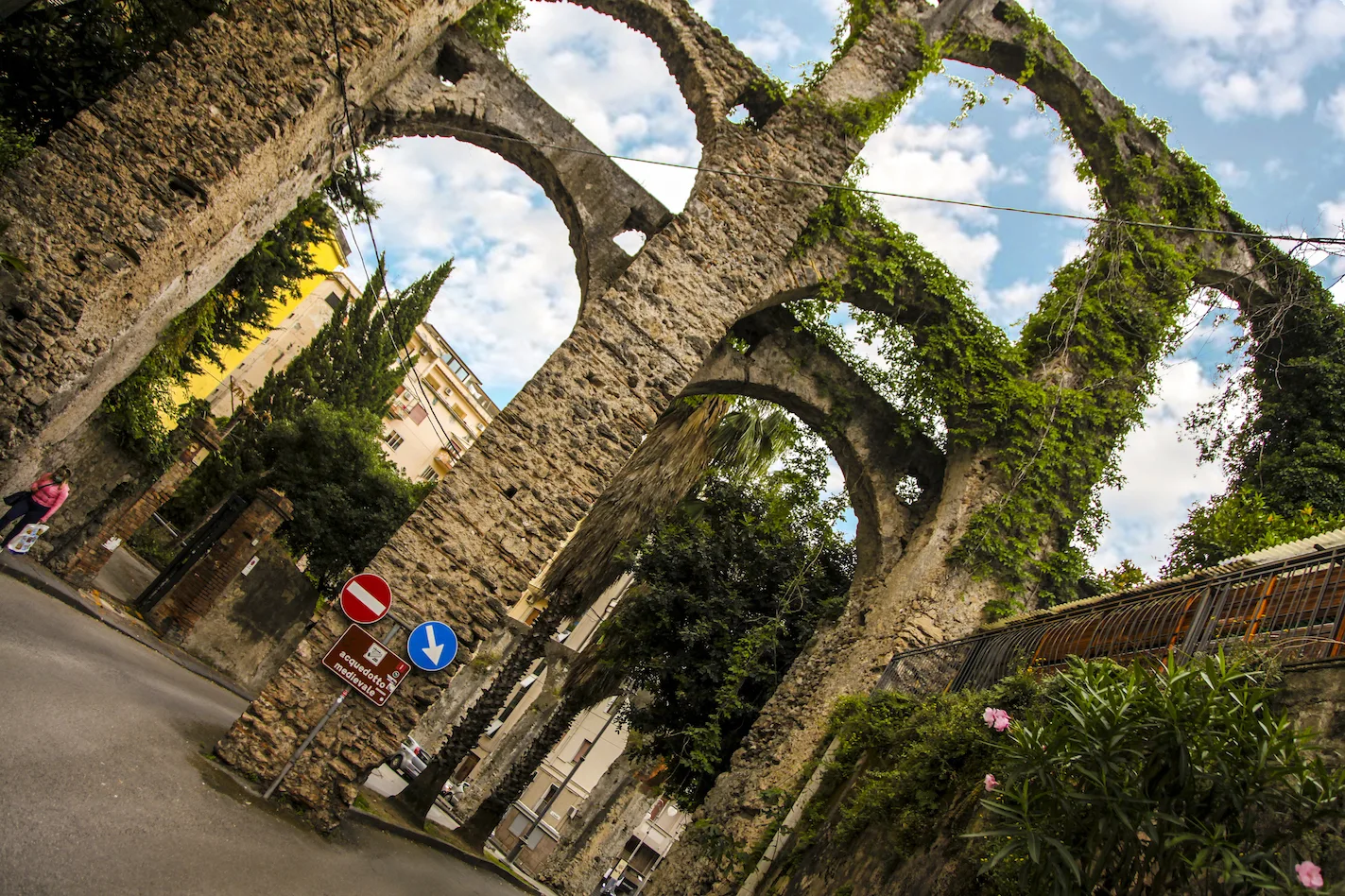
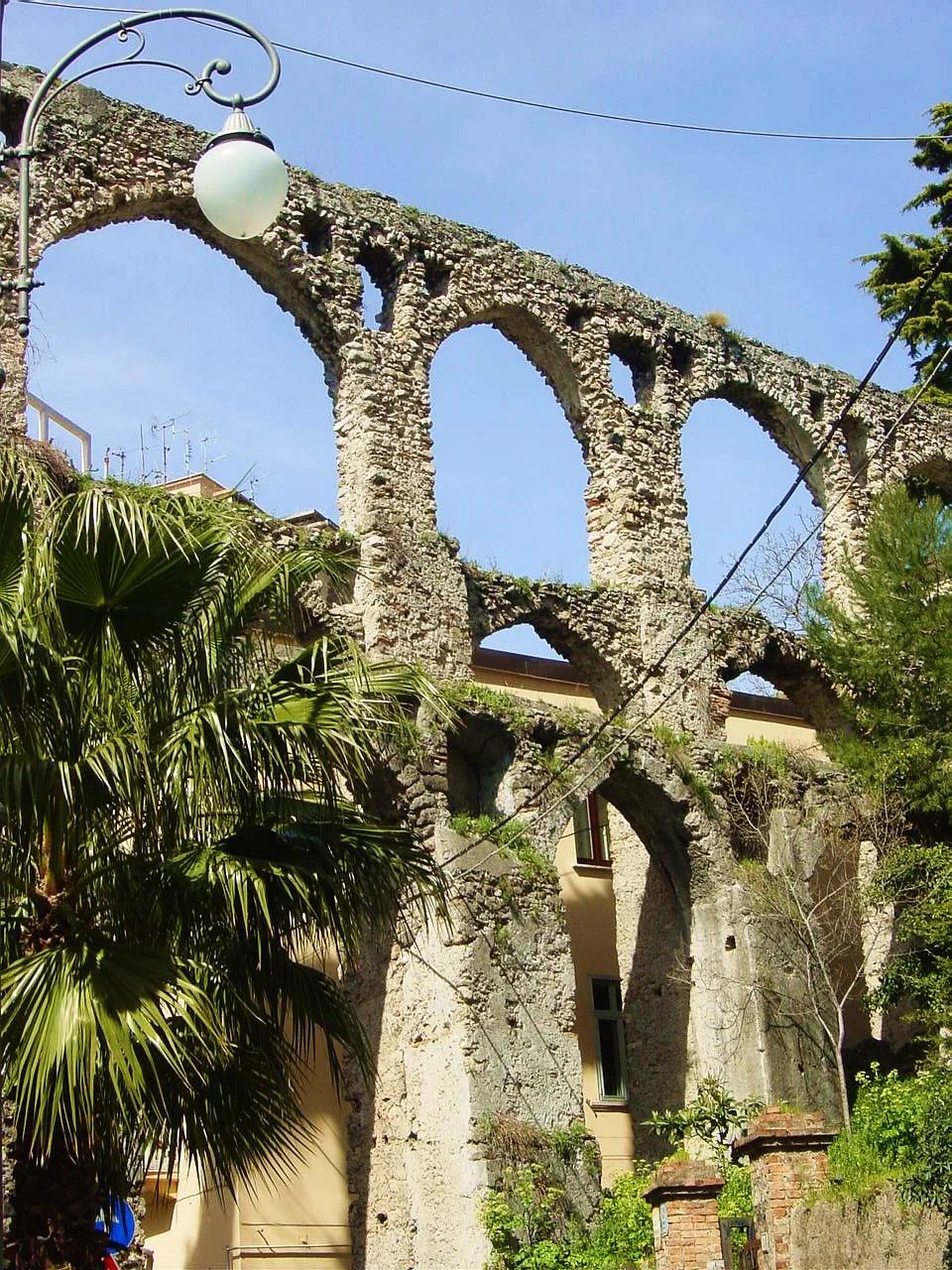
The Bridges of the Devil, so is said by tradition the Medieval Aqueduct, whose arches are among the symbols of Salerno.

Medieval aqueduct
- Description
- Event
- News
- Gallery
- Contacts
- Map
- Opening hours
- Itineraries
Via Arce was formerly bordered by a walls and was part of a fortified area, in use until the early Middle Ages.At the nearby via Velia flows the stream Faustino (Rafastia), which dried up had caused rise of the soil. The latter well adapted to the defence of the territory, against the assaults of enemies, who wanted to invade the city on that side of the wall. The fortified complex, built on the plateau (called della Torretta) included the current San Benedetto, Mutilati and Fieravecchia districts up to the former Malta square.
Today on this street it is interesting to see what remains of the majesticMedieval aqueduct, which brought water from the hills north of the city toMonastery of San Benedetto. The bridge was built in the 10th century by the Benedictine monks. Tradition tells that this aqueduct, called “the Bridges of the Devil”, was built by the Salernitan wizardBerlida, in a single stormy night, helped by evil forces.
At the end of Via Arce is locatedPiazza Portarotese. On the eastern edge of ancient Salerno, in this area there was the homonymous door, from which the road that communicated the city with Sanseverino Rota (from which Rotese). In Roman times near Portarotese, perhaps on the side of the currentChurchof the Holy Mountain of the Dead, the Circus was placed. Today the area is devoid of ancient monuments, wiped out by the work of urbanization.
In the upper part of Portarotese, near the ancient eastern walls of the city, it stretchesSant’Eremita. The ring is named because in a cave dug in the hill behind it, it housed St. William, who had been greeted in Salerno with great affection by Ruggero II, who wanted to host the saint in the splendorCastel Terracena.
After the Roman period in this area many sacred buildings such as theConvent of Santa Maria della Consolazione, which incorporates an ancient church with a slender and small bell tower and which was very important in the monastic life, because it is the provincial seat.
Loading…
always open
Nessun itinerario disponibile.