'/%3E%3C/svg%3E)


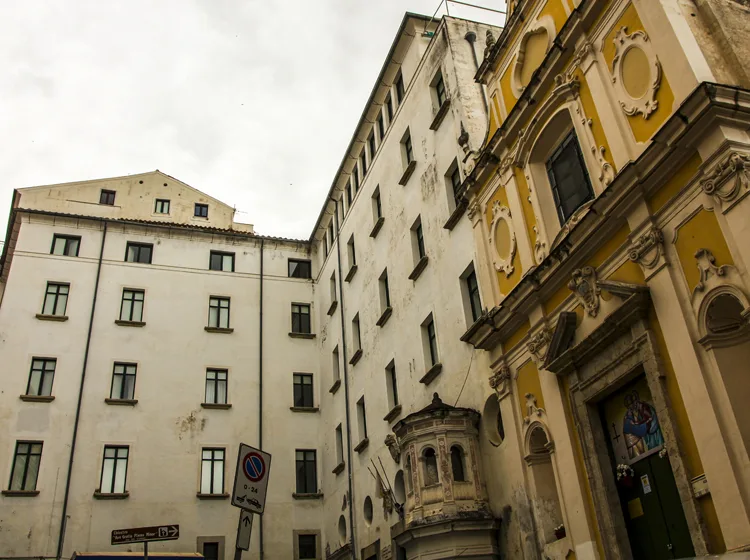
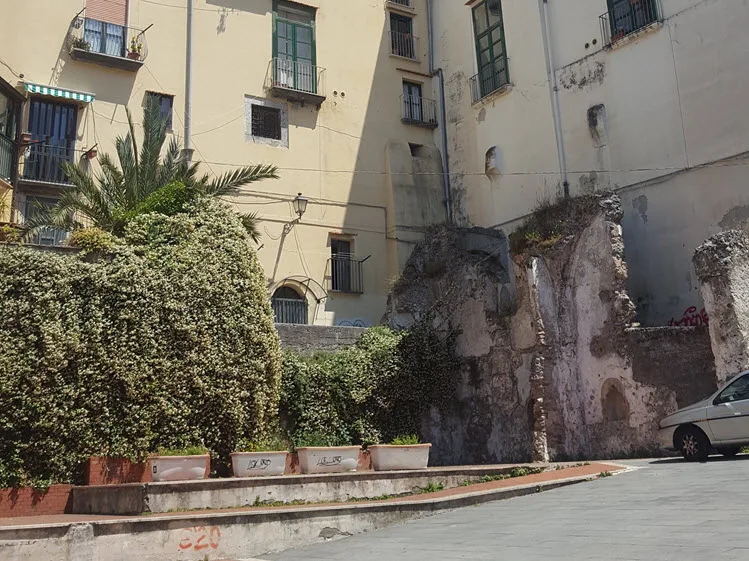
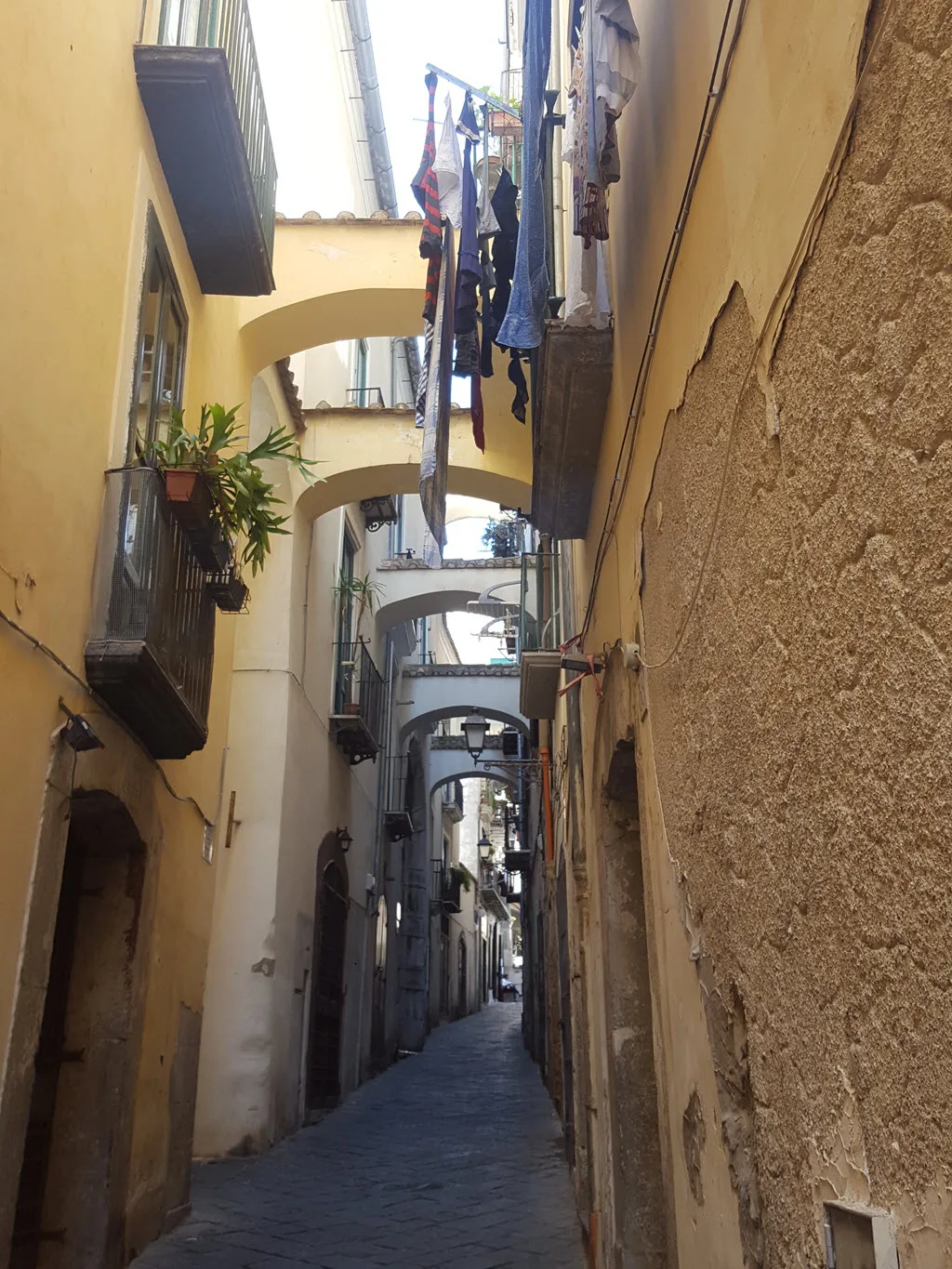
Largo dei Barbuti (the Longobardi) is at the center of the oldest part of the ancient city. The picturesque alleys that depart from the square lead to the Duomo, Via Botteghelle, Palazzo Fruscione and San Pietro a Corte.

Largo Barbuti
- Description
- Event
- News
- Gallery
- Contacts
- Map
- Opening hours
- Itineraries
The Barbuti district, the central nucleus of the ancient part of the city, probably derives its name from the Longobards (men with a long beard) who lived there. It is bordered north by via Tasso, south by Via Roma and west by Via dei Canali.
Largo Barbuti, also called “Curtis Dominica”, in the thirteenth century was the most important square with shops and the market; from the nearby Porta di Mare you could reach the beach. To the east of the square began Drapparia, todayvia dei Mercanti,where they crowded the traders of damasks and velvets. In the west there was the “Ruga Speciarorum”, with the shops of the spetials.
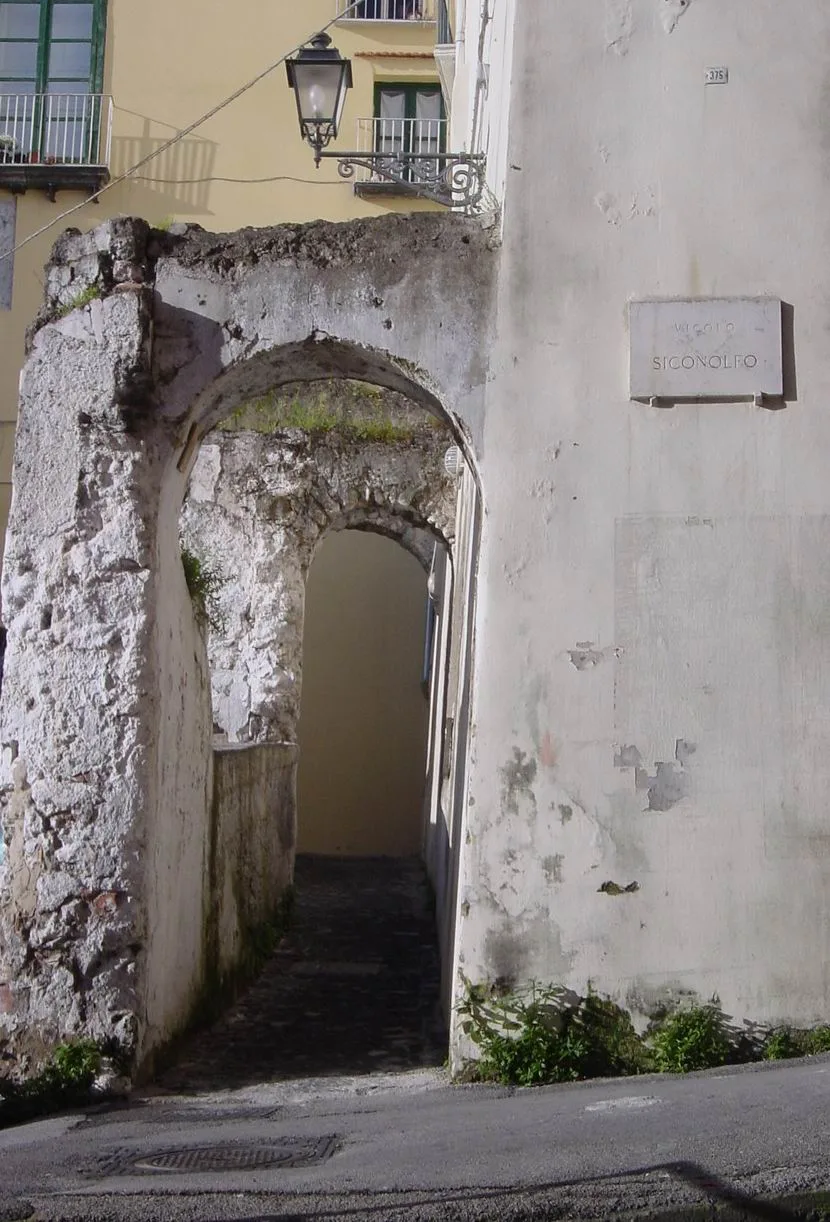
To see, between Via Adelberga and Via Santa Maria dei Barbuti,Palazzo Fruscione. The building presents on the upper floors a braided arch decoration referring to the middle of the thirteenth century and on the ground floor decorations of polychrome tarsia, a very common motif in the romantic bell. Below the arch of the Pescheria alley there are fragments of Longobard walls, remains of the oldcourt of Arechi.
Superato ilComplex of S. Pietro a Corte, you come to via Canali, where rises theChurch of the Annuncitella and the Conservatory Ave Gratia Plena Minor, with a courtyard from the Catalan loggia, the same that is located in the Morese Palace in Via Duomo.
From Largo Barbuti you will arrive thenVia delle Botteghelle. This street presents the monumentalPalazzo D’Avossa, today headquarters of the BAPPSAD Superintendency of Salerno and Avellino.
The Palazzo Gentilezio of the 17th century belonging to the Della Calce family, was purchased and renovated in the middle of the 18th century by the rich merchant Saverio D’Avossa. The building has a corridor with barrel vault through which it is accessed to the courtyard which, enriched by niches decorated with marble statues, housed the premises of the ancient stables of the palace. On the right side of the courtyard there is an elegant open staircase, leading to the upper floors. The last two floors are rear elevations. The walls of the majestic staircase were frescoed by episodes of the “Jerusalem Liberata”. Author of the restoration of the first half of the eighteenth century is Ferdinando Sanfelice, the greatest artist of the time tied to the Salento environment.
From via Botteghelle take Via Guarna Romualdo II, where in Roman times the “Decumano Massimo” passed, which went from the Forum to the Amphitheater and ended with the arch of Triomphe. Laterally, along the current Via Duomo, the “Labinario” flowed, bringing the waters from the upper part of the city to the sea.
Following adaptations and transformations the place was preferred by Norman Duke Roberto il Guiscardo for the construction of theCathedral.
Loading…
always open |
Nessun itinerario disponibile.