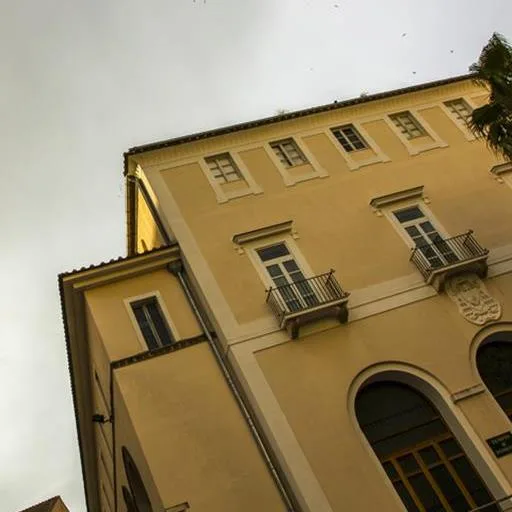
Walking in the historic centre of Salerno, at theCathedral, just drop the look downstream of the beautiful Cathedral, towards noon, to see an ancient building, showing the remains of various historical and architectural passages: thePalazzo Arcivescovile.
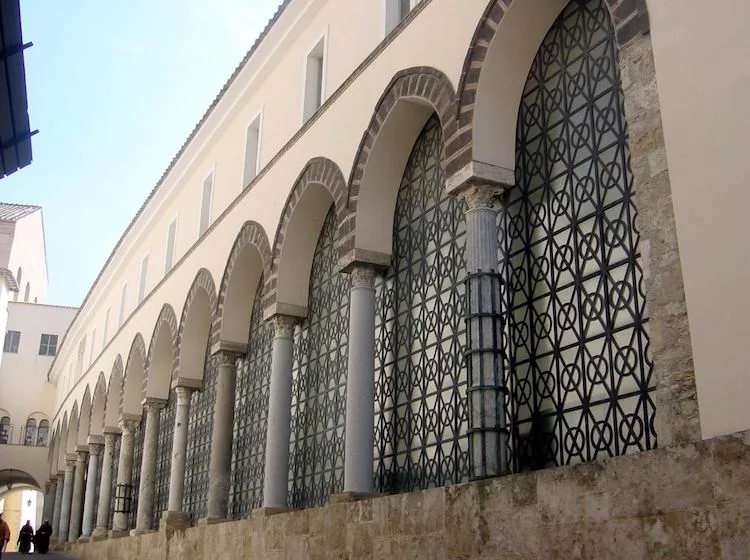
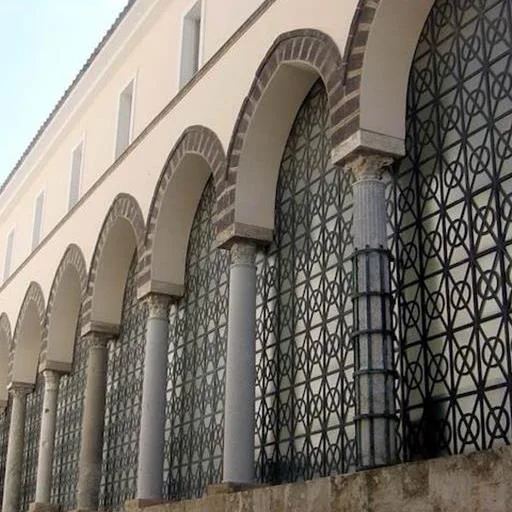
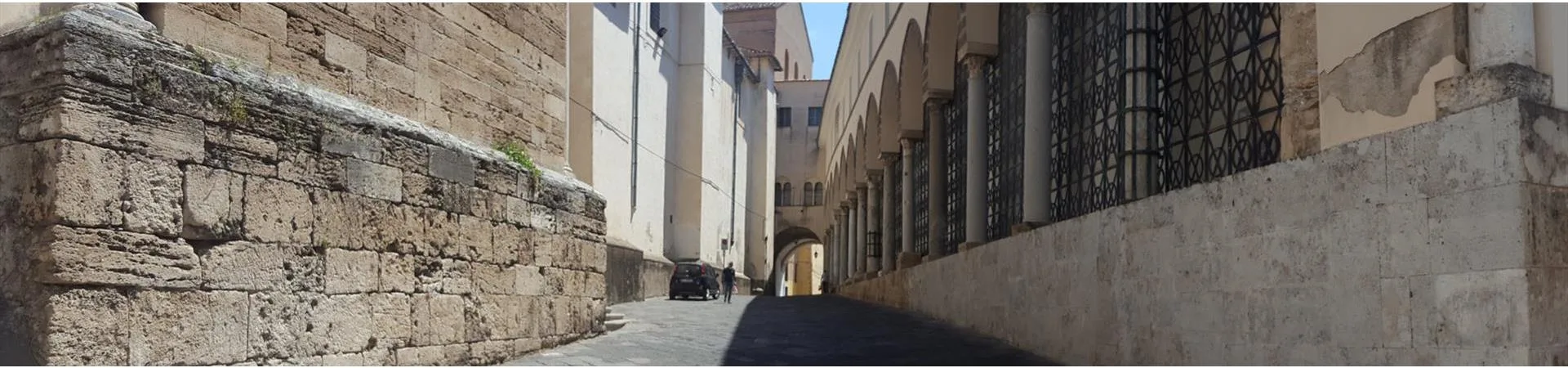
The latter has undergone several transformations over the centuries andpresents layers of different eras, due to enlargement or reconstruction. The oldest part is the one that opens on Via Roberto il Guiscardo, whose outer wall consists ofcolumns and fragments of arches composed of blocks of tuff and travertinewith decorations to lapidei inlays, dating from the end of the XI and the whole XII century.
The building is therefore immediately after that of the buildingCathedralto which it connects, through a passageway, theChapel of Nona, placed at the height of the transept of the Duomo.
The Archbishop’s Palace, in addition to the obvious historical-architectural value, also houses its interiornumerous works of art. On the upper floors, there are four paintings by Francesco Solimena:Saul agitated, Loth and daughters, Sacrifice of IsaacandGiuditta and Oloferne.
On the ground floor, passing through an inner courtyard and crossing a staircase, we reach, then, the new wing of the building, rebuilt at the end of the war. Here is theExhibition of arms, decorated byarms of all archbishopsand you can also admiresome paintings from the 18th century: lAscension of the Virgin, attributed to Francesco Giordano of a solo school; theAnnouncement of an unknown author, and two fine canvasesPresentation of the Virgin at the Temple and Annunciation) by Didacus da Sessa, a local painter active around the mid-18th century.
To the left of the Palazzo Arcivescovile rises theTemple of Pomona, probably a pagan temple dedicated to the goddess, although archoeologists speak of false attribution, today home to important exhibitions and events. The temple consists ofa large room divided into twofrom a columnof six grooved columns; the heads of the statues are decorated with female heads.

'/%3E%3C/svg%3E)


 Ancient Salerno: between Etruscan and Romans Artistic Historic