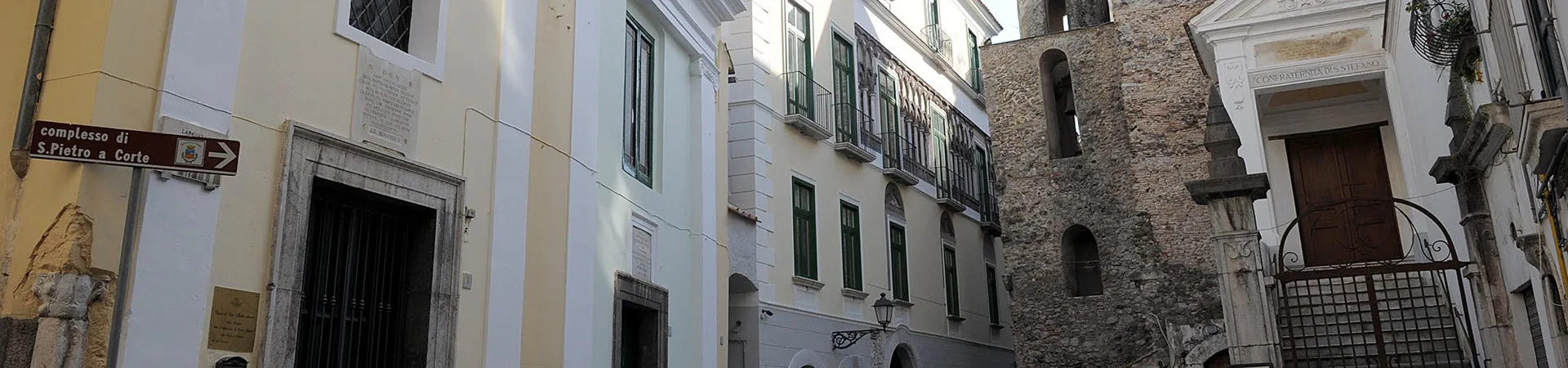
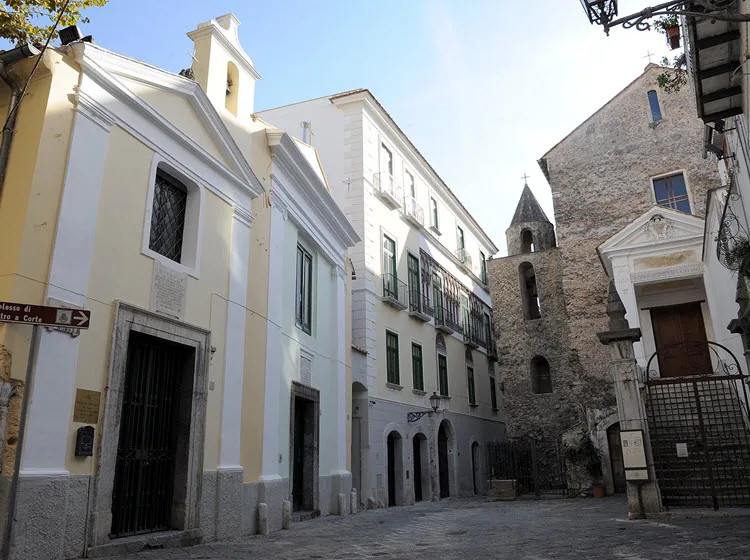
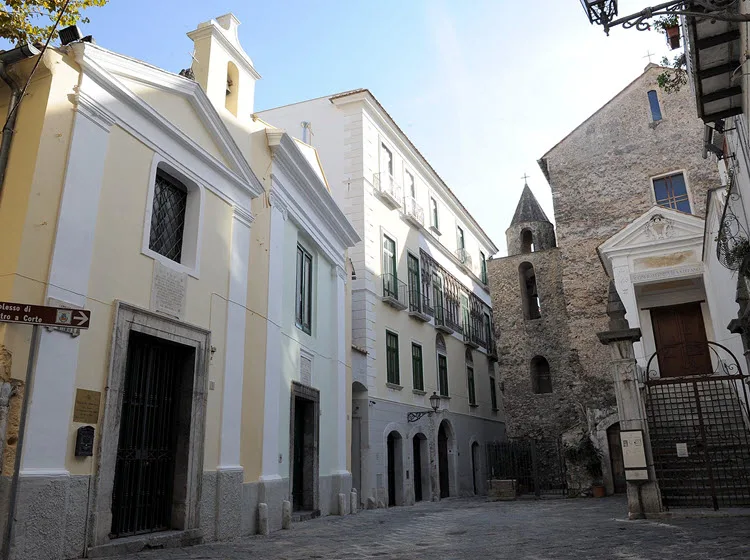
Between Adelberga alley and Barbuti alley, on the northern side ofChurch of St. Peter in Corte, rises thepalace known by the name of “Fruscione”, from the surname of the last family that inhabited it and to which it was expropriated to make it public heritage.
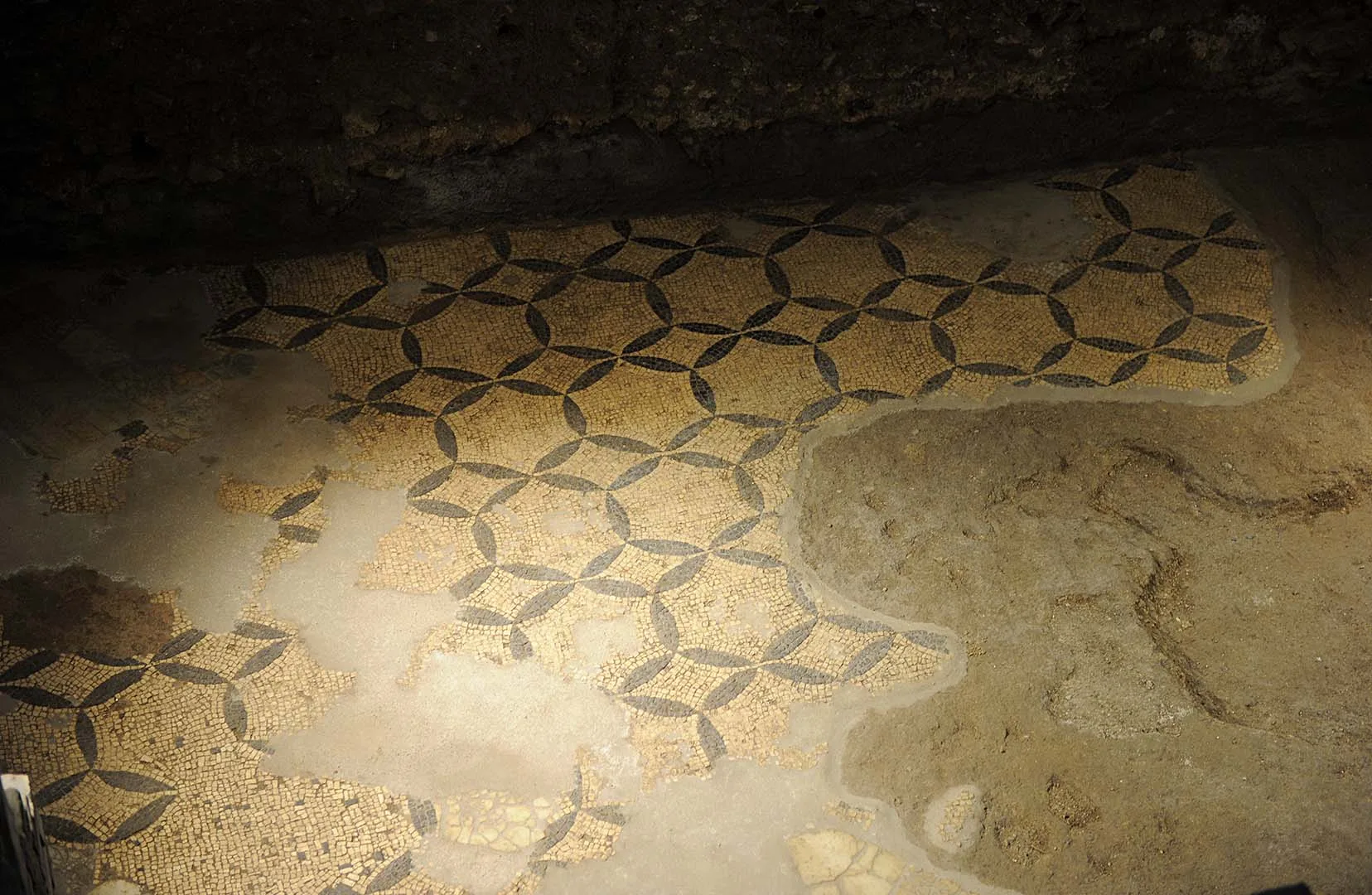
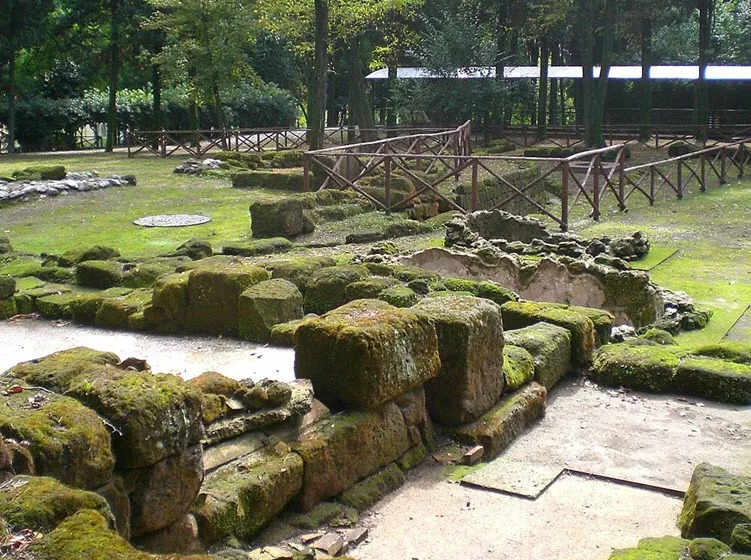
Built in the middle of the 13th century, a leftover of the residence of Arechi II was incorrectly defined, then “the palace of the Norman princes”. The building, which presentsdifferent archaeological stratifications, partially rests on the remains of aRoman bath complex, extension of the nearby thermal plexusS. Pietro a Corte. Recent restoration works have brought to light elements of masonry, fragments of frescoes and aRoman mosaic almost entirely intact, dating back to the I-II century after Christ.
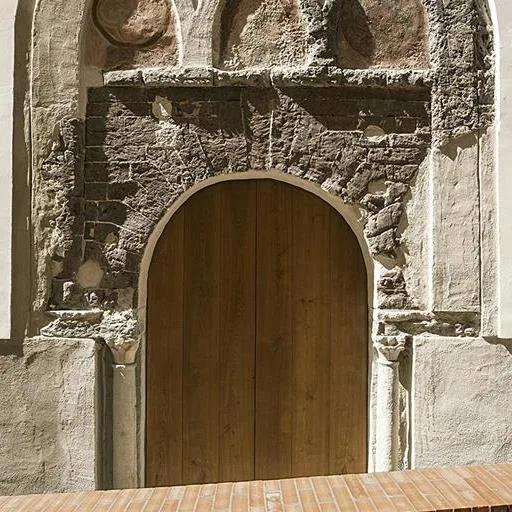
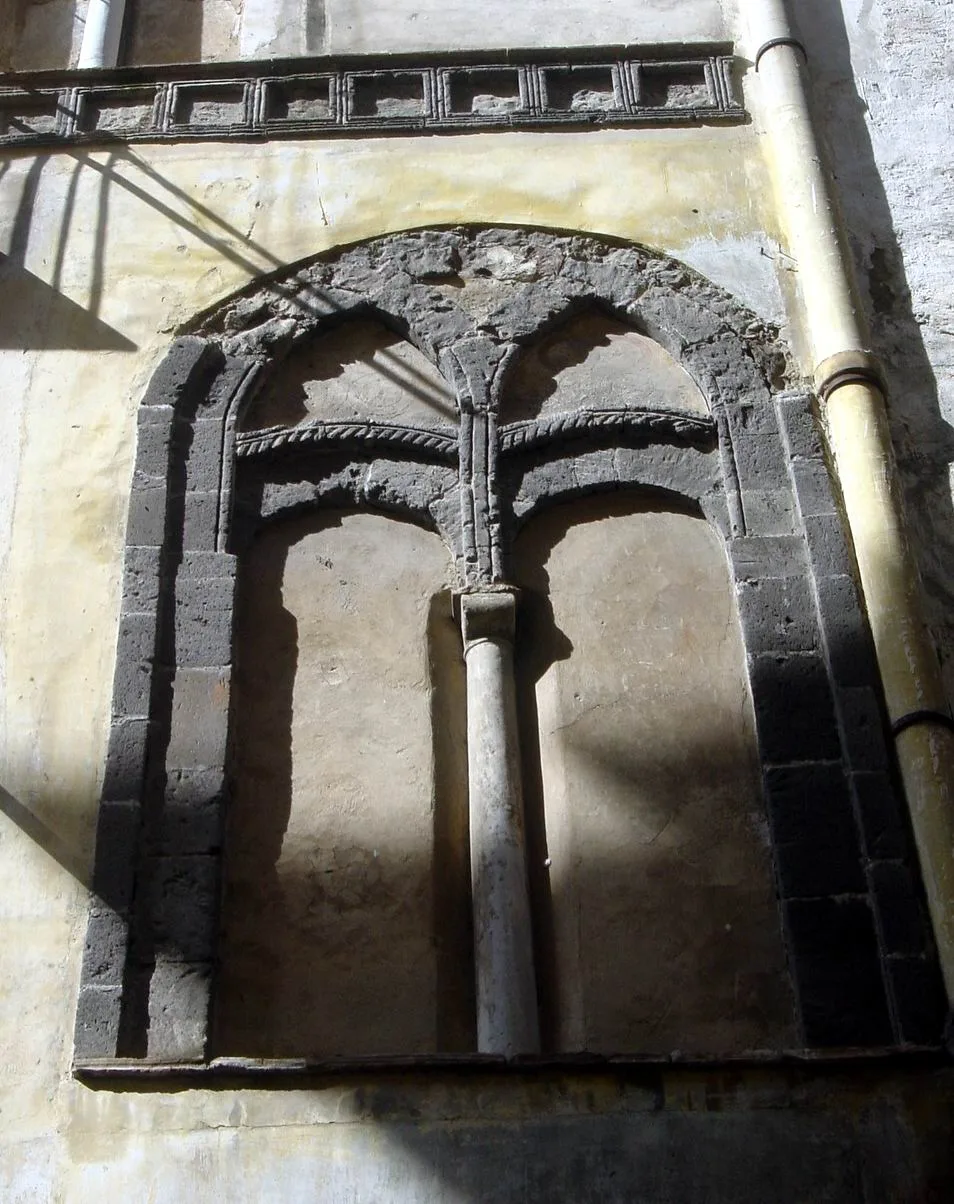
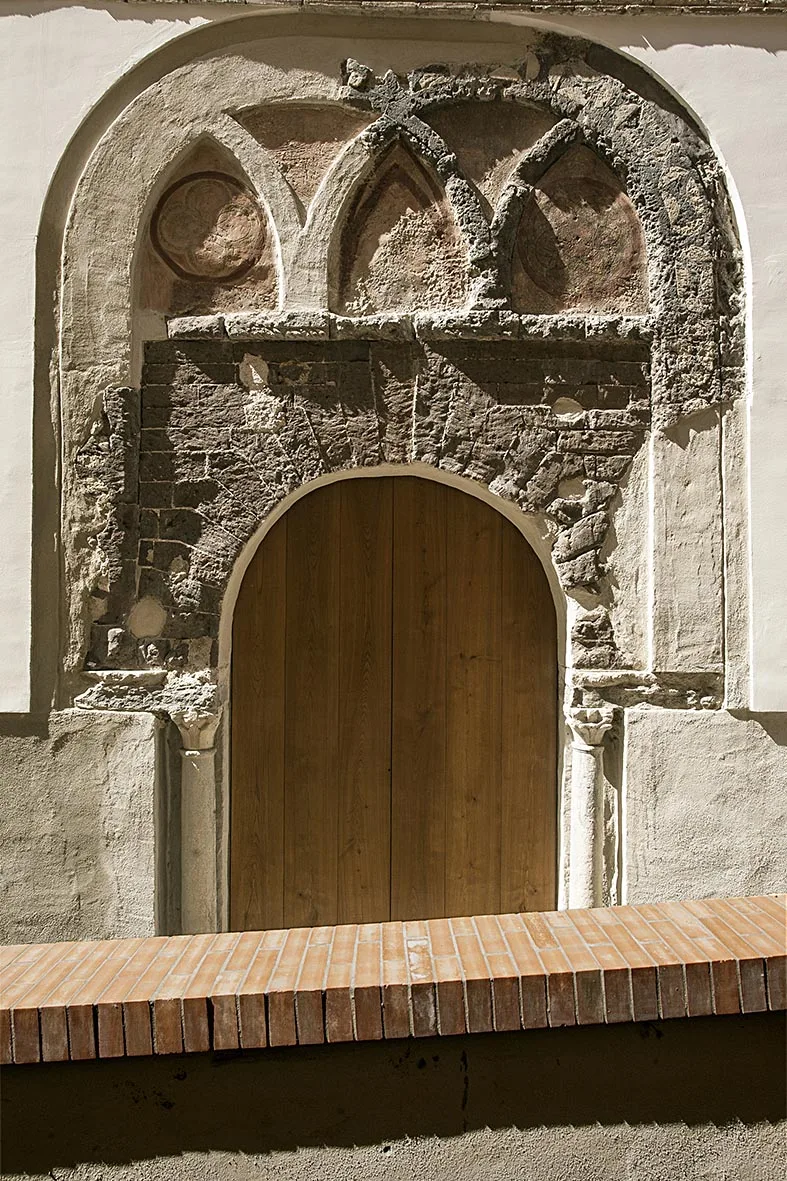
Theyellow and grey tuff shadespresent on the facade suggest an even older origin of the building, presumably referring to theNorman era. In the 13th century, when the palace was affected by important renovations, the three portals on Vicolo dei Barbuti and the rooms on the alley Adelberga, while the second floor was added in the 14th century, during the Angioine period. In the course of the seventeenth century the ground wasused as stables, as evidenced by a notary document dated 1575 which places within the building a ‘house of accommodation’, a sort of hospice of property of the cathedral.
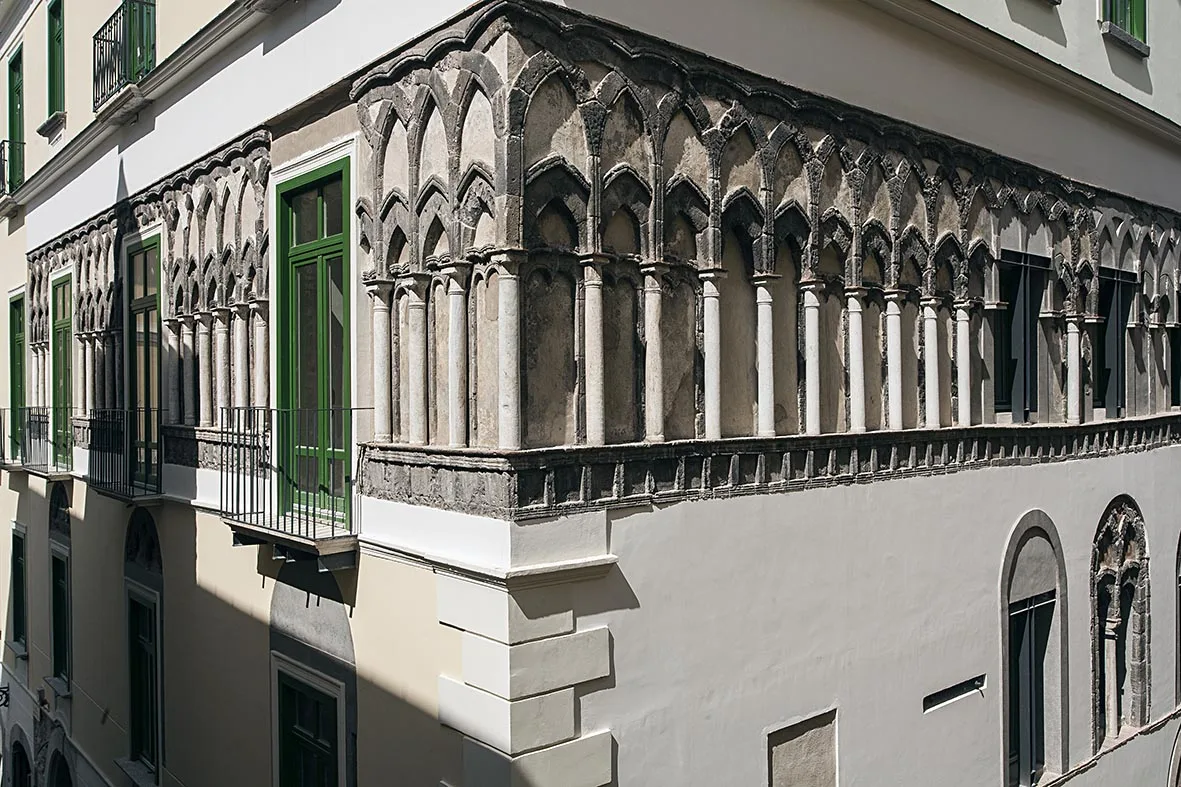
Theoriental facadeis adorned with valuable architectural elements. On the ground floor are visiblethree portals surmounted by archesOn the first floor, fivesculpted biphoresand on the second floor a series ofpolyphores interwoven with acute arches supported by columns.
In 2013 the important structural restoration work carried out by the municipal administration was completed with the aim of transforming the building into a largecultural polein the heart of the historic center of the city.

'/%3E%3C/svg%3E)


 L'evento terminerà tra 12 giorniLe Stanze dell’Arte – Personali a Palazzo Fruscione – VII edition free 16 Oct 2026 – 1 Nov 2026