


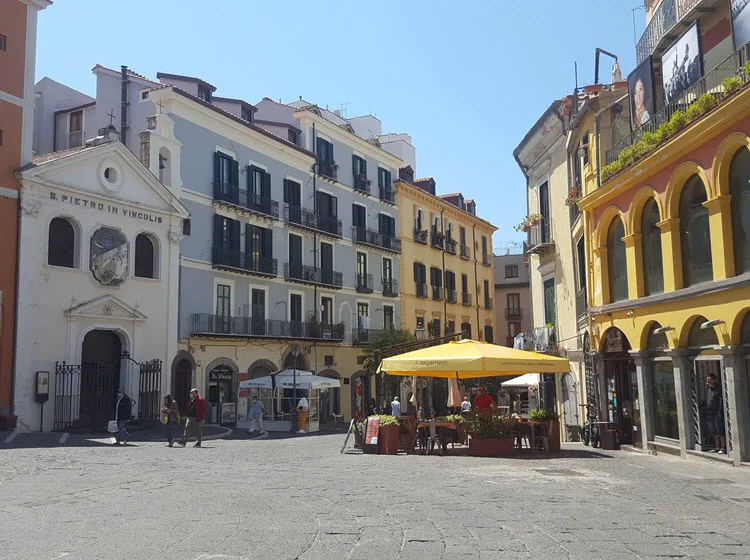
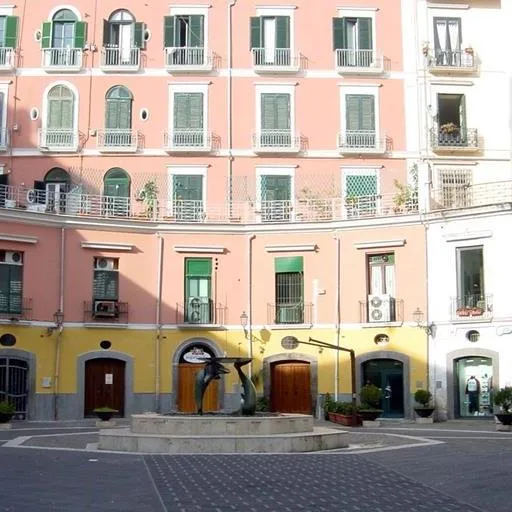
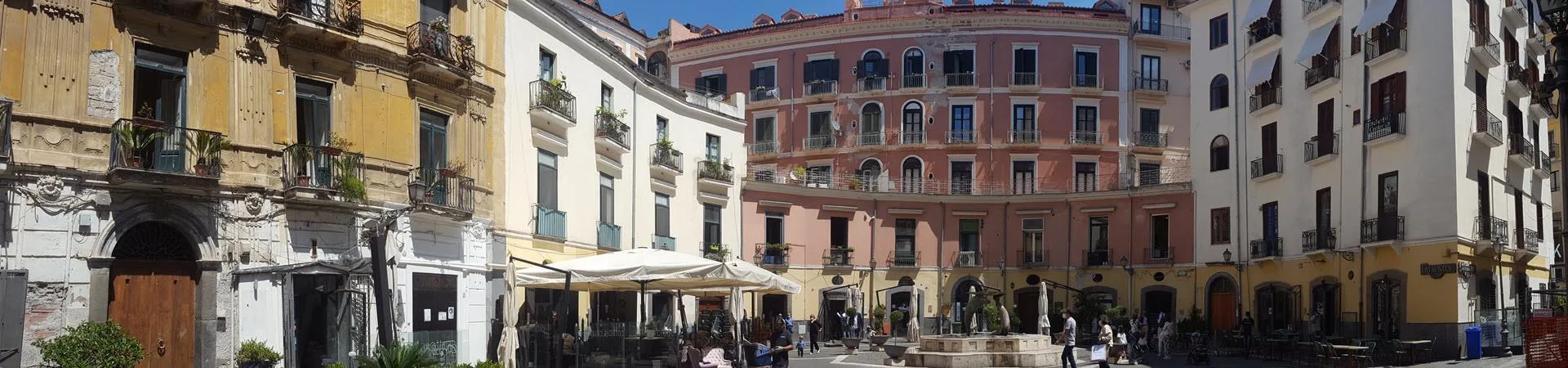
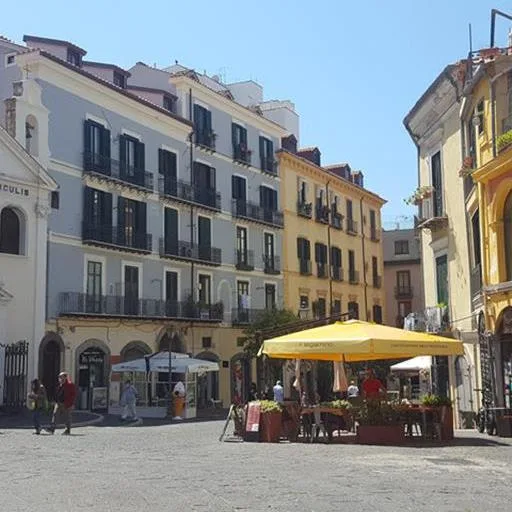
Piazza Portanova is access to the Old Town. The door, remade in the eighteenth century, enters the beautiful and scenic square Flavio Gioia, called the Rotonda for the arched shape of the buildings that make it as a backdrop.

Portanova Square and Rotonda
- Description
- Event
- News
- Gallery
- Contacts
- Map
- Opening hours
- Itineraries
In Roman times villas and industrial plants crowded the Rione Portanova, which today shows a marked commercial vocation.
Piazza Portanovais located, in fact between the beginning of Via Mercanti and Corso Vittorio Emanuele, the privileged streets for shopping in Salerno. The square takes its name from the presence of a sita door at the beginning ofvia dei Mercanti, destroyed by a flood and then rebuilt “nova”, to make room forCastel Terracena.
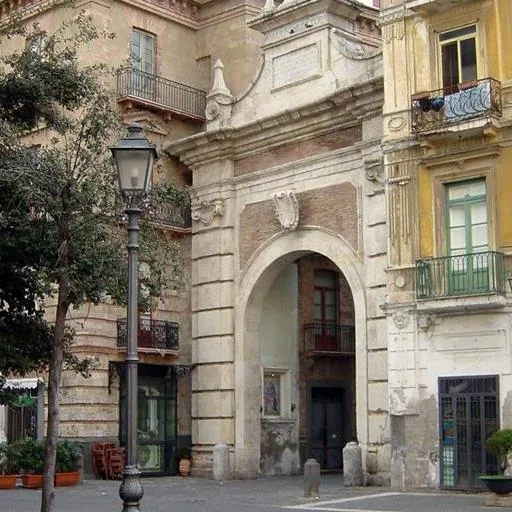
The door that until the nineteenth century closed the walls of the eastern border of the city, is located on the side towards the sea, betweenPiazza PortanovaandPiazza Flavio Gioia. It was created in 1754, replacing another precedent, by master Ragozzino. At its top is placed a greatstatue of St. Matthew, the patron and protector of the city, by the sculptor Francesco Pagano.
Today Piazza Portanova and Piazza Flavio Gioia are separated, but originally they were a single site declined towards the sea. This explains why Portanova is in a slightly higher position, while the so-calledRoundoccupies a flat floor more downstream.
Outside the walls, on the eastern side, merchants of all where they flocked into a vast flat area, equipped with barracks for the storage and exposure of goods of all kinds, and took part in the famousFair of San Matteo.The latter, in the Middle Ages and in the modern age, was one of the most prestigious in Southern Italy. Capital convictions were also carried out in the same area, as evidenced by theVoting newsstandby the end of the 17th century with the mural painting of the so-calledMadonna delle Grazie, before which the condemned for the last prayer stopped.
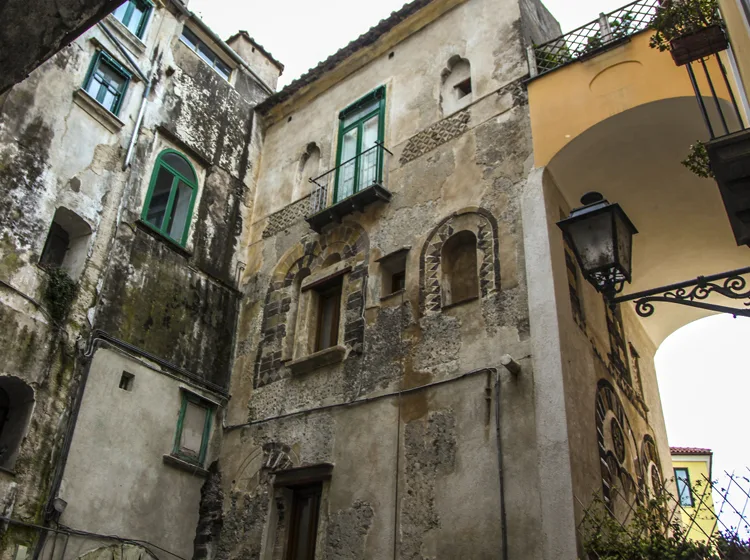
Coming out of Piazza Flavio Gioia through the door and walking parallel to Via Roma, you then cross the characteristic alley, calledMasuccio Salernitano, with the presence of many ancient shops and old buildings, whose porticos carry pieces of artistic ornate, engraved in the stone.
Loading…
always open
Nessun itinerario disponibile.