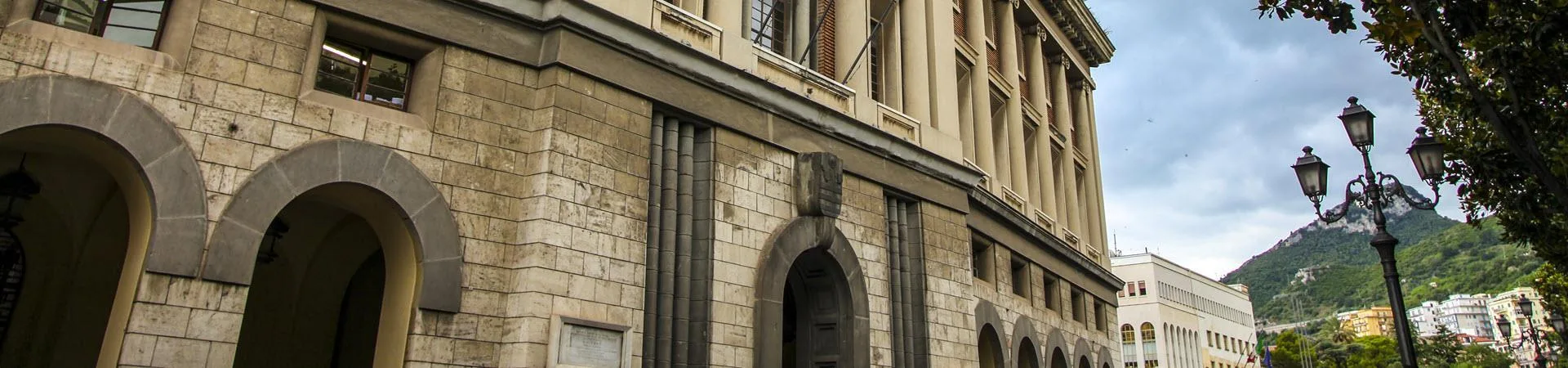
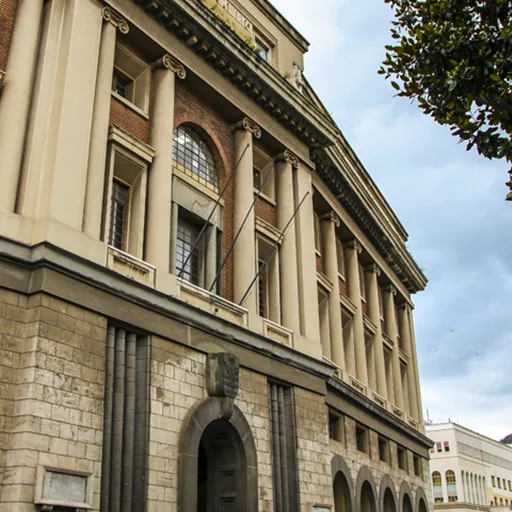
In the 1930s, in full fascist style, stands Palazzo di Città, a monumental work that becomes an undisputed symbol of a Salerno aimed at modernity.
 L'evento inizierà tra 8 giorniSalernitani Doc – 18th edition free 23 Oct 2026
In the 1930s, in full fascist style, stands Palazzo di Città, a monumental work that becomes an undisputed symbol of a Salerno aimed at modernity.
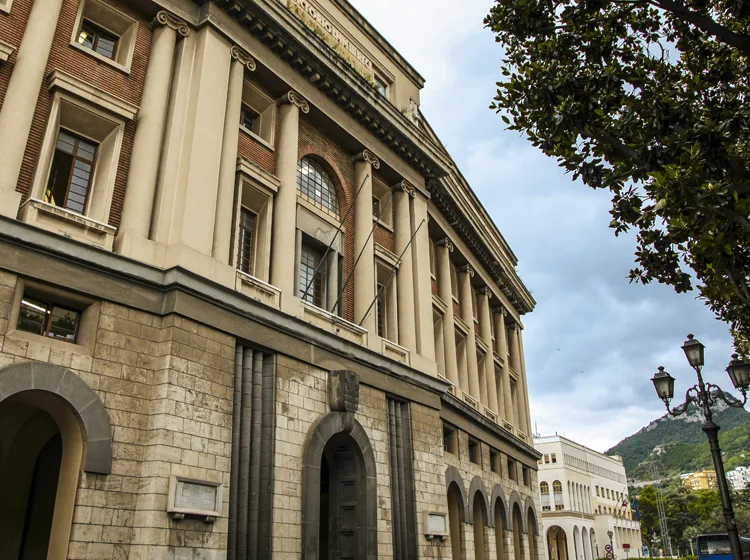
In the thirties of the 20th century, the municipal administration of Salerno started an important program of public works, to be realized mainly on the soils resulting from the rearrangement of the beach.
Among the many buildings built in that period stands out Palazzo di Cittàdesigned by the architect Camillo Guerra.
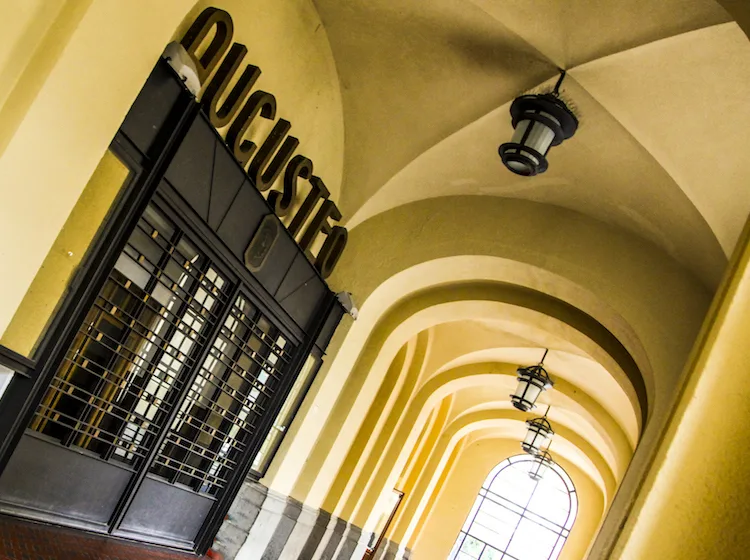
Built on a surface of 5000 sqm, with one typically fascist style, the imposing building has a niceporticoand a widecinema room (Cinema Teatro Augusteo).
From the monumental staircase to two ramps is access to the noble floor where theSalone di Marmithat in 1944, when Salerno became the Capital of the Kingdom, hosted the first meeting of the Council of Ministers of the Government of National Unit. The walls of the room, almost completely covered with polychrome marble, have a largefringepainted by the artist Pasquale Avallone, depicting the highlights of the history of the city.
The neighborHall of Gonfaloneis characterized by a splendidcoffered ceilingin glass.
In the outer corridor you can admire the bronze statues sculpted by Gaetano Chiaromonte, which were originally placed outside the Palace.
The Palace is rich in works of art that constitute a kind ofCivic museumwaiting for its enhancement.
Monday | : | : | |
Tuesday | : | : | |
Wednesday | : | : | |
Thursday | : | : | |
Friday | : | : | |
Saturday | : | : | |
Sunday | : | : |