


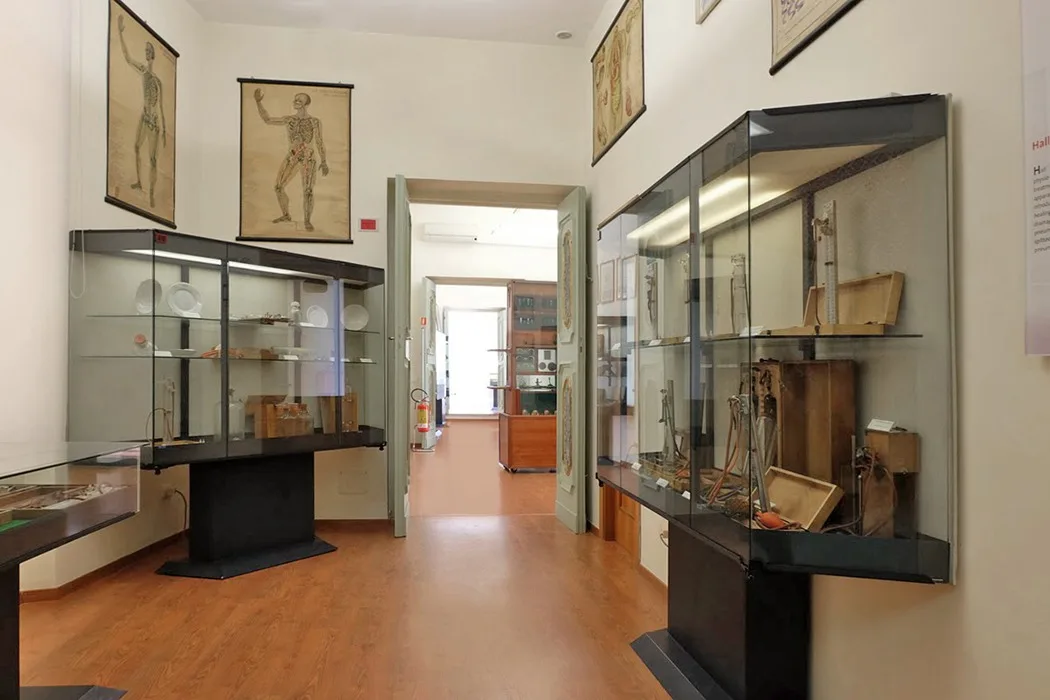
The medical and surgical museum ‘Roberto Papi’ is a truly unique place. Located in the heart of the historic centre of Salerno, it tells the story of medicine with hundreds of objects, furnishings and reconstructions of period environments.

Roberto Papi
- Description
- Event
- News
- Gallery
- Contacts
- Map
- Opening hours
- Itineraries
The museum
Intitled to the Roman collector Roberto Papi, the museum was curated by his father Mario and his brother Fernando, who gave the Municipality of Salerno a collection among the most important in the world for scientific interest and quantity of materials.
The birth of the museum, inaugurated in 2009 in the historic Palazzo Galdieri, is linked to the ancient tradition ofSalernitana Medical School, the most important medical institution in the Middle Ages, considered by many as the ancestor of modern universities.
Placement in viaTrotula de Ruggiero, the first and perhaps most famous of the medieval medical women, makes the visit to this museum truly original and of great educational interest.
The collection
The rich collection of the Papi Museum includes historical instruments datablebetween the 17th and the 20th centuryand rare medical and surgical and pharmaceutical equipment.
The originality of the exhibition lies in the research and attention to detail with which the precious objects, belonging to almost all fields of medicine such as surgery, ophthalmology, orthopaedics, cardiology anatomy, dental pneumology, neurosurgery.
In the path, which develops in two floors and fourteen rooms, you will meet rare pieces like thehood Mathieuof a warship at the end of the eighteenth century or an oral hygiene case with gold decorations of the Empire.
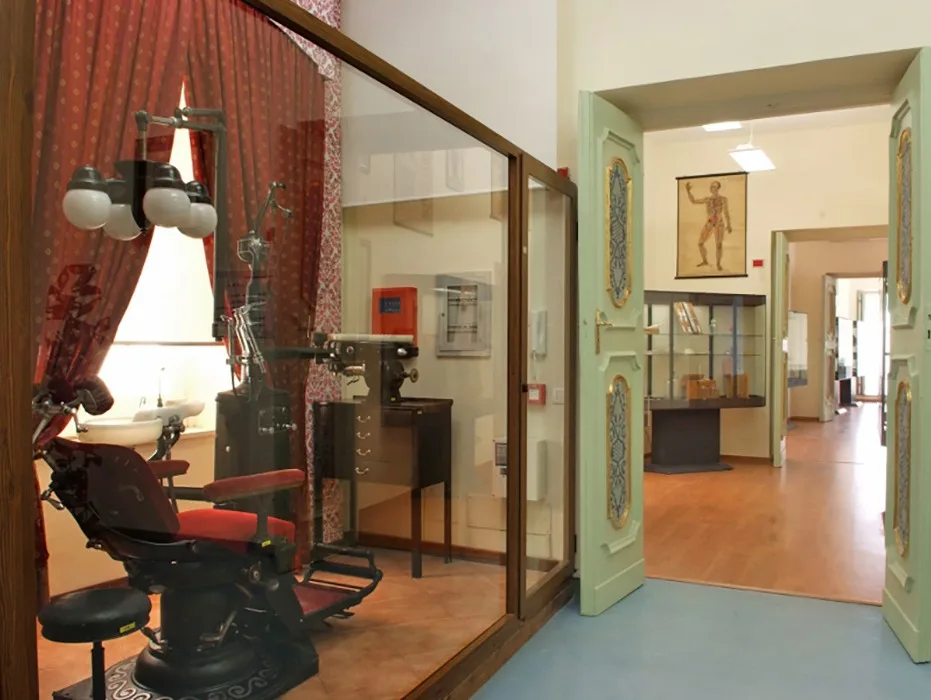
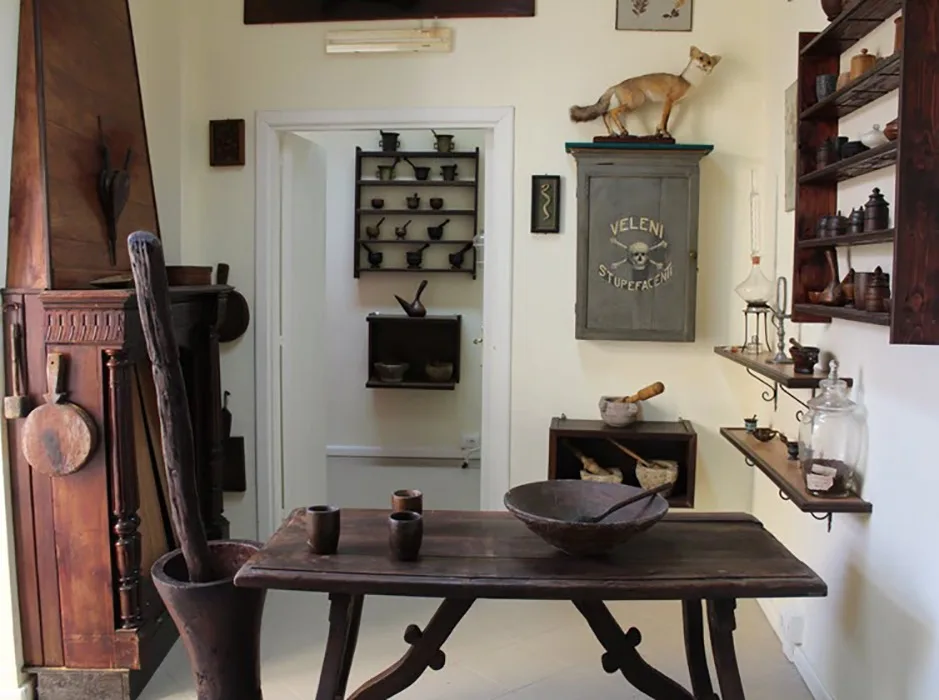
In many rooms have been recreatedreal life scenes that carry the visitor on a suggestive journey over time. Among the many settings, there are entire ancient medical studies, a 16th century pharmacy, a field hospital dating back to World War I, a shop of barbershops.
Curiosity / to know
– The first “medical” in history
Trotula de Ruggero, a noble from Salento, lived in the 11th century at the Lombard court of Guaimario IV, was the first medical woman. Author of the Treaty of GynaecologyDe passionibus mulierum curandarumand the first book of female cosmetics, theDe ornatu mulierumIn contrast to the medical doctrines of time, he took care of the problem of infertility, seeking causes not only in women, but also in men.
– Treaties of other times
One of the techniques of diagnosis most used by the masters of the Salernitana Medical School was urine analysis. Since the Middle Ages, in fact, the masters of Salento diagnosed diseases by analyzing the urine of the patients. One of the greatest experts in this technique was the French master Egidio of Corbeil. Coming from France to study Salento techniques, he became one of the greatest experts. Back to the home, in fact, he wrote theDe Urinis, a treatise on urine that was studied until the eighteenth century at universities throughout Europe.
– The medical ars at the time of the Romans
In Pompeii, a real “cassetta of tools” of a Roman surgeon was found. Inside his house, buried by the eruption of the Vesuvius of 79 AD, about forty iron and bronze surgical tools were found. The artefacts, now preserved at the National Archaeological Museum of Naples, appear very similar to the current ones: probes, catheters, forces, pliers and scalpels, but also onespeculum magnum matricis, divarication system used both in surgery and in gynecology.
Loading…
Day | Morning | Afternoon |
|---|---|---|
Monday | — | — |
Tuesday | — | 15:00 – 19:00 |
Wednesday | — | 15:00 – 19:00 |
Thursday | — | 15:00 – 19:00 |
Friday | — | 15:00 – 19:00 |
Saturday | 11:00 – 14:00 | 14:00 – 19:00 |
Sunday | 11:00 – 14:00 | — |
Cost: Full ticket: 5€
Reduced cost: Reduced ticket: 3,50€;
Special ticket for locality residents in the city: 1€;
Special rates for groups depending on the number of visitors.
Nessun itinerario disponibile.