• Home
  • Salerno
    • History of Salerno
    • Historical Figures
    • Traditions
    • Food and Wine
    • Mobility in Salerno
    • Places Nearby
    • Useful Links
  • Events
    • Find an Event
    • Artist Lights
    • Must-see events 2026
  • Explore places
    • Itineraries
    • Verdi Theater
      • Theater Home
      • The season 2026
      • The Prose Season 2026
      • Ticket office
    • Cultural Venues and Theatres
    • Churches and Monasteries
    • Palaces and Squares
    • Museums and Archaeology
    • Gardens and Parks
    • Modern Architecture
  • News
  • English
    • English
    • Italiano
    • Français
Salerno Cultura -
  • Home
  • Salerno
    • History of Salerno
    • Historical Figures
    • Traditions
    • Food and Wine
    • Mobility in Salerno
    • Places Nearby
    • Useful Links
  • Events
    • Find an Event
    • Artist Lights
    • Must-see events 2026
  • Explore places
    • Itineraries
    • Verdi Theater
      • Theater Home
      • The season 2026
      • The Prose Season 2026
      • Ticket office
    • Cultural Venues and Theatres
    • Churches and Monasteries
    • Palaces and Squares
    • Museums and Archaeology
    • Gardens and Parks
    • Modern Architecture
  • News
  • English
    • English
    • Italiano
    • Français
Salerno Cultura -
  1. Home
  2. Tradizioni
  3. Traditions
  4. San Matteo: Heart and identity of Salerno

San Matteo: Heart and identity of Salerno


On September 21, it is the day of the procession, it is the day of St. Matthew, Patron of the city of Salerno: an entire community pours through the streets for the most anticipated moment of the year. Faith, history and folklore merge into one great collective ritual.

The one between the city and its patron is a visceral and deep bond, rooted in ancient history and legend.


‘Passing, he saw Levi, the son of Alpheus, sitting at the tax counter, and said to him, “Follow me.” And he rose up and followed him»
Marco, 2,14

According to the Gospel of Mark, Jesus sees Levi, the son of Alpheus, sitting at the tax stand, intent in his daily work as a publican, a tax collector. Listening to these words, Levi (Matthew) abandons everything and follows Jesus, beginning a new life of constant evangelization, until he arrives at death around the year 69 AD, whose circumstances are wrapped in mystery.

Just as the next story of his mortal remains is wrapped in mystery, the long wandering of his relics, which would have been transported from Africa to Brittany until they arrived in Velia, where they were found in 954 AD. and finally lead to Salerno, by the Lombard prince Gisulfo I.

The siege of Roberto the Guiscardo and the subsequent conquest of the city open the doors to the Norman dominion. Guiscardo decides to build a majesticCathedralin 1081 the remains of St. Matthew are welcomed into the Crypt, the first completed nucleus of the Cathedral.


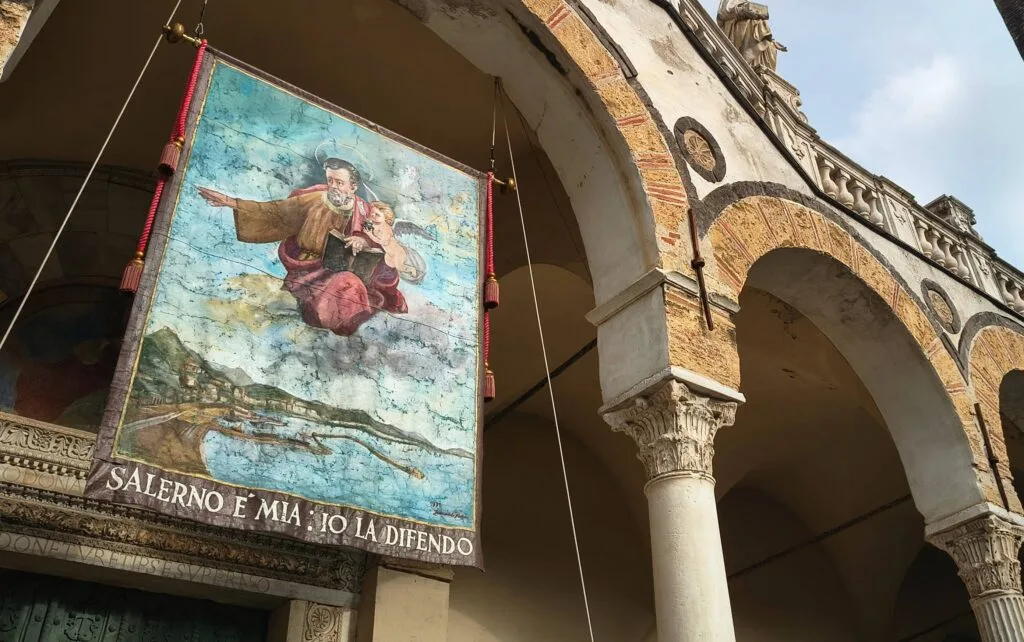
“Salerno is mine, I defend her”

It is historically documented that in June 1544 the admiral of the Ottoman fleet Khair ad-Din, called Ariadeno Barbarossa, performed fierce raids along the Tyrrhenian coast, while it belongs to legend and popular faith the episode that most of all determines the link between Salerno and San Matteo: the miracle that saves the city on June 27, 1544.

The Barbarossa deploys its ships in front of the Gulf of Salerno, on a clear summer day. The Salernitans, ready to fight but aware of danger, ask for the protection of the Patron. Suddenly the sky becomes dark, and a tremendous storm overlooks the sea, landing and dispersing the Saracen fleet.

Legend has it that San Matteo himself appeared in the sky at that time, saying the famous phrase: ‘Salerno is mine, I defend».

This phrase, with St. Matthew and the image of the city, appears on the “Panno” that every year, on August 21, is set up in the Atrium of the Cathedral: it is the famous Alzata del Panno. On the cloth the historical promise of protection falls, and when the drappo slowly rises along the facade of the Duomo, Salerno and the Salento officially begin the countdown for the most anticipated day.


The most anticipated day

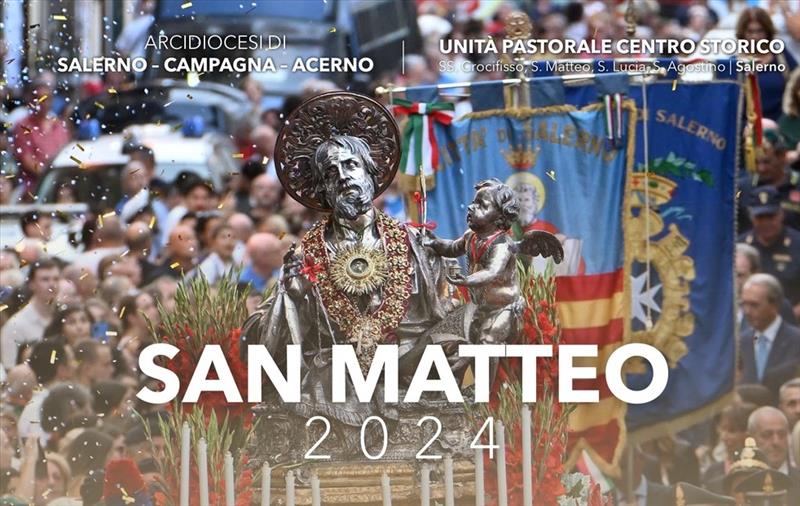
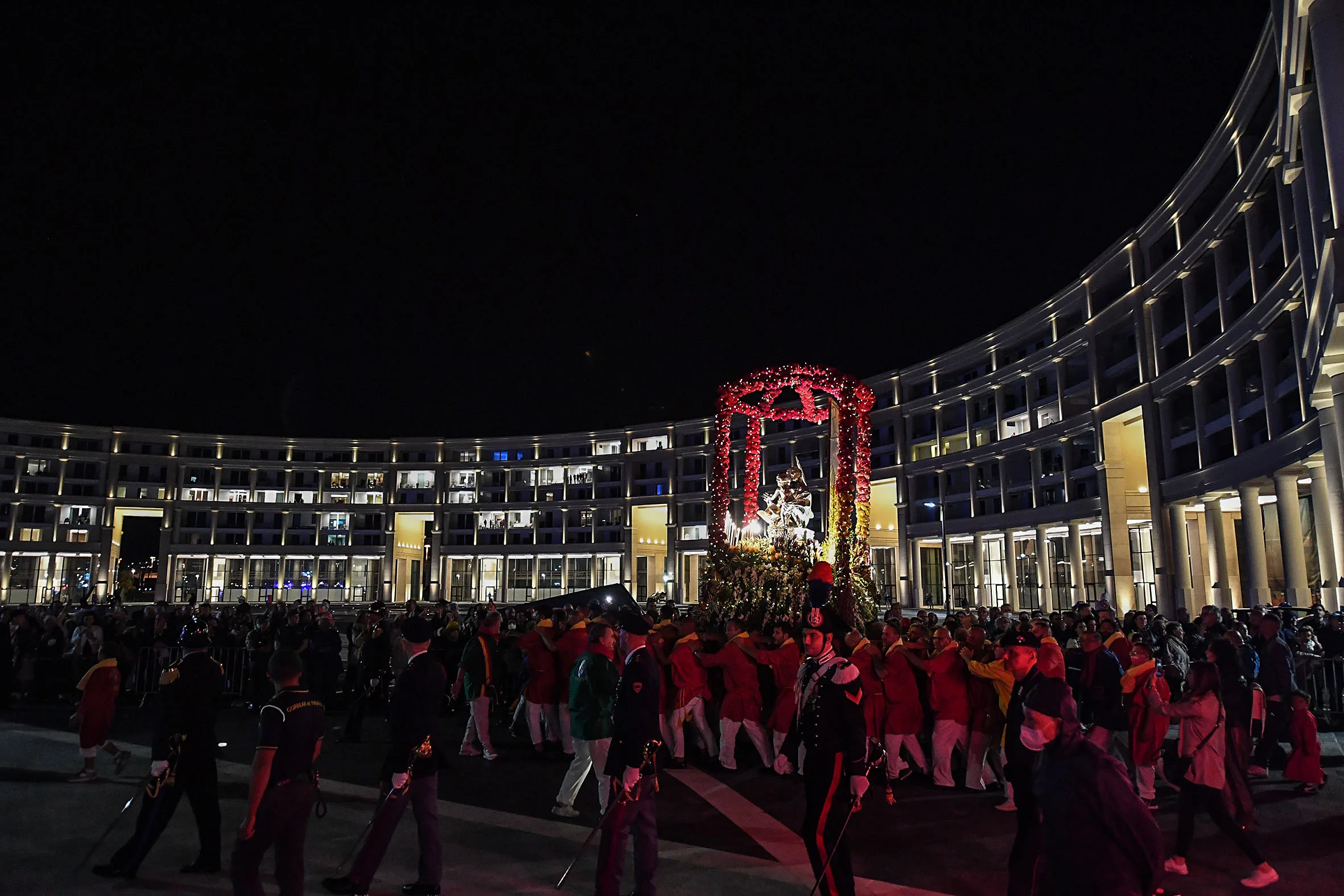
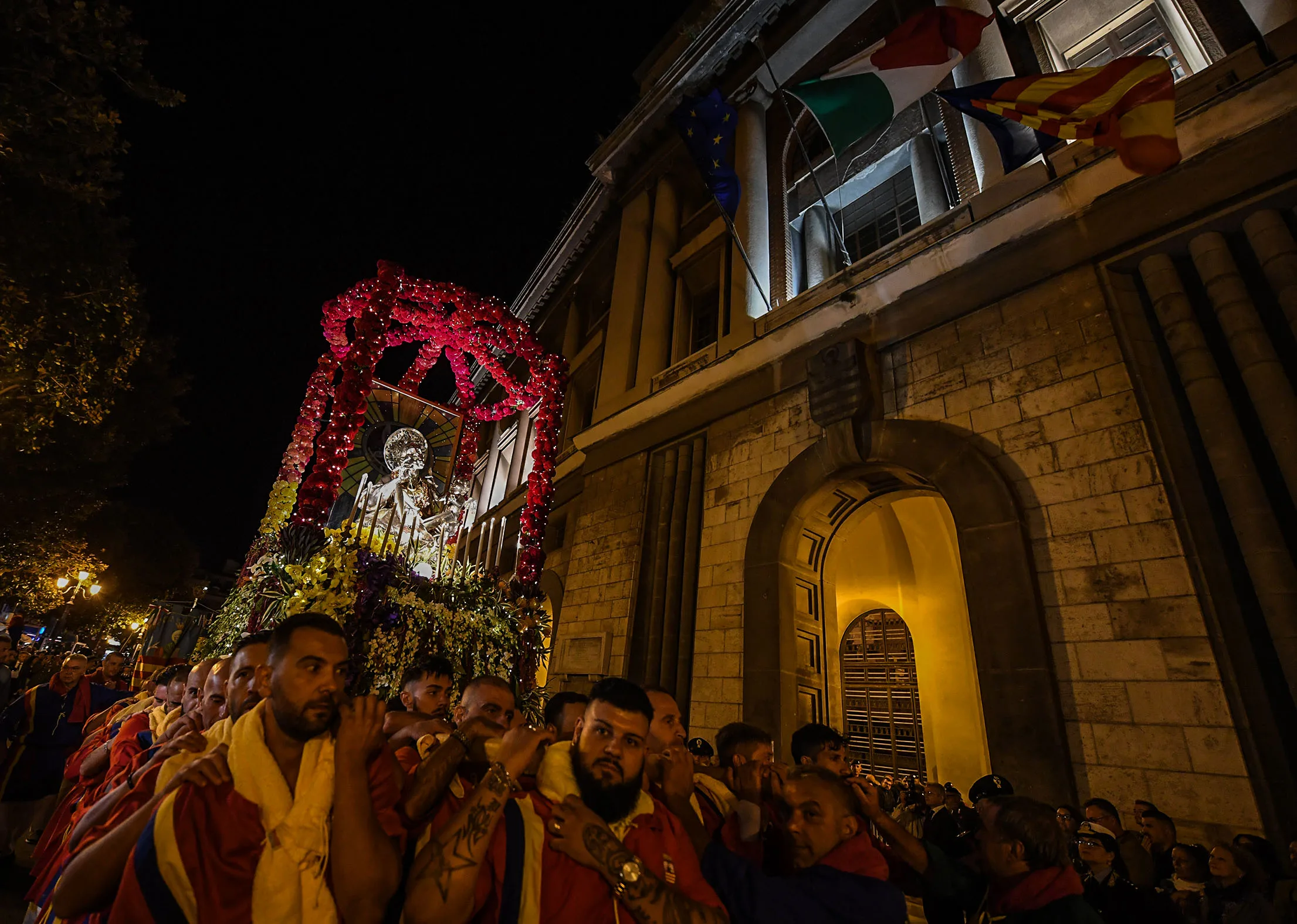
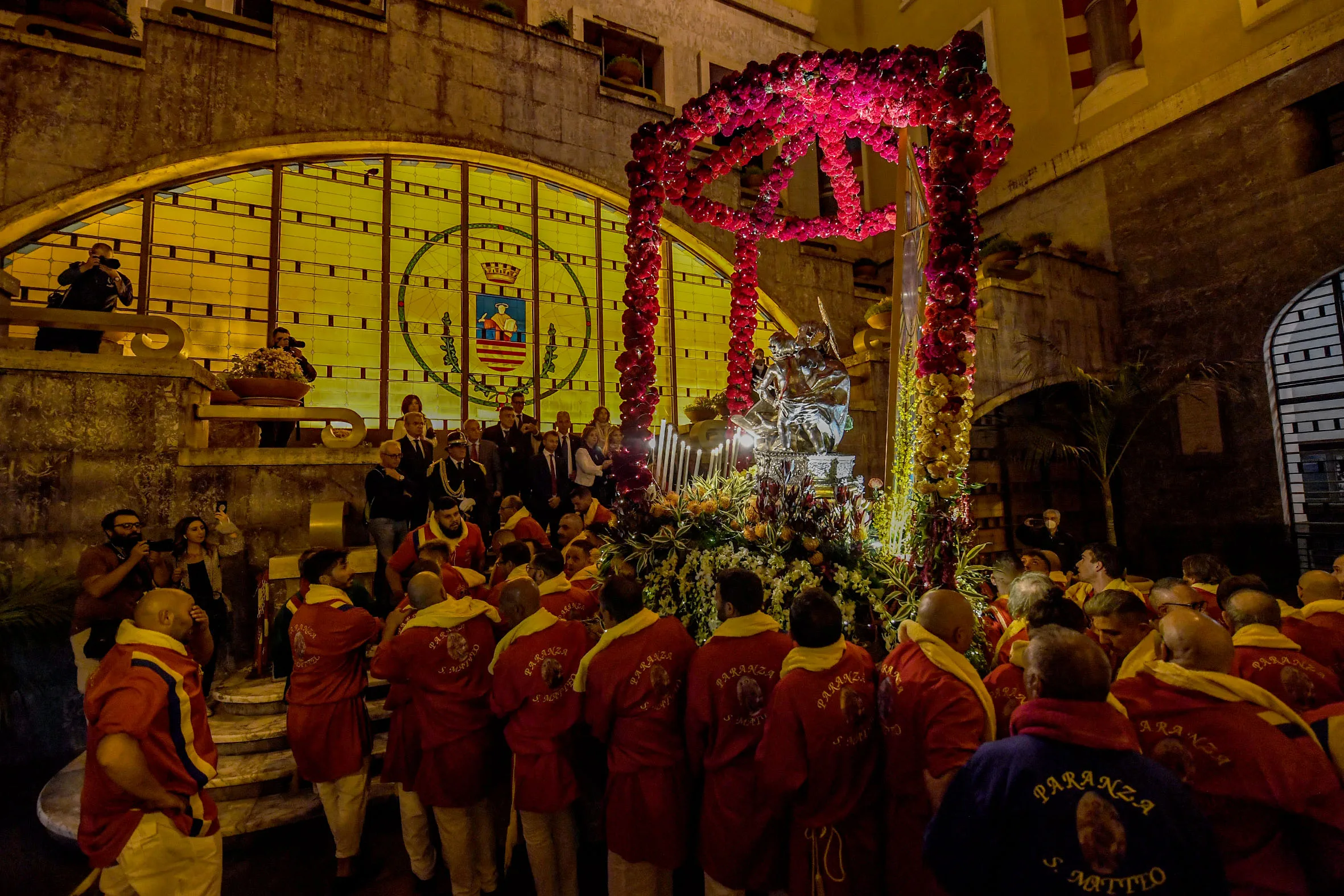
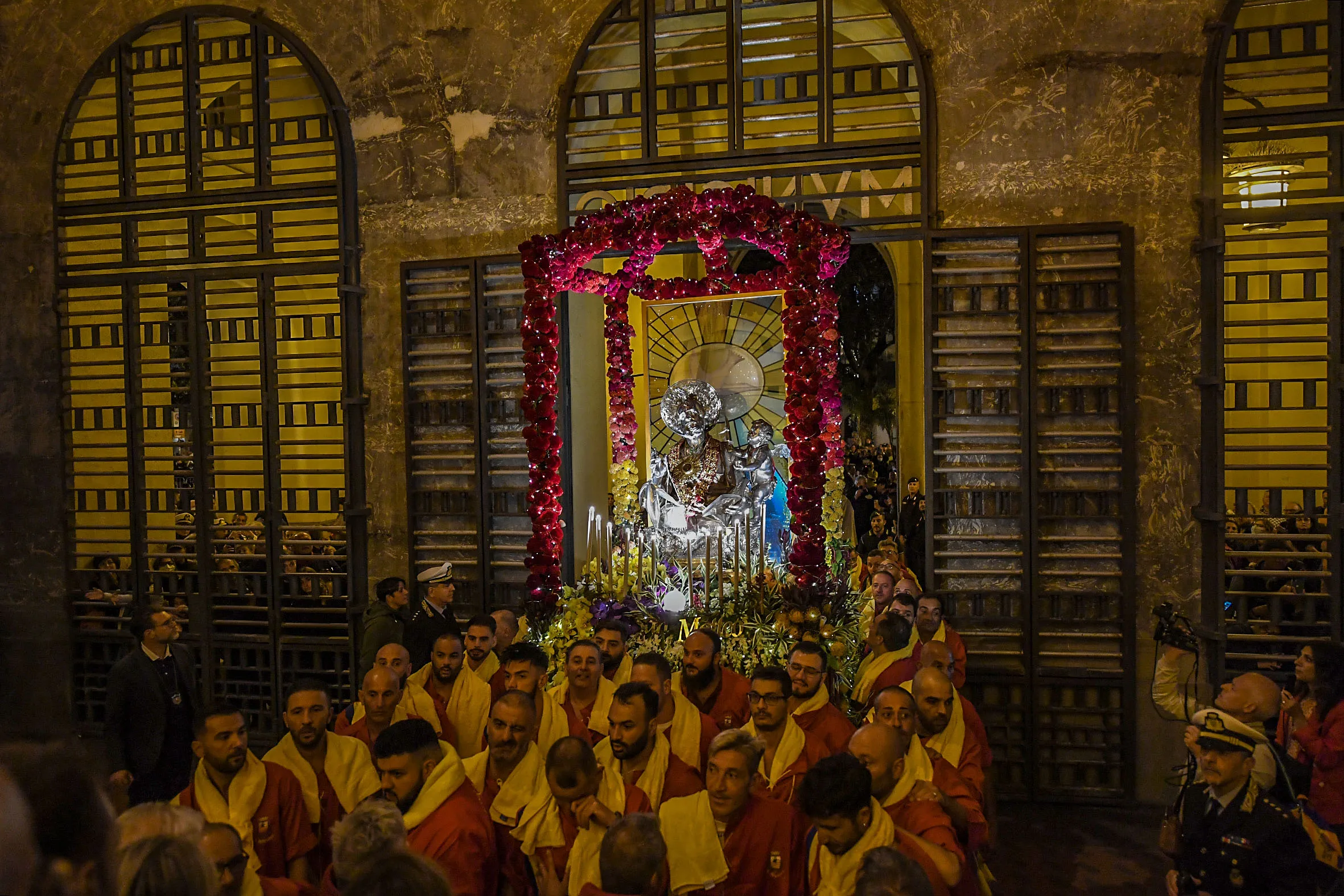
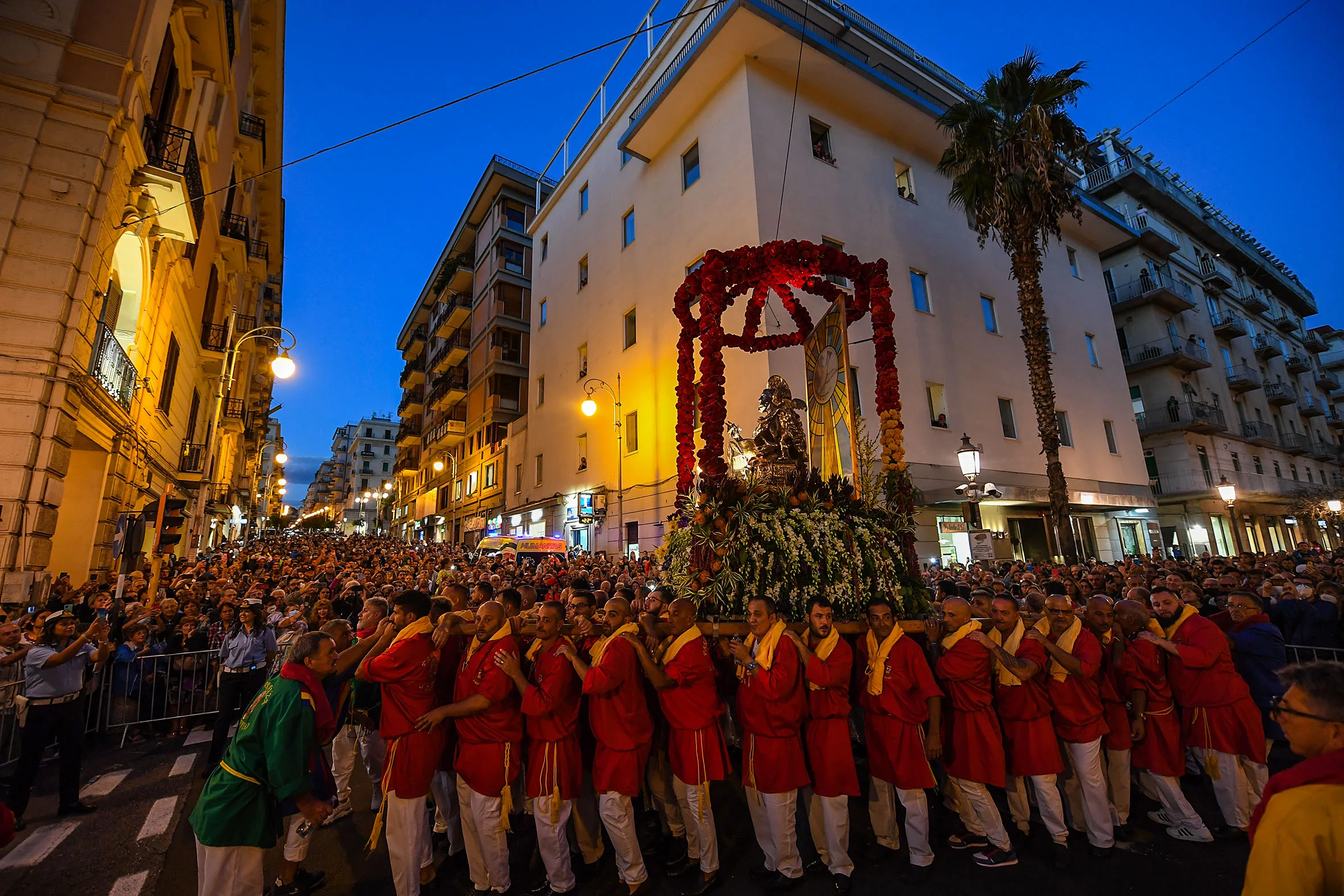
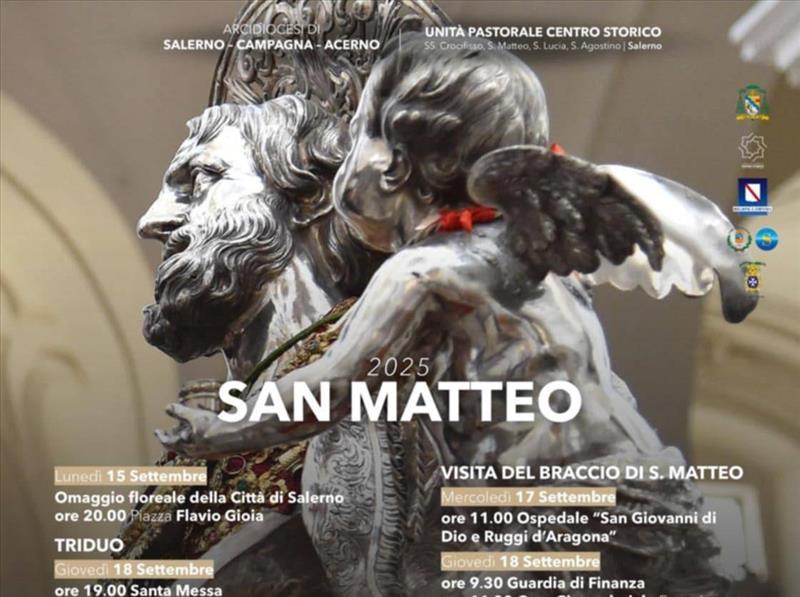
The long wait culminates on September 21st, a day dedicated to the Saint since the morning, but above all with the solemn procession that crosses the main streets of the historic and city center. The procession does not see only the statue of the Patron, but also the other saints who accompany him forever: Anthes, Gaius and Fortunato, the “Santi Martiri Salernitani”, Pope Gregory VII, the pontiff who died in exile in Salerno and whose remains are kept in the Cathedral, and finally the massive wooden statue of St. Joseph.

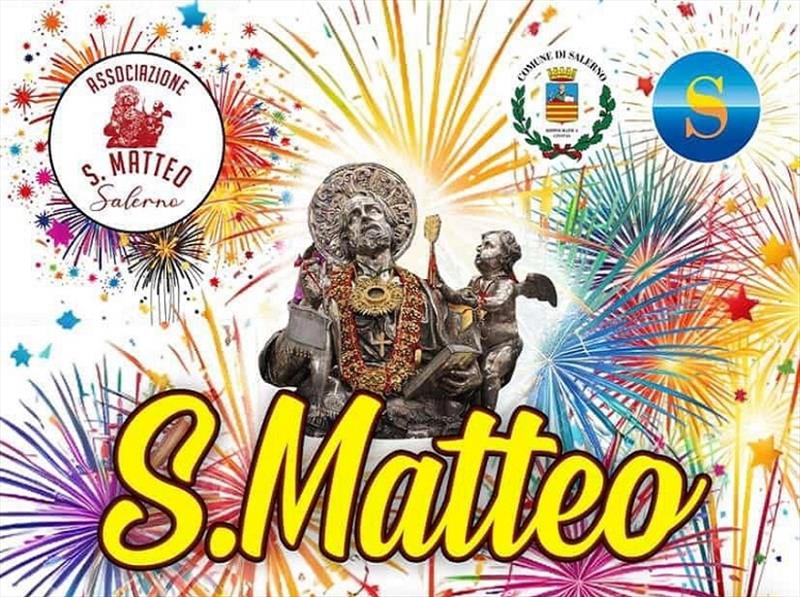
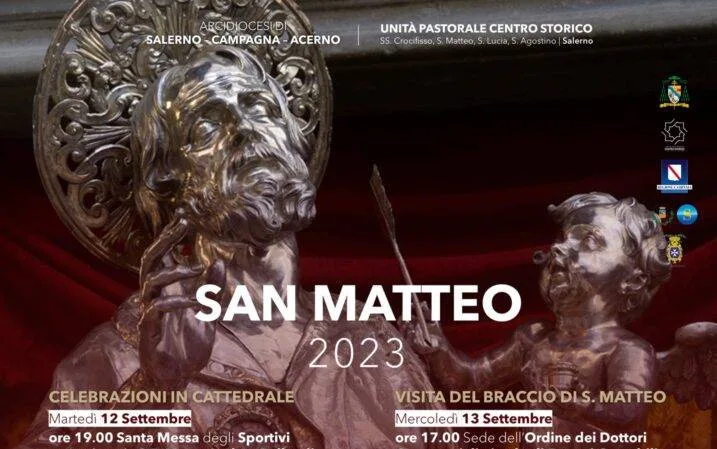
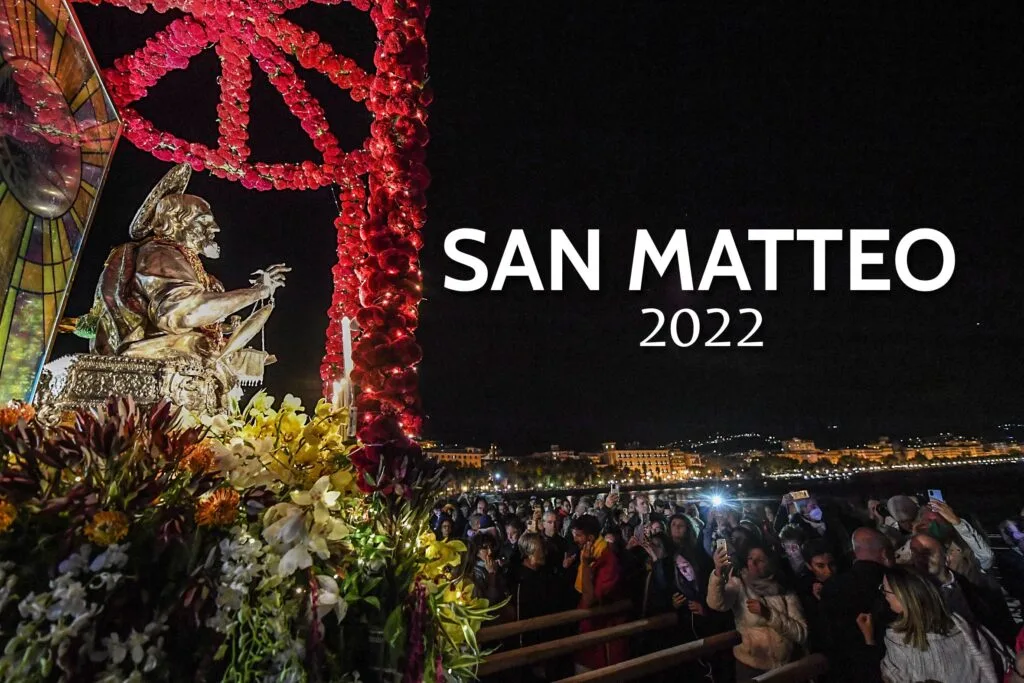
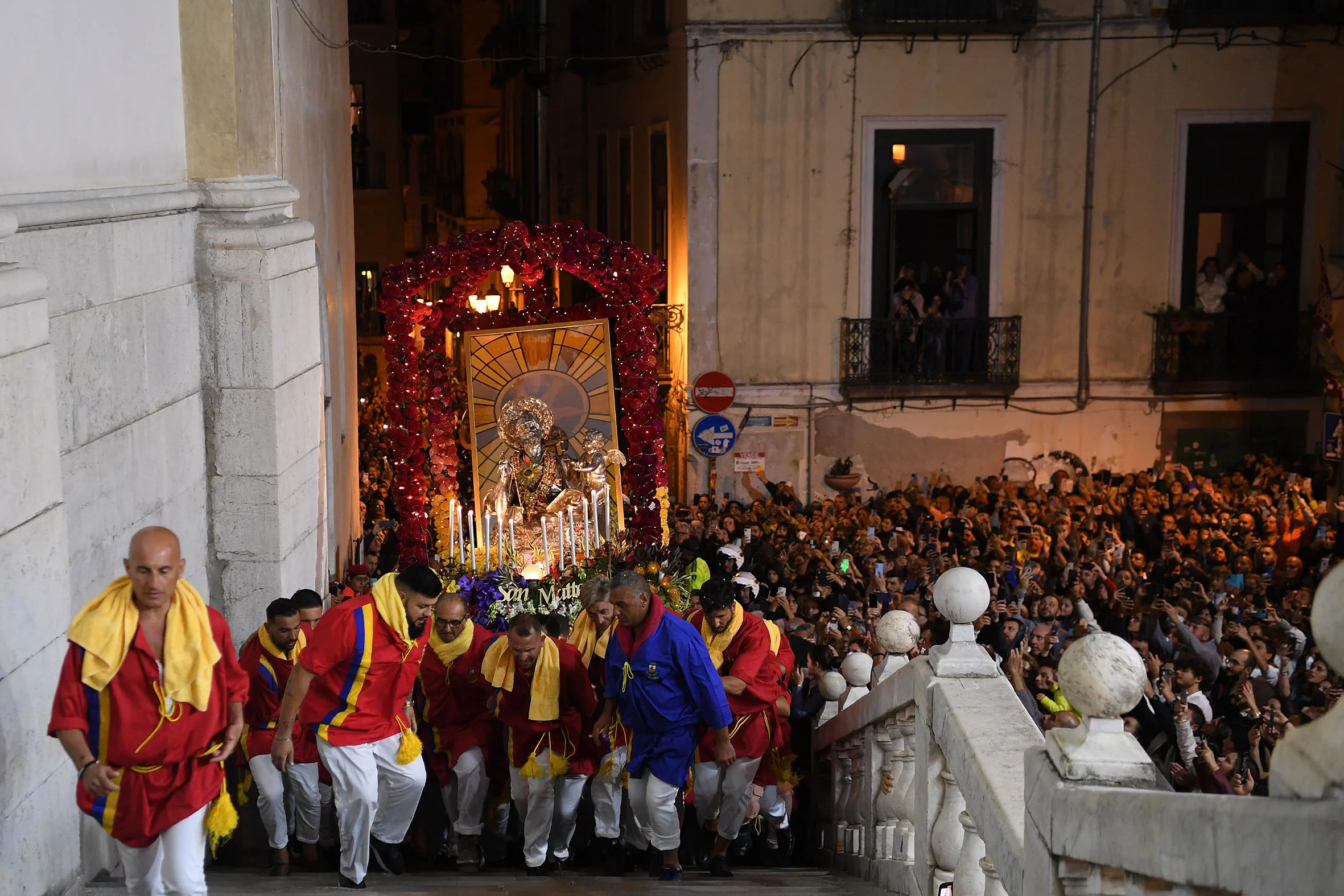
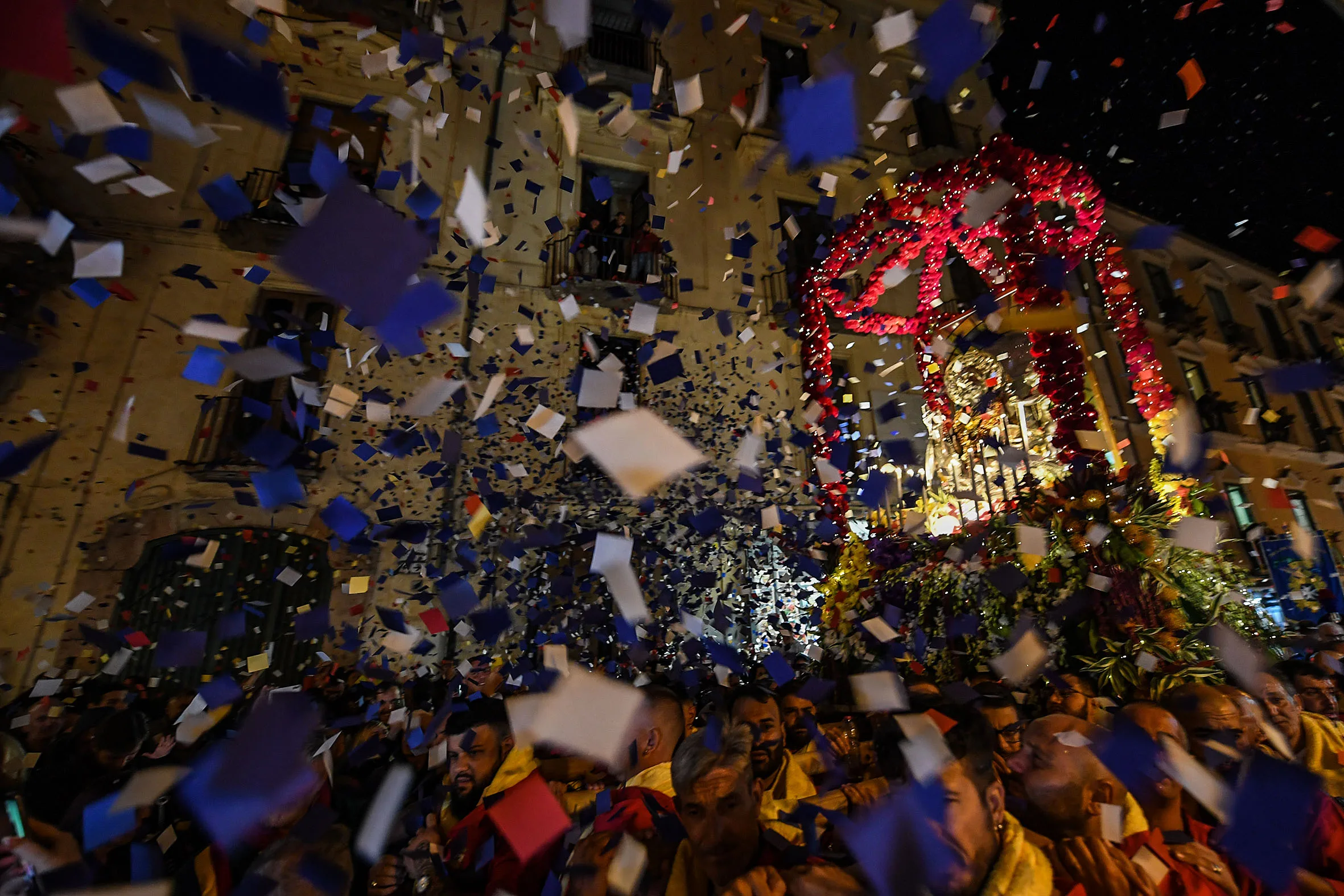
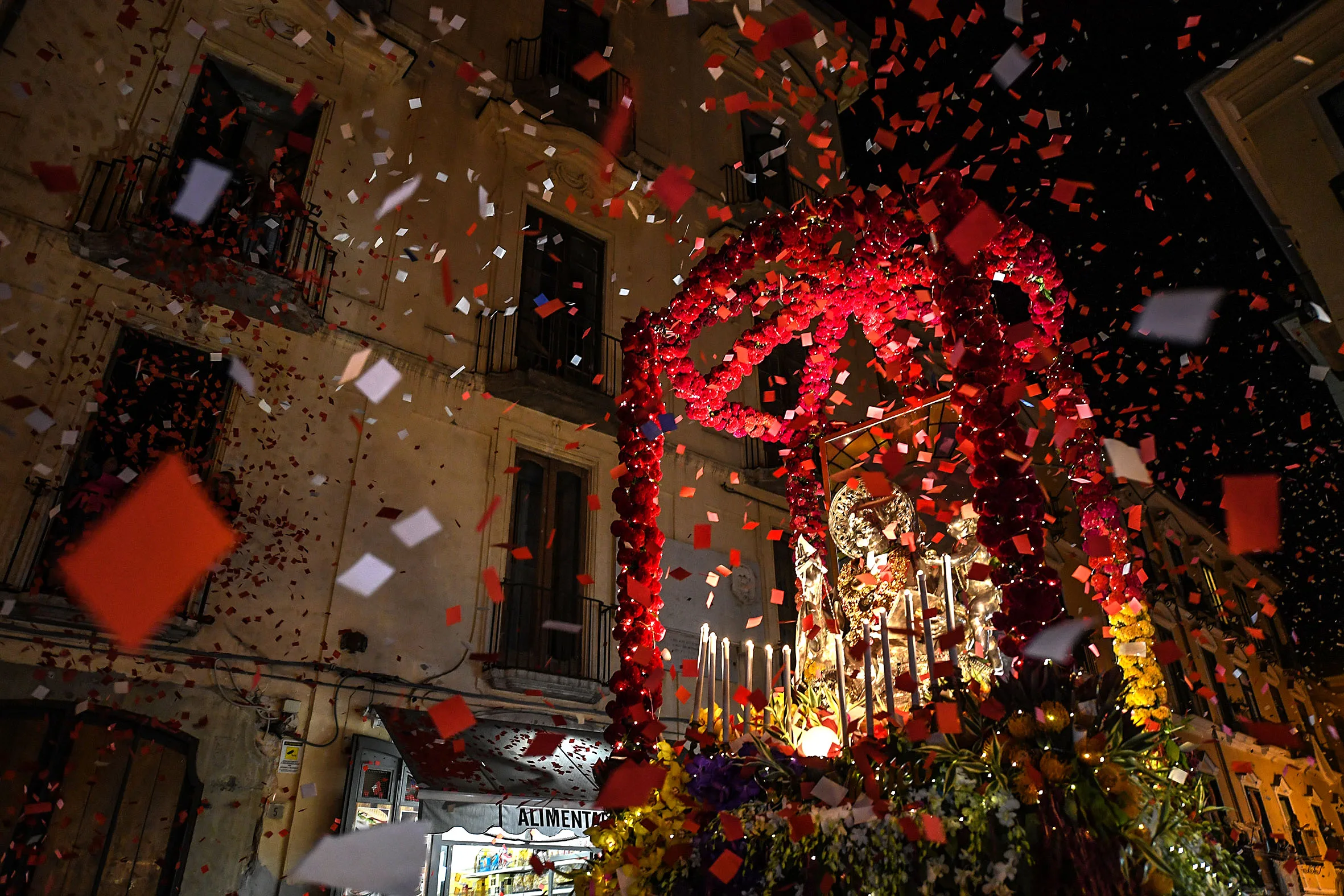
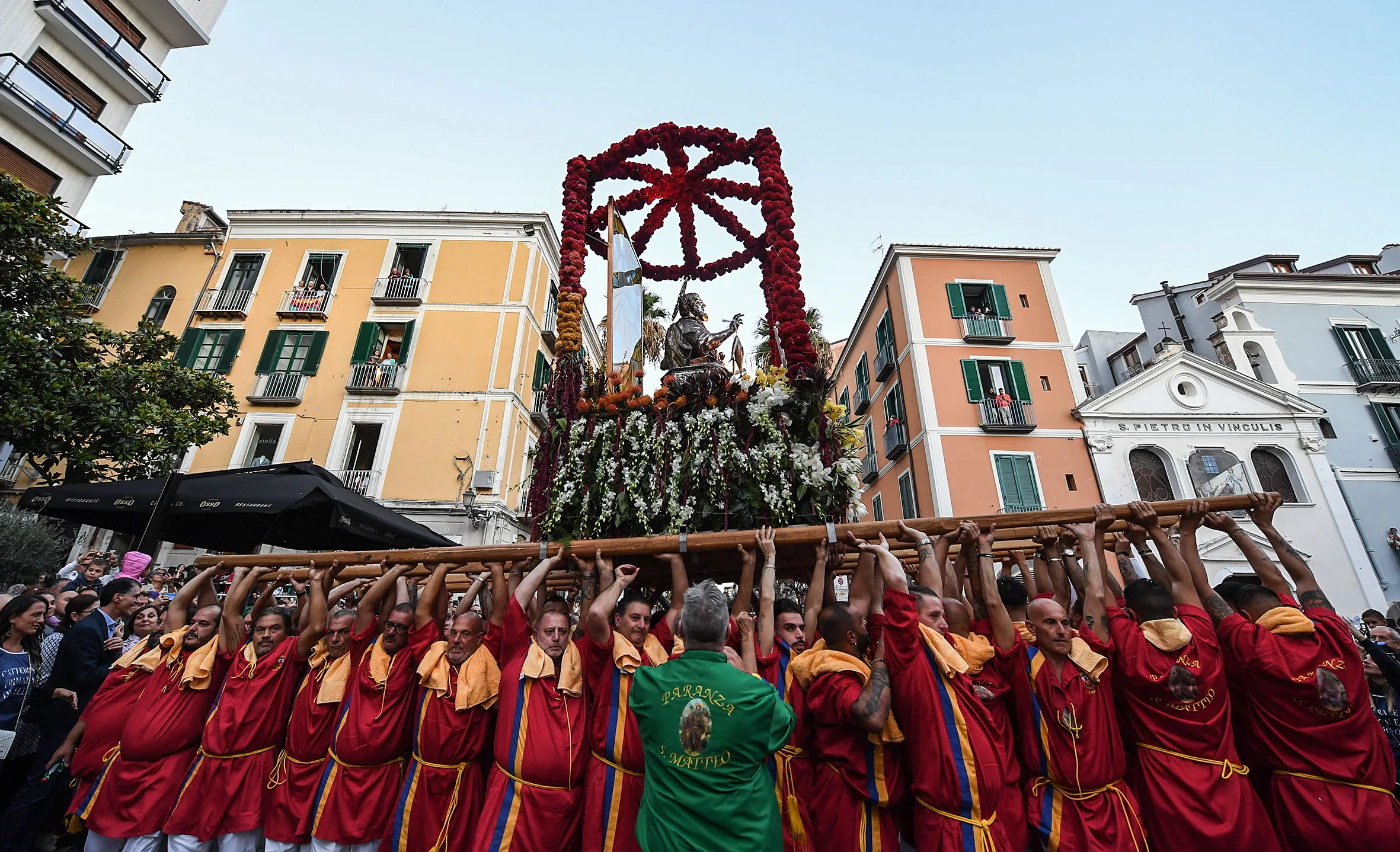
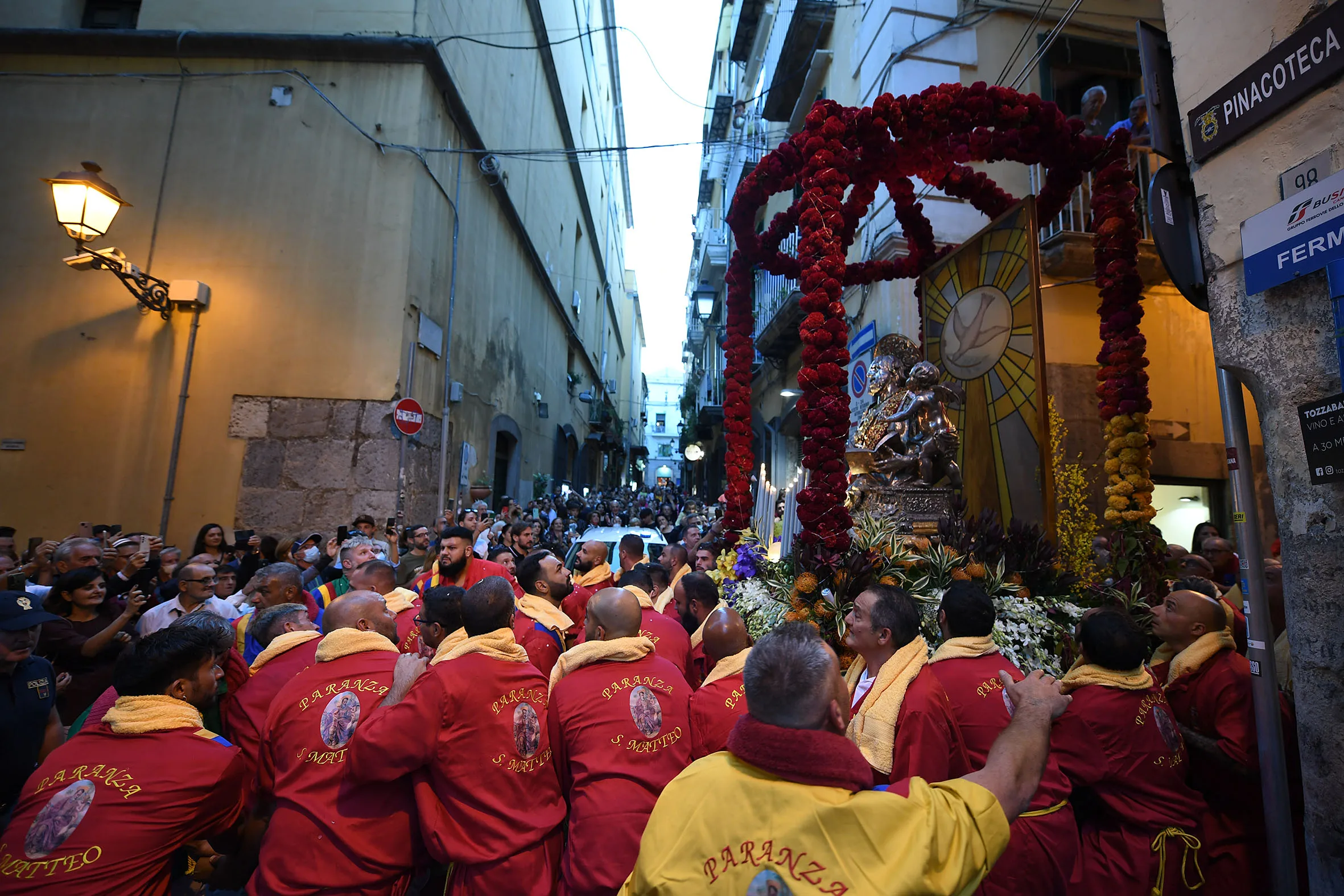
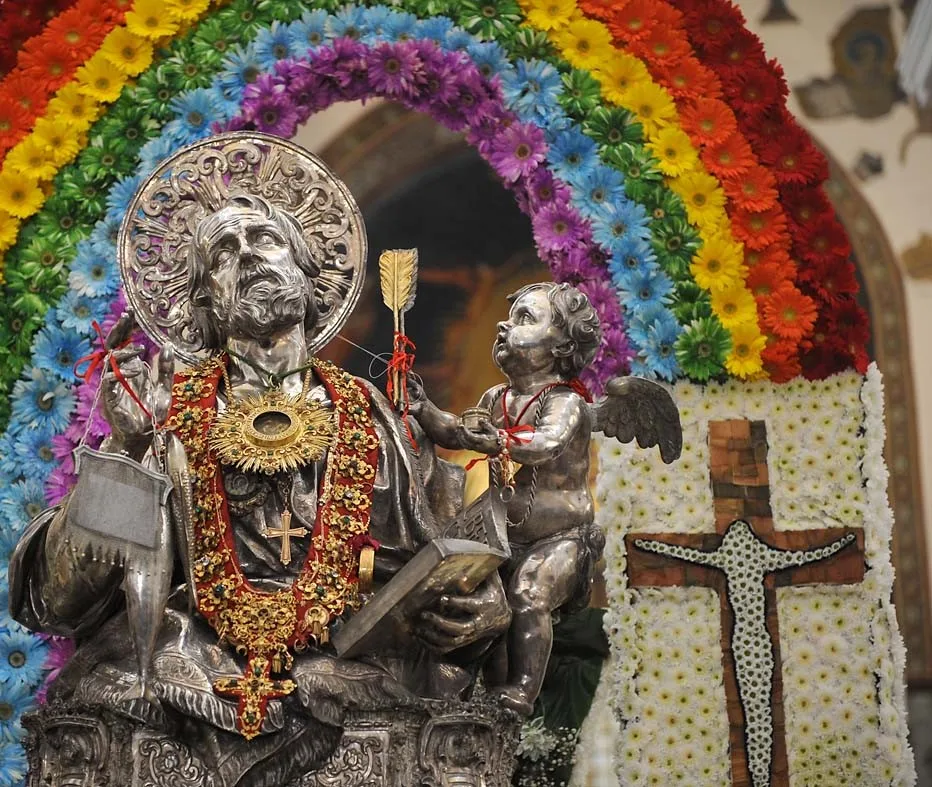
The precious silver statue of St. Matthew triumphs. The symbol of the Patronus is covered with flowers and is carried on the shoulder by the historical “paranze” of the bearers, who with cadenced steps lead the Saint until the return to the Cathedral.

Here, the famous and tiring final race along the steps of the Duomo closes the exciting embrace between the Saint and his city, before the feast continues on the streets between the scents of the typical dishes and the traditional fireworks on the sea.
Past editions

EventsSaint Matteo L'evento inizierà tra 19 giorniSan Matteo 2026 free 21 Sep 2026
EventsSaint MatteoSan Matteo 2025 Free admission 14 Sep 2025 – 21 Sep 2025
EventsSaint MatteoSan Matteo 2024 – pyrotechnic show Free admission 21 Sep 2024
EventsSaint MatteoSan Matteo 2024 Free admission 11 Sep 2024 – 21 Sep 2024
EventsSaint MatteoSan Matteo 2023 Free admission 12 Sep 2023 – 21 Sep 2023
EventsSaint MatteoSan Matteo 2022 Free admission 15 Sep 2022 – 21 Sep 2022

Gallery


    Photo credits: Massimo Pica

    Comune di Salerno
    Via Roma – Palazzo di Città, 84121 Salerno
    C.F. 80000330656 P.IVA 00263650657

    Email:
    cultura@comune.salerno.it

    Reporting service disruptions on the portal:
    utd@pec.comune.salerno.it

    Explore Places

    • Itineraries
    • Cultural Venues and TheatresCultural venues and theatres in Salerno enliven the city’s artistic life with a dense network of historic halls and contemporary spaces dedicated to theatre, cinema, music and performing arts. From the Municipal Theatre Giuseppe Verdi and the Cinema Teatro Augusteo to the Teatro Ghirelli, Sala Pasolini and neighbourhood theatres such as Teatro delle Arti, Piccolo Teatro del Giullare and Teatro Nuovo, these spaces host seasons, festivals, workshops and projects that make culture accessible to residents and visitors all year round.
    • Churches and MonasteriesThe churches and monasteries of Salerno preserve the spiritual and historical heart of the city, especially in the old town centre, where monumental buildings and more intimate spaces tell centuries of faith and art. From the Cathedral of San Matteo to the monastic complexes of San Benedetto, Santa Sofia and San Giorgio, a journey through these sites crosses different eras — from medieval and baroque architecture to spaces now repurposed for culture — keeping alive the connection with the religious roots of the territory.
    • Palaces and SquaresPalaces and squares in Salerno form a vibrant urban fabric, where noble residences, historical archives and monumental spaces recount the city’s civil and social evolution from the Middle Ages to the twentieth century. From Piazza Portanova and Largo Campo to Piazza Abate Conforti, from Palazzo Fruscione to the City Hall and the many historic buildings along Via dei Mercanti and in the Duomo district, every corner offers evocative architectural settings that combine history, everyday life and the symbolic places of the Salerno community.
    • Museums and ArchaeologyMuseums and archaeology in Salerno recount the thousand-year history of the territory through artefacts spanning from prehistory to the Roman era, housed in a network of institutions spread across the city. From the Provincial Archaeological Museum, hosted in the former monastery of San Benedetto and dominated by the famous bronze head of Apollo, to civic and diocesan museums and the routes dedicated to the Etruscan-Samnite sites of Fratte, each exhibition offers an immersive journey through everyday objects, funerary goods, sculptures and the evidence of ancient civilisations in the Salerno area.
    • Gardens and ParksGardens and parks in Salerno offer a widespread network of green areas stretching across the entire city — from historic gardens to large urban parks — creating spaces for relaxation and socialising just steps from the sea. From the Parco del Mercatello to the Parco del Seminario, from the Parco dell’Irno to the gardens of the eastern district and the Giardino della Minerva, these places combine nature, outdoor sports and cultural events, enhancing the urban landscape and making the city more liveable in every season.
    • Modern ArchitectureModern architecture in Salerno reshapes the relationship between the city and the sea with iconic buildings and open public spaces, transforming the waterfront into a new contemporary urban hub. From the Crescent and Piazza della Libertà to Zaha Hadid’s maritime station, the Santa Teresa seafront and the Cittadella Giudiziaria, a dynamic architectural landscape emerges — one of fluid lines, essential volumes and sea-facing squares designed for the social and cultural life of the city.

    Events

    • Concerts
    • Dance
    • Exhibitions
    • Fairs
    • Festivals & Series
    • Music
    • Opera
    • Festivals & Series
    • Theatre

    Salerno

    • Historical Figures
    • Food and Wine
    • Mobility in Salerno
    • Places Nearby
    • Useful Links

    © 2026 Comune di Salerno – All rights reserved

    • Credits
    • Privacy Policy
    • Cookie Policy
    • Instagram
    • Facebook